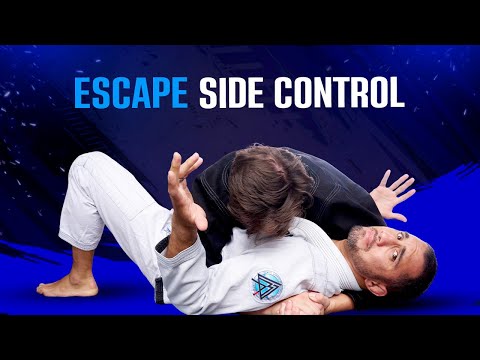
Use your UNDERHOOK to ESCAPE bottom SIDE CONTROL - Professor Steven Williams
0
Underhook To Single Leg·Steven Strangles People
Using your underhook to escape is a great way to generate leverage. Body positioning and timing play a key roll in this …
Перевод: underhook to single leg
The Underhook To Single Leg converts the underhook escape from side control into a single-leg takedown attempt, using the underhook to drive into the opponent and then switching the grip to attack one leg. [1] The defender establishes the underhook, drives to the knees, then transitions the underhook hand down to grab the opponent's near leg while maintaining forward pressure. [1],[2] This escape exemplifies the grappling principle of transitioning seamlessly from defence to offence. [2],[3]
The underhook to single leg transitions from a bottom-side underhook escape directly into a single leg takedown attempt. [1]
Combines wrestling underhook technique with BJJ ground escapes. [1]
Used in BJJ and MMA competition. [1]
Изображений для этой техники пока нет.
Войдите, чтобы предложить изображение.
Using your underhook to escape is a great way to generate leverage. Body positioning and timing play a key roll in this …
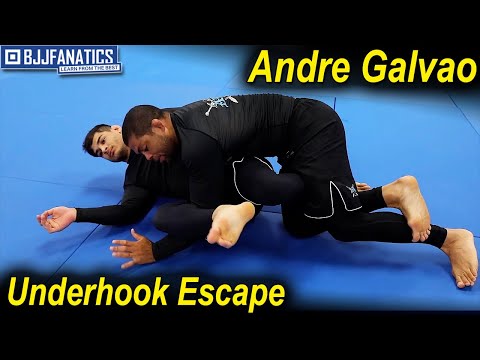
THE UNDERHOOK ESCAPE https://bjjfanatics.com In this Jiu Jitsu training video, Andre Galvao teaches the Underhook Escap…
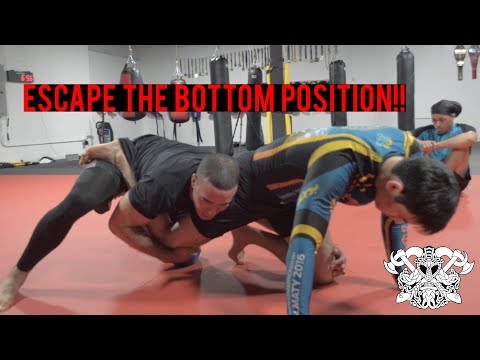
GET MY FREE COURSE - THE SIDE CONTROL ESCAPE KIT! https://intro.mattarroyo.com/home-page-575004 Getting crushed in sid…
The underhook-to-single-leg escape from bottom side control is a high-percentage reversal that transitions a defensive underhook position into leg-based control. Andre Galvao (BJJ Fanatics) emphasizes establishing the underhook by bridging and inserting the hand between the chest and opponent's chest, then using the thigh closest to the hips to create space while maintaining elbow proximity to the body. Once the underhook is secured, Galvao details trapping the opponent's leg and either standing to open the elbow for a take-down or employing the limp-arm technique to secure a body lock before attacking the back. Steven Strangles People (Steven Williams) focuses on the entry sequence from side control, emphasizing heel placement on the ground, shin control transitioning to knee-long grip, and lateral sliding before reaching below the opponent's buttocks to prevent a whizzer. Williams stresses the importance of momentum generation and maintaining head position throughout the scramble. Matt Arroyo Jiu Jitsu presents a strategic variation that uses positional manipulation rather than force—flattening the legs, turning the hip, and placing the knee near the opponent's knee to create a trap that converts an opponent's mount attempt into an escape opportunity. All three instructors agree on the fundamental importance of the underhook and leg control, though they emphasize different technical pathways and timing windows for successful execution.
Сформировано на основе 3 инструкторов
Учебных курсов по этой технике пока нет.
Войдите, чтобы предложить курс.
Риск травмы для человека, к которому применяется техника
Bottom escapes from mount/side control; bridge and hip escape mechanics (Ribeiro 2008)
Уровень мастерства, необходимый для надёжного выполнения техники
Разрешена ли техника по основным соревновательным правилам
Jiu-Jitsu University (Saulo Ribeiro, 2008)
Alias sources — [1] Mastering Jujitsu (Renzo Gracie & John Danaher, 2003) [2] Wrestling Physical Conditioning Encyclopedia (John Jesse, 1974)
Effectiveness sources — [1] Mastering Jujitsu (Gracie & Danaher, 2003)
Standard katakana transliteration of Western martial arts terminology (外来語) — used in Japanese MMA, boxing, and BJJ communities
Alias sources — [1] Mastering Jujitsu (Renzo Gracie & John Danaher, 2003) [2] Wrestling Physical Conditioning Encyclopedia (John Jesse, 1974)
Effectiveness sources — [1] Mastering Jujitsu (Gracie & Danaher, 2003)
hip escape (shrimping) speed, framing strength, timing
flexible hips and quick lateral movement
hip flexors, obliques, triceps (framing), core
According to Matt Arroyo, the key is to avoid exhausting yourself with constant escape attempts. Instead, focus on controlling their leg position by moving their knee out just a few inches, keep your elbow inside to prevent them from mounting freely, and let them attempt to mount while you're already set up to escape as their knee comes up.
Andre Galvao emphasizes keeping your elbow close to your body and using a 'limp arm' technique, where you pass your arm between the opponent's butt and hips while hugging them tight, then explosively driving through with momentum rather than relying solely on arm strength.
Professor Steven Williams recommends using a whipping motion from side control by pushing with your heel on the ground, grabbing the shin, and driving up while grabbing the knee long to generate upward momentum that breaks their control.
The Underhook To Single Leg converts the underhook escape from side control into a single-leg takedown attempt, using the underhook to drive into the opponent and then switching the grip to attack one leg. The defender establishes the underhook, drives to the knees, then transitions the underhook hand down to grab the opponent's near leg while maintaining forward pressure.
The underhook to single leg from side control was developed by wrestlers in BJJ and MMA who recognised that the underhook escape naturally led to single-leg attack opportunities. It represents the integration of wrestling offence with BJJ defensive positioning.
Unified MMA: разрешён — Legal defensive/transitional technique; IBJJF: разрешён — Legal; IJF: разрешён — Legal; ADCC: разрешён — Legal; UWW: разрешён — Legal, escape scores 1 point (freestyle), reversal scores 1 point; FIAS Sport Sambo: разрешён — Legal; NCAA Folkstyle: разрешён — Legal, escape scores 1 point, reversal scores 2 points
Оценка опасности 3/10. Moderate — bottom escapes from mount/side control; bridge and hip escape mechanics (Ribeiro 2008)
Стандартная цепочка подготовки: Create Space → Disrupt Control → Execute Escape → Recover Position.
Стандартные контрприёмы: Maintain Pressure — keep consistent weight distribution to limit escape space / Anticipate Direction — read escape attempt direction and block early / Transition — flow to a new position when the current one is threatened.
Распространённые варианты: Shrimp to guard (framing and hip-escaping to recover full guard or half guard); Underhook escape (winning the underhook and coming to knees or reversing); Bridge to knees (bridging into the opponent and transitioning to turtle or…); Ghost escape (inverting under the opponent to re-guard from the opposit…).
Used in BJJ and MMA competition.
Основные ошибки, на которые стоит обратить внимание: Coming to the knees and then pausing before shooting the single — the transition must be seamless; any pause lets the… / Releasing the underhook to grab the leg — maintain the underhook while level-changing to the leg / Shooting too far from the opponent — the single leg is close-range from the underhook position / Not finishing the single leg after the initial entry — the entry is the easy part; commit to the finish.
Underhook To Single Leg также известен как Andāfukku kara Shinguru Reggu, Underhook Single Leg, Side Control To Takedown.