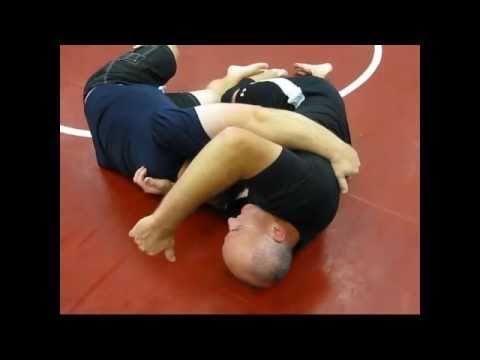
Standard Underhook Escape

Род

Перевод: standard underhook escape

Дистанция и классификация

Категория
Удар и защитаЗамкиБлижний бойБой против нескольких
Дистанция
БлижняяСредняяДальняя

Обзор

The Standard Underhook Escape establishes a near-side underhook from bottom side control, then uses the underhook to drive into the opponent while rotating to the knees, escaping the pin. [1] The defender threads the inside arm under the opponent's armpit, secures the underhook, then bridges and drives the underhook shoulder forward while rotating the hips to the knees. [1],[2] The escape finishes with the defender on their knees facing the opponent, in a neutral position from which they can wrestle up or re-engage. [2],[3]

Также известна как
Basic Underhook EscapeWrestling[1]Underhook To KneesWrestling[2]
Используется в

История и происхождение

The standard underhook escape is a fundamental technique in both wrestling and BJJ, representing an aggressive escape approach that transitions from defence to a neutral or offensive position. [1] It is widely taught as a primary side control escape option. [2],[3]

Страна происхождения· показано в случайном порядке

  • БразилияБразильское джиу-джитсу, ММА
  • Японияスタンダードアンダーフック逃げ(Sutandādo Andāfukku Nige)Бразильское джиу-джитсу
  • ГрецияБорьба
  • СШАБорьба, ММА

Эффективность

The standard underhook escape is the baseline underhook-based side control escape. [1]

Родословная

Adapted from wrestling into BJJ. [1]

Соревновательные результаты

Used in BJJ competition. [1]

Изображения

Изображений для этой техники пока нет.

Войдите, чтобы предложить изображение.

Биомеханический механизм

Primary ActionCreating space between the bottom player's body and the top player to recover guard or achieve underhook
Joints InvolvedHips (shrimping/hip escape), elbows and forearms (framing against crossface and hip), knees (re-inserting guard)
Force VectorLateral hip escape (shrimp) — moving the hips away from the opponent creates the space needed to insert knee or recover guard
Escape MechanicFrames create momentary space, hip escape maintains it, and knee insertion re-establishes guard

Позиция и вход

From bottom side controlCreate frames with the forearms against the opponent's neck and hip, hip escape (shrimp) to create space, insert the knee to recover guard
From underhook escapeSwim the near arm to an underhook, bridge into the opponent and come to knees or reverse
From opponent's transitionWhen the opponent moves to mount or north-south, use the movement to create space and escape

Варианты

Shrimp to guardframing and hip-escaping to recover full guard or half guard
Underhook escapewinning the underhook and coming to knees or reversing
Bridge to kneesbridging into the opponent and transitioning to turtle or single-leg
Ghost escapeinverting under the opponent to re-guard from the opposite side

Видео

Modesto Grappling Club Instructional #3: Side-Control/Underhook Escape

0
Standard Underhook Escape·Modesto Judo Club·Added by Admin

Wrestling, Grappling, Jiu-Jitsu, Sambo, Judo and Greco-Roman http://www.modestograpplingclub.com

1 video

Изучить технику

Учебных курсов по этой технике пока нет.

Войдите, чтобы предложить курс.

Оценки

Уровень опасности

Риск травмы для человека, к которому применяется техника

3
Умеренный3/10

Bottom escapes from mount/side control; bridge and hip escape mechanics (Ribeiro 2008)

Сложность

Уровень мастерства, необходимый для надёжного выполнения техники

Начинающий
Допустимость на соревнованиях

Разрешена ли техника по основным соревновательным правилам

Unified MMA — Legal defensive/transitional technique
Unified Rules of MMA, August 2025PDF
FIAS Sport Sambo — Legal
FIAS International Sambo Competition RulesPDF
NCAA Folkstyle — Legal, escape scores 1 point, reversal s...
NCAA Wrestling Rules 2025-26PDF

Заметки по тренировке

Standard underhook escape: swim the near arm under the opponent's far arm, secure a deep underhook, turn into the opponent to come to the knees, and transition to a takedown or standing (Cael Sanderson, Wrestling Technique, 2010)
Step 1: bridge to create a small amount of space between your shoulder and the opponent
Step 2: swim the near-side arm under the opponent's arm to establish the underhook
Step 3: drive the underhook deep — hand reaching to the opponent's far shoulder blade
Step 4: turn your body into the opponent while coming to your knees
Step 5: from the knees with the underhook, choose: single leg, double leg, or stand up
The bridge in Step 1 creates the window for the underhook entry — without it, there's no space to swim
The deep underhook prevents the opponent from taking your back as you turn
Chain with the shrimp escape: if the underhook is denied, immediately shrimp to guard

Типичные ошибки

!Swimming the arm under without bridging first — the bridge creates the entry window
!Not driving the underhook deep enough — a shallow underhook (hand on the ribs) lets the opponent counter
!Turning without securing the underhook first — sequence matters: underhook then turn
!Coming to the knees with the head up — keep the head tight to the opponent to prevent front headlock attacks
!Not having a follow-up plan from the knees — choose your transition before coming up
!Exposing the neck while turning — keep the chin tucked and the head tight against the opponent
!Only training the underhook escape from one side — practice both sides

Связанные техники

Контрприёмы

Цепочка подготовки

1Create Spaceuse frames, hip movement, or leverage to generate room to move
2Disrupt Controlbreak or weaken the opponent's grips and weight placement
3Execute Escapeapply the specific escape mechanic with timing and commitment
4Recover Positionestablish a safe position (guard, standing, or top)

Источники и ссылки

Основной источник

Jiu-Jitsu University (Saulo Ribeiro, 2008)

1КнигаJiu-Jitsu University (Ribeiro, 2008)

Alias sources — [1] Jiu-Jitsu University (Saulo Ribeiro, 2008) [2] Wrestling Physical Conditioning Encyclopedia (John Jesse, 1974)

2КнигаBrazilian Jiu-Jitsu: Theory and Technique (Gracie & Gracie, 2001)

Effectiveness sources — [1] Mastering Jujitsu (Gracie & Danaher, 2003)

3ДругоеJapanese Martial Arts Hybrid Terminology

Mixed Japanese-Western terminology — combines traditional Japanese terms with katakana loanwords

4ЦитатаJiu-Jitsu University (Ribeiro, 2008)

Alias sources — [1] Jiu-Jitsu University (Saulo Ribeiro, 2008) [2] Wrestling Physical Conditioning Encyclopedia (John Jesse, 1974)

5ЦитатаBrazilian Jiu-Jitsu: Theory and Technique (Gracie & Gracie, 2001)

Effectiveness sources — [1] Mastering Jujitsu (Gracie & Danaher, 2003)

Сообщество

Атлетизм

Requires

hip escape (shrimping) speed, framing strength, timing

Favours

flexible hips and quick lateral movement

Key muscles

hip flexors, obliques, triceps (framing), core

Часто задаваемые вопросы

How do I get my hand under my opponent's armpit to start the underhook escape?

Start by getting into a good position with your opponent's head tight. Take one hand and place it directly under their armpit to establish your initial underhook grip.

What are the three movements I need to execute once I have a deep underhook?

Once you have a deep underhook with your hand under their back and feet pushed down, perform three simultaneous movements: push on their hip, lift up, and arch your body. This combination creates space and generates power to escape side control.

Should I lead with my elbow or my fingers when threading the underhook?

Lead with your fingers, not your elbow, when threading the underhook under your opponent. This hand position creates more power and makes it harder for your opponent to control you by holding down.

What can I attack after successfully escaping with the underhook?

After popping up from the underhook escape, you can transition into attacking a single leg takedown, though your opponent may try to regain their position.

Как работает Standard Underhook Escape?

The Standard Underhook Escape establishes a near-side underhook from bottom side control, then uses the underhook to drive into the opponent while rotating to the knees, escaping the pin. The defender threads the inside arm under the opponent's armpit, secures the underhook, then bridges and drives the underhook shoulder forward while rotating the hips to the knees.

Откуда происходит Standard Underhook Escape?

The standard underhook escape is a fundamental technique in both wrestling and BJJ, representing an aggressive escape approach that transitions from defence to a neutral or offensive position. It is widely taught as a primary side control escape option.

Разрешён ли Standard Underhook Escape на соревнованиях?

Unified MMA: разрешён — Legal defensive/transitional technique; IBJJF: разрешён — Legal; IJF: разрешён — Legal; ADCC: разрешён — Legal; UWW: разрешён — Legal, escape scores 1 point (freestyle), reversal scores 1 point; FIAS Sport Sambo: разрешён — Legal; NCAA Folkstyle: разрешён — Legal, escape scores 1 point, reversal scores 2 points

Насколько опасен Standard Underhook Escape?

Оценка опасности 3/10. Moderate — bottom escapes from mount/side control; bridge and hip escape mechanics (Ribeiro 2008)

Как подготовить Standard Underhook Escape?

Стандартная цепочка подготовки: Create Space → Disrupt Control → Execute Escape → Recover Position.

Как защититься от Standard Underhook Escape?

Стандартные контрприёмы: Heavy Hips — maintain low hip pressure and wide base to absorb the bridge / Grapevine — hook legs inside opponent's thighs to neutralize hip movement / Post Hand — post arm on the mat in the direction of the bridge to maintain balance.

Какие есть варианты Standard Underhook Escape?

Распространённые варианты: Shrimp to guard (framing and hip-escaping to recover full guard or half guard); Underhook escape (winning the underhook and coming to knees or reversing); Bridge to knees (bridging into the opponent and transitioning to turtle or…); Ghost escape (inverting under the opponent to re-guard from the opposit…).

Насколько эффективен Standard Underhook Escape на соревнованиях?

Used in BJJ competition.

Какие типичные ошибки при выполнении Standard Underhook Escape?

Основные ошибки, на которые стоит обратить внимание: Swimming the arm under without bridging first — the bridge creates the entry window / Not driving the underhook deep enough — a shallow underhook (hand on the ribs) lets the opponent counter / Turning without securing the underhook first — sequence matters: underhook then turn / Coming to the knees with the head up — keep the head tight to the opponent to prevent front headlock attacks.

Какие ещё названия есть у Standard Underhook Escape?

Standard Underhook Escape также известен как Sutandādo Andāfukku Nige, Basic Underhook Escape, Underhook To Knees.