Tai Chi Walking for Beginners | How To Do Tai Chi Walking
0
Short Shoulder Walk·Ann Swanson Wellness·Added by Admin
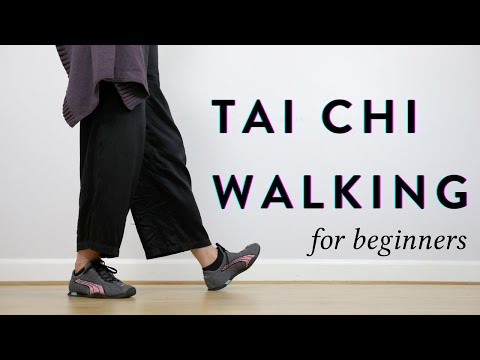
Join the Tai Chi Walking Challenge for FREE: https://www.annswansonwellness.com/walk What is tai chi walking?? Join me …
Перевод: short shoulder walk
The Short Shoulder Walk uses quick, short alternating shoulder slides to make incremental progress downward out of back control, prioritising speed of each individual shoulder shift over distance covered. [1] The short shoulder walk creates a rhythm of rapid micro-adjustments that are difficult for the attacker to counter because each movement is too small to react to individually, but the cumulative effect gradually extracts the defender from the control position. [1],[2] This variation is preferred when the attacker maintains very tight control and large movements are not possible. [2],[3]
The short shoulder walk is a compact version of the shoulder walk escape for tight spaces. [1]
A refined shoulder walk variant in BJJ. [1]
Used in BJJ competition. [1]
Изображений для этой техники пока нет.
Войдите, чтобы предложить изображение.
Join the Tai Chi Walking Challenge for FREE: https://www.annswansonwellness.com/walk What is tai chi walking?? Join me …
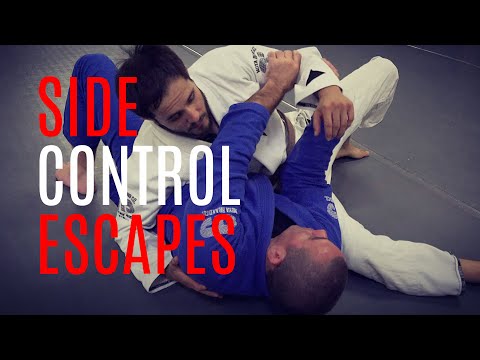
In this video; Sensei Anthony Mantanona teaches a variety of side control escapes. Also taught are circumstantial scenar…
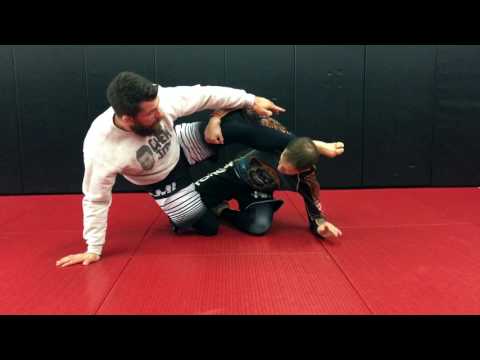
Recently one of my BJJ students watched one of my Mount Escape videos. The video is here: Escape a Heavy Mount in BJJ …
The transcripts provided do not contain instructional content related to the 'Short Shoulder Walk' technique as it pertains to rear-mount escape or back-escape sequences in Brazilian Jiu-Jitsu or grappling. Ann Swanson Wellness (Tai Chi Walking for Beginners) teaches tai chi walking, a meditative movement practice emphasizing stance, weight distribution, and hip rotation—unrelated to grappling escapes. Chewjitsu and CVBJJ Online both address mount escapes and side control escapes involving framing, hip displacement (shrimping), and positional transitions, but neither instructor specifically demonstrates or discusses a 'Short Shoulder Walk' escape technique. While these BJJ resources cover foundational escape mechanics such as frame establishment, hip drive, and shoulder-based leverage, they do not isolate or name the particular shoulder-walk variation referenced in the technique path. The instructional gap suggests either mismatched source materials or that this specific escape nomenclature requires additional primary sources.
Сформировано на основе 3 инструкторов
Учебных курсов по этой технике пока нет.
Войдите, чтобы предложить курс.
Риск травмы для человека, к которому применяется техника
Back escapes must address choke threat while escaping; urgency increases injury risk
Уровень мастерства, необходимый для надёжного выполнения техники
Разрешена ли техника по основным соревновательным правилам
Jiu-Jitsu University (Saulo Ribeiro, 2008)
Alias sources — [1] Back Attacks: Enter the System (John Danaher, 2018) [2] Jiu-Jitsu University (Saulo Ribeiro, 2008)
Effectiveness sources — [1] Jiu-Jitsu University (Ribeiro, 2008)
Standard katakana transliteration of Western martial arts terminology (外来語) — used in Japanese MMA, boxing, and BJJ communities
Alias sources — [1] Back Attacks: Enter the System (John Danaher, 2018) [2] Jiu-Jitsu University (Saulo Ribeiro, 2008)
Effectiveness sources — [1] Jiu-Jitsu University (Ribeiro, 2008)
explosive hip bridge power, shrimping ability, timing
strong glutes and hip extensors for powerful bridges
glutes, hip extensors, core, quadriceps
Keep your knees soft and never fully straighten them throughout the movement. Your knees should track in the direction of your toes, and when in a bow stance, your front knee should stay at or behind your toes—not forward of them. Per Ann Swanson Wellness, maintaining this alignment protects your knees and keeps proper alignment.
Position your toes facing outward with your back foot at approximately a 45-degree angle and your front foot forward in a bow stance. When stepping forward, place your heel down first, then your toes, and shift your weight gradually between feet according to Ann Swanson Wellness's tai chi walking instruction.
Maintain outward rotation of your back thigh to protect the knee and keep your qua open, while ensuring the back knee stays bent throughout the movement. This subtle activation in your gluteal and thigh muscles helps support the knee safely during weight shifts.
You have several options: place your hands on your hips, bring them to your low back near your kidney area, or layer them with gentle pressure on the kidney region, whichever is most comfortable for you.
The Short Shoulder Walk uses quick, short alternating shoulder slides to make incremental progress downward out of back control, prioritising speed of each individual shoulder shift over distance covered. The short shoulder walk creates a rhythm of rapid micro-adjustments that are difficult for the attacker to counter because each movement is too small to react to individually, but the cumulative effect gradually extracts the defender from the control position.
The short shoulder walk was refined through competitive BJJ as an incremental escape method for overcoming tight back control. It is taught as an alternative to the standard shoulder walk when the attacker's control is exceptionally tight.
Unified MMA: разрешён — Legal defensive/transitional technique; IBJJF: разрешён — Legal; IJF: разрешён — Legal; ADCC: разрешён — Legal; UWW: разрешён — Legal; FIAS Sport Sambo: разрешён — Legal
Оценка опасности 4/10. Moderate — back escapes must address choke threat while escaping; urgency increases injury risk
Стандартная цепочка подготовки: Create Space → Disrupt Control → Execute Escape → Recover Position.
Стандартные контрприёмы: Maintain Pressure — keep consistent weight distribution to limit escape space / Anticipate Direction — read escape attempt direction and block early / Transition — flow to a new position when the current one is threatened.
Распространённые варианты: Bridge and roll (upa) (explosive bridge trapping arm and leg to reverse position); Elbow-knee escape (framing and shrimping to recover guard); Foot drag escape (dragging the opponent's foot with the heel to create spac…); Combination escape (bridging to force a reaction, then shrimping when the opp…).
Used in BJJ competition.
Основные ошибки, на которые стоит обратить внимание: Making shifts too large and becoming detectable — the short shoulder walk should be subtle / Not combining with hand fighting — the choke threat remains constant; protect the neck / Walking without purpose — each shift should be directional toward the bottom hook / Expecting fast results — the short shoulder walk is incremental; patience is essential.
Short Shoulder Walk также известен как Shōto Shorudā Wōku, Quick Shoulder Walk, Micro Shoulder Scoot.