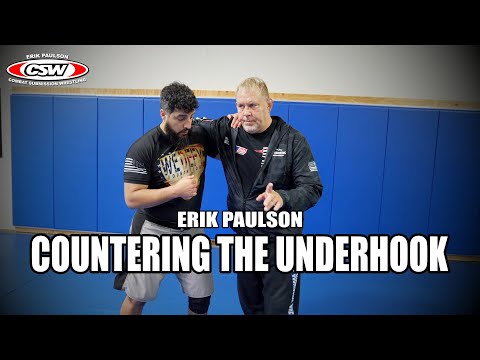
Countering The Underhook
0
Underhook Defence·CSW Association
Coach Erik Paulson showing three counters to the underhook from standing. - #grapple #jiujitsu #bjj #grappling #mma #br…
Перевод: underhook defence
The Underhook Defence family covers defensive techniques for preventing the opponent from establishing or maintaining underhooks, which are the primary clinch position for initiating takedowns. [1] Underhook defence is critical because an opponent with underhooks has inside position and direct access to the body for takedowns — denying underhooks is therefore equivalent to denying the most common takedown platform. [1],[2] The primary underhook defensive technique is re-pummelling — swimming the arm back inside to re-establish the underhook after the opponent has secured one. [2],[3]
Underhook defence through pummelling has been a central element of wrestling since the sport's formalisation, with the battle for underhooks recognised as one of the most important tactical contests in standing grappling. [1] The importance of underhook defence increased in MMA where underhook control often determines the clinch battle. [2],[3]
Underhook defence is fundamental in wrestling. [1]
Used in wrestling and MMA competition. [1]
Изображений для этой техники пока нет.
Войдите, чтобы предложить изображение.
Coach Erik Paulson showing three counters to the underhook from standing. - #grapple #jiujitsu #bjj #grappling #mma #br…
Учебных курсов по этой технике пока нет.
Войдите, чтобы предложить курс.
Риск травмы для человека, к которому применяется техника
Sprawls and stuffs involve sudden body weight displacement; knee/hip strain risk
Уровень мастерства, необходимый для надёжного выполнения техники
Разрешена ли техника по основным соревновательным правилам
Boxing (Edwin Haislet, 1940)
Alias sources — [1] Wrestling Physical Conditioning Encyclopedia (Welker, 2010) [2] Wrestling Physical Conditioning Encyclopedia (Welker, 2010)
Effectiveness sources — [1] Wrestling Physical Conditioning Encyclopedia (Petrov, 1977) [2] Mastering Jujitsu (Gracie & Danaher, 2003)
Standard katakana transliteration of Western martial arts terminology (外来語) — used in Japanese MMA, boxing, and BJJ communities
Alias sources — [1] Wrestling Physical Conditioning Encyclopedia (Welker, 2010) [2] Wrestling Physical Conditioning Encyclopedia (Welker, 2010)
Effectiveness sources — [1] Wrestling Physical Conditioning Encyclopedia (Petrov, 1977) [2] Mastering Jujitsu (Gracie & Danaher, 2003)
reaction speed, structural body mechanics, defensive awareness
quick reflexes and conditioned defensive surfaces
varies — forearms (blocking), legs (movement), core (stability)
Каждое движение в любом боевом искусстве обладает рядом универсальных свойств. Комбинируйте параметры ниже, чтобы найти нужный инструмент или сравнить аналоги из разных стилей.
Underhook defense counters the opponent's underhook by whizzing (overhooking), re-pummelng (fighting for your own underhook), or using frames to create distance. The underhook battle is the fundamental clinch exchange in wrestling and MMA. (Wrestling coaching manuals; The Ultimate MMA Training Guide)
Block their forearm and use your elbow to pull your arm out, keeping their head controlled. Step across to prevent them from obtaining a body lock. CSW Association emphasizes blocking the forearm first as the key to breaking free from the underhook.
Place your hand across their chest and work to straighten out their underhook arm, which sets up the position to take their back. This straightening action is crucial before transitioning to the back control.
If your opponent gets a seatbelt grip (underhook with second arm around your waist), drop to the floor immediately while applying a whizzer, then hook your arm to defend and escape.
The Underhook Defence family covers defensive techniques for preventing the opponent from establishing or maintaining underhooks, which are the primary clinch position for initiating takedowns. Underhook defence is critical because an opponent with underhooks has inside position and direct access to the body for takedowns — denying underhooks is therefore equivalent to denying the most common takedown platform.
Underhook defence through pummelling has been a central element of wrestling since the sport's formalisation, with the battle for underhooks recognised as one of the most important tactical contests in standing grappling. The importance of underhook defence increased in MMA where underhook control often determines the clinch battle.
Unified MMA: разрешён — Legal defensive technique; IBJJF: разрешён — Legal — defensive techniques are fundamental to grappling; IJF: разрешён — Legal defensive action; ADCC: разрешён — Legal; UWW: разрешён — Legal defensive technique; FIAS Sport Sambo: разрешён — Legal
Оценка опасности 3/10. Moderate — sprawls and stuffs involve sudden body weight displacement; knee/hip strain risk
Стандартная цепочка подготовки: Anticipate the Attack → Execute Defence → Recover Stance → Counter or Disengage.
Стандартные контрприёмы: Timing — attack when the defence is recovering or between movements / Feint — use deception to create openings in the defensive structure / Angle Change — attack from an unexpected angle that the defence does not cover.
Распространённые варианты: Standard defence (primary defensive technique from the most common position); Reactive defence (triggered by the opponent's attack, minimal movement for …); Proactive defence (anticipating the attack and positioning to neutralise it …); Counter defence (using the defensive movement to create an immediate count…).
Used in wrestling and MMA competition.
Основные ошибки, на которые стоит обратить внимание: Allowing the underhook to be established without immediately re-pummelling — every second of delay makes recovery harder / Reaching over the opponent's arm (overhook) as your primary defence instead of re-pummelling inside — the underhook b… / Lifting the elbows to create frames instead of keeping them tight — high elbows invite underhooks / Not combining underhook defence with footwork — re-pummel while angling your hips away from the underhook side.
Underhook Defence также известен как Andāfukku Difensu, Pummel Defence, Inside Position Defence.