Standard Fence Walk

Род

Перевод: standard fence walk

Дистанция и классификация

Категория
Удар и защитаЗамкиБлижний бойБой против нескольких
Дистанция
БлижняяСредняяДальняя

Обзор

The Standard Fence Walk positions the upper back against the cage fence, plants both feet underneath the body, and uses a combination of leg drive and fence friction to push up to standing while maintaining a defensive frame against the opponent. [1] The defender typically posts one hand on the mat and uses the other to control the opponent's head or arm, then walks the feet close to the body and drives upward along the fence. [1],[2] The standard fence walk must be performed with defensive awareness, as the opponent will typically attempt to re-shoot or pull the defender back down during the stand-up attempt. [2],[3]

Также известна как
Basic Wall Walk[1]Standard Cage Stand-Up[2]Fence Walk-Up[3]
Используется в

История и происхождение

The standard fence walk became one of the most commonly used defensive techniques in MMA, developed through the practical experience of cage fighting and refined through coaching methodology. [1] It is now standard curriculum in MMA ground defence programmes. [2],[3]

Страна происхождения· показано в случайном порядке

  • БразилияММА
  • СШАММА

Эффективность

The fence walk stand-up is one of the most important defensive skills in MMA, allowing a fighter taken down against the cage to use the fence as support to stand back up. [1] The technique is highly effective when combined with proper wrist control and hip positioning, as the fence provides the structural support that would otherwise be unavailable on an open mat. [2]

Родословная

The fence walk is another MMA-specific technique that evolved through cage fighting competition, with no direct equivalent in traditional wrestling or grappling. [1] It became a formally taught technique as MMA coaching methodology matured in the 2000s. [2]

Соревновательные результаты

Georges St-Pierre's fence walk stand-up was a critical component of his defensive grappling, allowing him to return to his feet when taken down against the cage during his welterweight championship reign. [1]

Изображения

Изображений для этой техники пока нет.

Войдите, чтобы предложить изображение.

Биомеханический механизм

Primary ActionPreventing or reducing the effect of an incoming attack through physical interception, evasion, or structural positioning
Joints InvolvedVaries by defence type — blocks use arms/shins, evasions use head/body movement, sprawls use hips
Force VectorOpposing or tangential to the attack — either absorbing, redirecting, or evading the incoming force
Defensive PrincipleEconomy of motion — the best defence uses minimal movement to neutralise the maximum threat

Позиция и вход

From bottom positionPost the forearms or hands against the opponent's body to create distance and prevent them from advancing
As guard retentionUse frames against the opponent's shoulders, hips, or neck to prevent the guard pass

Варианты

Standard defenceprimary defensive technique from the most common position
Reactive defencetriggered by the opponent's attack, minimal movement for maximum protection
Proactive defenceanticipating the attack and positioning to neutralise it early
Counter defenceusing the defensive movement to create an immediate counter-attack opportunity

Видео

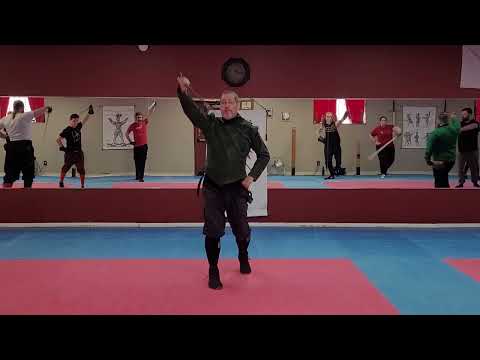
Bolognese Form for Beginners: Walking in the Guards (2023)

0
Standard Fence Walk·Ken Harding - Bolognese Martial Arts·Added by Admin

Our most recent version of Giovanni dall' Agocchie's "Walking in the Guards" (1572). This form contains the essential f

1 video

Изучить технику

Учебных курсов по этой технике пока нет.

Войдите, чтобы предложить курс.

Оценки

Уровень опасности

Риск травмы для человека, к которому применяется техника

3
Умеренный3/10

Sprawls and stuffs involve sudden body weight displacement; knee/hip strain risk

Сложность

Уровень мастерства, необходимый для надёжного выполнения техники

Средний
Допустимость на соревнованиях

Разрешена ли техника по основным соревновательным правилам

Unified MMA — Legal defensive technique
Unified Rules of MMA, August 2025PDF
WBC/Boxing — Legal {srcWBC Rules of Boxing}

Заметки по тренировке

Standard fence walk execution: secure an underhook, turn your back toward the cage, press your upper back into the fence, and incrementally walk your feet underneath you until you can stand (Couture, Wrestling for Fighting, 2007)
Step 1: from a clinch or grounded position against the cage, fight for the underhook on one side
Step 2: turn your body so your upper back presses against the cage fence
Step 3: post your outside foot and begin walking it toward your hips
Step 4: use the cage friction and underhook leverage to incrementally rise
Step 5: once standing, immediately create distance or establish a dominant clinch
The free hand (non-underhook side) frames on the opponent's hip to prevent them from closing distance
The walk must be patient and incremental — each step gains a few inches of height
Elite MMA fighters drill the fence walk hundreds of times — it's a skill that wins fights against superior wrestlers
The fence walk succeeds through persistence — it may take 15-30 seconds of continuous effort against a strong opponent
Типичные ошибки

!Trying to stand up in one explosive movement — the fence walk is incremental; one big movement is easily countered
!Not using the underhook actively — the underhook doesn't just sit there; use it to control the opponent's shoulder as you rise
!Pressing the lower back against the cage instead of the upper back — the upper back provides the correct angle for the walk
!Walking the feet without maintaining cage contact — if your back leaves the cage, you lose the structural advantage
!Not framing with the free hand on the opponent's hip — without the frame, the opponent can press in and stall the walk
!Giving up after one failed attempt — the fence walk often requires multiple attempts; persist
!Standing up but not immediately creating distance — the opponent will simply re-press you to the cage if you stay close

Связанные техники

Контрприёмы

Цепочка подготовки

1Anticipate the Attackread the opponent's intention through body cues
2Execute Defenceapply the specific defensive technique with proper timing
3Recover Stancereturn to a balanced fighting position immediately
4Counter or Disengagecapitalize on the opening or create safe distance

Источники и ссылки

Основной источник

Jiu-Jitsu University (Saulo Ribeiro, 2008)

1КнигаFreestyle Wrestling (Petrov, 1977)

Alias sources — [1] MMA Instruction Manual (Ryan & Snowden, 2010) [2] MMA Instruction Manual (Ryan & Snowden, 2010) [3] MMA Instruction Manual (Ryan & Snowden, 2010)

2КнигаWrestling Physical Conditioning Encyclopedia (Cejudo & Holliday, 2015)

Effectiveness sources — [1] MMA Instruction Manual (Ryan & Snowden, 2010) [2] MMA Instruction Manual (Ryan & Snowden, 2010)

3ДругоеJapanese Combat Sports Katakana Convention

Standard katakana transliteration of Western martial arts terminology (外来語) — used in Japanese MMA, boxing, and BJJ communities

4ЦитатаFreestyle Wrestling (Petrov, 1977)

Alias sources — [1] MMA Instruction Manual (Ryan & Snowden, 2010) [2] MMA Instruction Manual (Ryan & Snowden, 2010) [3] MMA Instruction Manual (Ryan & Snowden, 2010)

5ЦитатаWrestling Physical Conditioning Encyclopedia (Cejudo & Holliday, 2015)

Effectiveness sources — [1] MMA Instruction Manual (Ryan & Snowden, 2010) [2] MMA Instruction Manual (Ryan & Snowden, 2010)

Сообщество

Атлетизм

Requires

structural arm strength, forearm density, timing

Favours

strong arms and elbows for load-bearing frames

Key muscles

triceps, deltoids, forearms, core

Часто задаваемые вопросы

What role does hip motion play in the Standard Fence Walk?

Hip motion is essential to generate power in your cuts during the fence walk. Ken Harding demonstrates that proper hip engagement allows you to transition smoothly between strikes and follow-up techniques.

How do I transition from a cut in the Standard Fence Walk into the next technique?

After executing your cut with proper hip motion, turn around and transition into the next guard position or technique, such as moving into kurunga alto or setting up for a reverse cut. Ken Harding shows this involves rotating your body to flow into the subsequent movement.

Как работает Standard Fence Walk?

The Standard Fence Walk positions the upper back against the cage fence, plants both feet underneath the body, and uses a combination of leg drive and fence friction to push up to standing while maintaining a defensive frame against the opponent. The defender typically posts one hand on the mat and uses the other to control the opponent's head or arm, then walks the feet close to the body and drives upward along the fence.

Откуда происходит Standard Fence Walk?

The standard fence walk became one of the most commonly used defensive techniques in MMA, developed through the practical experience of cage fighting and refined through coaching methodology. It is now standard curriculum in MMA ground defence programmes.

Разрешён ли Standard Fence Walk на соревнованиях?

Unified MMA: разрешён — Legal defensive technique; IBJJF: разрешён — Legal; IJF: разрешён — Legal defensive action; WBC/Boxing: разрешён — Legal; WKF: разрешён — Legal; WT: разрешён — Legal

Насколько опасен Standard Fence Walk?

Оценка опасности 3/10. Moderate — sprawls and stuffs involve sudden body weight displacement; knee/hip strain risk

Как подготовить Standard Fence Walk?

Стандартная цепочка подготовки: Anticipate the Attack → Execute Defence → Recover Stance → Counter or Disengage.

Как защититься от Standard Fence Walk?

Стандартные контрприёмы: Timing — attack when the defence is recovering or between movements / Feint — use deception to create openings in the defensive structure / Angle Change — attack from an unexpected angle that the defence does not cover.

Какие есть варианты Standard Fence Walk?

Распространённые варианты: Standard defence (primary defensive technique from the most common position); Reactive defence (triggered by the opponent's attack, minimal movement for …); Proactive defence (anticipating the attack and positioning to neutralise it …); Counter defence (using the defensive movement to create an immediate count…).

Насколько эффективен Standard Fence Walk на соревнованиях?

Georges St-Pierre's fence walk stand-up was a critical component of his defensive grappling, allowing him to return to his feet when taken down against the cage during his welterweight championship reign.

Какие типичные ошибки при выполнении Standard Fence Walk?

Основные ошибки, на которые стоит обратить внимание: Trying to stand up in one explosive movement — the fence walk is incremental; one big movement is easily countered / Not using the underhook actively — the underhook doesn't just sit there; use it to control the opponent's shoulder as… / Pressing the lower back against the cage instead of the upper back — the upper back provides the correct angle for th… / Walking the feet without maintaining cage contact — if your back leaves the cage, you lose the structural advantage.

Какие ещё названия есть у Standard Fence Walk?

Standard Fence Walk также известен как Sutandādo Fensu Wōku, Basic Wall Walk, Standard Cage Stand-Up, Fence Walk-Up.