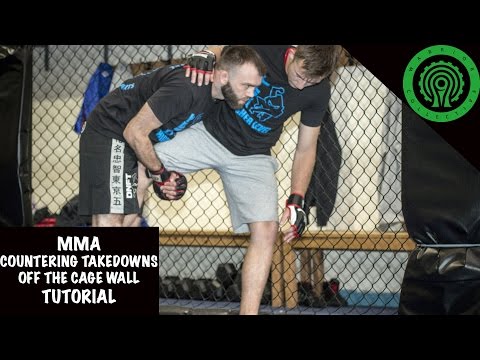
MMA Countering Takedown Defence against the Cage Wall Tutorial
0
Cage-Wall Takedown Defence·Stuart Tomlinson
James Doolan, Pro Fighter and head coach of Higher Level Martial Arts in Whitburn is here filmed by the Warrior Collecti…
Перевод: cage-wall takedown defence
The Cage-Wall Takedown Defence family covers defensive techniques specific to defending takedowns when pressed against the cage wall or fence in MMA competition. [1] Cage takedown defence is a distinct tactical challenge because the wall prevents the defender from retreating, changes the dynamics of sprawling, and creates unique positional scenarios not found in open-mat wrestling. [1],[2] This family includes cage bracing (using the cage for support and leverage) and fence walk stand-ups (using the cage to facilitate returning to the feet). [2],[3]
Cage-specific takedown defence developed entirely within MMA, as fighters discovered that the fence created unique defensive challenges and opportunities not addressed by traditional wrestling defence. [1] Fighters and coaches developed systematic cage defence methods during the 2000s as MMA coaching became more specialised. [2],[3]
Cage and wall takedown defence uses the cage as a brace to resist takedowns and work back to standing. [1]
Cage takedown defence was developed in MMA cage fighting. [1]
Cage defence is critical in MMA competition. [1]
Изображений для этой техники пока нет.
Войдите, чтобы предложить изображение.
James Doolan, Pro Fighter and head coach of Higher Level Martial Arts in Whitburn is here filmed by the Warrior Collecti…
Учебных курсов по этой технике пока нет.
Войдите, чтобы предложить курс.
Риск травмы для человека, к которому применяется техника
Sprawls and stuffs involve sudden body weight displacement; knee/hip strain risk
Уровень мастерства, необходимый для надёжного выполнения техники
Разрешена ли техника по основным соревновательным правилам
Freestyle Wrestling: A Complete Guide for Coaches and Wrestlers (Petrov, 1977)
Alias sources — [1] Wrestling for Fighting (Couture, 2007) [2] MMA Instruction Manual (UFC, 2008) [3] MMA Instruction Manual (UFC, 2008)
Effectiveness sources — [1] Wrestling for Fighting (Couture, 2007)
Mixed Japanese-Western terminology — combines traditional Japanese terms with katakana loanwords
Alias sources — [1] Wrestling for Fighting (Couture, 2007) [2] MMA Instruction Manual (UFC, 2008) [3] MMA Instruction Manual (UFC, 2008)
Effectiveness sources — [1] Wrestling for Fighting (Couture, 2007)
reaction speed, explosive hip extension, downward driving force
long legs for quick sprawl, heavy upper body
hip extensors, glutes, core, shoulders (dead weight)
Каждое движение в любом боевом искусстве обладает рядом универсальных свойств. Комбинируйте параметры ниже, чтобы найти нужный инструмент или сравнить аналоги из разных стилей.
The Cage Brace Defence subfamily covers techniques where the defender uses the cage fence or wall as a structural support to resist takedown attempts, bracing against the cage to maintain standing position. [1] Cage bracing uses the vertical surface as a prop that helps maintain balance and provides a surface to push off from, compensating for the positional disadvantage of being pressed against the fence. [1,2] The defender hooks the cage with the hands or presses the back against it while working to establish underhooks and create separation. [2,3]
The Fence Walk Stand-Up subfamily covers techniques for using the cage fence as support to stand up from a downed position against the cage wall. [1] The fence walk uses the vertical surface as a prop — the defender places the back or shoulders against the fence and walks the feet underneath the body, using the friction and support of the cage to rise to standing. [1,2] The fence walk is the most common method of standing up in MMA when an opponent has achieved a takedown against the cage. [2,3]
Cage/wall takedown defense uses the wall surface for support — the defender braces against the wall, maintains underhooks, and works to separate or stand up. A critical MMA-specific skill that doesn't exist in open-mat grappling. (MMA training manuals; The Ultimate MMA Training Guide)
Keep your head on the inside and switch to attacking quickly rather than chasing your opponent's movements, which will break your posture and drain your energy. Stuart Tomlinson emphasizes switching off the defence as fast as possible to avoid getting weighed down.
Hide your elbow down and punch through their grip to back them up, then shoot for a single leg takedown against the fence. This counter-offensive approach turns their attack into an opportunity for you to finish with various options from the single-leg position.
The Cage-Wall Takedown Defence family covers defensive techniques specific to defending takedowns when pressed against the cage wall or fence in MMA competition. Cage takedown defence is a distinct tactical challenge because the wall prevents the defender from retreating, changes the dynamics of sprawling, and creates unique positional scenarios not found in open-mat wrestling.
Cage-specific takedown defence developed entirely within MMA, as fighters discovered that the fence created unique defensive challenges and opportunities not addressed by traditional wrestling defence. Fighters and coaches developed systematic cage defence methods during the 2000s as MMA coaching became more specialised.
Unified MMA: разрешён — Legal defensive technique; IBJJF: разрешён — Legal; IJF: разрешён — Legal defensive action; WBC/Boxing: разрешён — Legal; WKF: разрешён — Legal; WT: разрешён — Legal
Оценка опасности 3/10. Moderate — sprawls and stuffs involve sudden body weight displacement; knee/hip strain risk
Стандартная цепочка подготовки: Anticipate the Attack → Execute Defence → Recover Stance → Counter or Disengage.
Стандартные контрприёмы: Timing — attack when the defence is recovering or between movements / Feint — use deception to create openings in the defensive structure / Angle Change — attack from an unexpected angle that the defence does not cover.
Распространённые варианты: Full sprawl (both legs kicked back, hips dropped to the mat); Half sprawl (one leg back while the other posts for balance); Sprawl to front headlock (sprawling and immediately securing head control).
Cage defence is critical in MMA competition.
Основные ошибки, на которые стоит обратить внимание: Allowing your back to be flat against the cage — hips must be forward, creating space between your lower back and the… / Relying on the cage to hold you up instead of actively defending — the cage assists but doesn't replace technique / Not hand-fighting against the cage — active hands are even more important in cage clinch situations / Trying to sprawl against the cage — there's no room to sprawl; use underhooks, whizzers, and wall walks instead.
Cage-Wall Takedown Defence также известен как Kēji Kabe Teikudaun Difensu, Cage Defence, Fence Defence, Wall Takedown Defence.