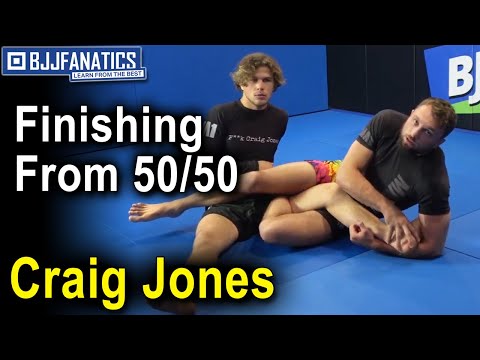
Finishing From 50/50: CRAIG JONES BJJ Techqniques
0
Standard Fifty-Fifty·BJJ Fanatics·Added by Admin
FINISHING FROM 50/50 BY CRAIG JONES // In this BJJ Techniques video, Craig Jones teaches Finishing From 50/50. Craig J…
Перевод: standard fifty-fifty
The Standard Fifty-Fifty positions both fighters with one underhook and one overhook each, heads positioned on the underhook side, with hips squared and active. [1] The position is neutral — both fighters have equal opportunity to advance to double underhooks, transition to body locks, or initiate takedowns from their underhook side. [1],[2] Success in the standard fifty-fifty depends on pummelling speed, hip pressure, and the ability to chain offensive moves faster than the opponent can counter. [2],[3]
The standard fifty-fifty is wrestling's default clinch engagement, occurring in virtually every match and training session. [1] Pummelling drills — the systematic practice of fighting for underhooks from the fifty-fifty position — are among the most fundamental exercises in wrestling training. [2],[3]
The standard fifty-fifty clinch (one overhook, one underhook each) is a neutral clinch position where neither fighter has dominant control, creating a dynamic scramble for advantage. [1]
The fifty-fifty is the most common neutral clinch position in wrestling and MMA. [1]
The standard fifty-fifty clinch position occurs in nearly every wrestling and MMA bout, making it one of the most common competitive positions in combat sports. [1]
Изображений для этой техники пока нет.
Войдите, чтобы предложить изображение.
FINISHING FROM 50/50 BY CRAIG JONES // In this BJJ Techniques video, Craig Jones teaches Finishing From 50/50. Craig J…
Учебных курсов по этой технике пока нет.
Войдите, чтобы предложить курс.
Риск травмы для человека, к которому применяется техника
Upper body clinch positions for control and transitions
Уровень мастерства, необходимый для надёжного выполнения техники
Разрешена ли техника по основным соревновательным правилам
Freestyle Wrestling: A Complete Guide for Coaches and Wrestlers (Petrov, 1977)
Alias sources — [1] Wrestling Physical Conditioning Encyclopedia (Welker, 2010) [2] Clinch Fighting for MMA (Couture, 2011) [3] Freestyle Wrestling: A Complete Guide (Petrov, 2005)
Effectiveness sources — [1] Wrestling Physical Conditioning Encyclopedia (Petrov, 1977)
Standard katakana transliteration of Western martial arts terminology (外来語) — used in Japanese MMA, boxing, and BJJ communities
Alias sources — [1] Wrestling Physical Conditioning Encyclopedia (Welker, 2010) [2] Clinch Fighting for MMA (Couture, 2011) [3] Freestyle Wrestling: A Complete Guide (Petrov, 2005)
Effectiveness sources — [1] Wrestling Physical Conditioning Encyclopedia (Petrov, 1977)
swimming speed for inside position, shoulder drive, hip pressure
strong shoulders and low centre of gravity
deltoids, pectorals, core, quadriceps
Craig Jones emphasizes finishing on your side rather than flat on your back, similar to how you'd finish from the saddle. This prevents your opponent from being able to grab your head and fight your hands during the finish.
Finishing square exposes you to hand fighting—your opponent can grab your head and defend against the submission. By finishing on your side, you keep distance from their hands and maintain control of the heel.
The Standard Fifty-Fifty positions both fighters with one underhook and one overhook each, heads positioned on the underhook side, with hips squared and active. The position is neutral — both fighters have equal opportunity to advance to double underhooks, transition to body locks, or initiate takedowns from their underhook side.
The standard fifty-fifty is wrestling's default clinch engagement, occurring in virtually every match and training session. Pummelling drills — the systematic practice of fighting for underhooks from the fifty-fifty position — are among the most fundamental exercises in wrestling training.
Unified MMA: разрешён — Legal — clinching is integral to MMA; IJF: разрешён — Legal — kumi-kata (grip fighting) is fundamental to judo; IBJJF: разрешён — Legal — standing grip fighting and clinch work permitted; IFMA: разрешён — Legal — the clinch is a core element of Muay Thai, clinch dominance is highly…; WBC/Boxing: ограничен — Holding is technically a foul — referee breaks clinch, excessive holding resu…; K: ограничен — 1/GLORY — One attack from clinch allowed, then referee breaks; WAKO: ограничен — Clinch generally broken by referee — limited or no clinch fighting in most fo…; UWW: разрешён — Legal — clinch is fundamental to wrestling, the primary position in Greco-Roman
Оценка опасности 4/10. Moderate — upper body clinch positions for control and transitions
Стандартная цепочка подготовки: Close Distance → Establish Primary Grip → Position the Hips → Apply Pressure.
Стандартные контрприёмы: Pummeling — fight for inside position by swimming arms under opponent's grips / Frame and Push — create distance using forearm frames against the chest or neck / Grip Break — systematically strip the opponent's controlling grips / Posture Up — straighten the spine and drive the hips forward to break clinch control.
Распространённые варианты: Single underhook (one arm inside for angle and control); Double underhooks (both arms inside for maximum inside position); Underhook with collar tie (combining the underhook with head control).
The standard fifty-fifty clinch position occurs in nearly every wrestling and MMA bout, making it one of the most common competitive positions in combat sports.
Основные ошибки, на которые стоит обратить внимание: Pummelling only when you think about it — the pummel must be a constant, reflexive effort / Not timing the pummel to the opponent's movement — a pummel against a set opponent is harder than one during their tr… / Keeping the overhook elbow high — when pummelling, the elbow must drop and swim inside / Not using the head to help the pummel — push your head into the opponent's shoulder on the pummelling side.
Standard Fifty-Fifty также известен как Sutandādo Fifuti Fifuti, Basic Fifty-Fifty, Standard Over-Under, Fundamental 50/50 Clinch.