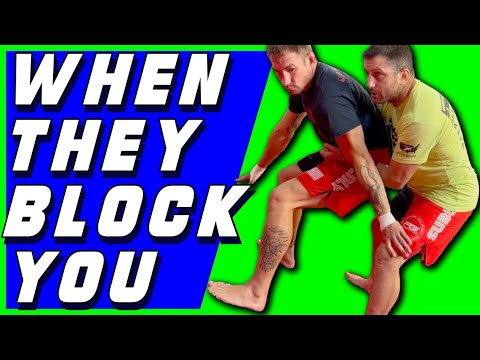
Rear Standing TAKEDOWN Combo!
0
Rear Waist Lock·TeachMeGrappling Coach Brian
This video I breakdown a follow up to a lift from the rear standing position. Check out the details and you are sure to…
Перевод: rear waist lock
The Rear Waist Lock subfamily positions the locked grip around the opponent's waist from behind, with the attacker's chest against the opponent's lower back. [1] The rear waist lock is the standard control position for par terre wrestling and standing rear clinch situations, providing direct control of the opponent's hip line from the back. [1],[2] From the rear waist lock, the attacker can execute gut wrenches, mat returns, rear lifts, and suplex variations. [2],[3]
The rear waist lock is the highest-percentage clinch position for suplex throws and mat returns in Greco-Roman wrestling. [1]
The rear waist lock is the defining position of Greco-Roman par terre work. [1]
Rear waist lock gut-wrenches and suplexes are the primary scoring methods in Greco-Roman par terre at Olympic level. [1]
Изображений для этой техники пока нет.
Войдите, чтобы предложить изображение.
This video I breakdown a follow up to a lift from the rear standing position. Check out the details and you are sure to…
Учебных курсов по этой технике пока нет.
Войдите, чтобы предложить курс.
Риск травмы для человека, к которому применяется техника
Body clinch positions enable throws and takedowns; rib compression risk
Уровень мастерства, необходимый для надёжного выполнения техники
Разрешена ли техника по основным соревновательным правилам
Freestyle Wrestling: A Complete Guide for Coaches and Wrestlers (Petrov, 1977)
Alias sources — [1] Wrestling Physical Conditioning Encyclopedia (Welker, 2010) [2] Greco-Roman Wrestling (Petrov, 1987) [3] Kodokan Judo (Kano, 1986)
Effectiveness sources — [1] Wrestling Physical Conditioning Encyclopedia (Petrov, 1977)
Established Japanese martial arts naming convention — native Japanese term (和語/漢語)
Alias sources — [1] Wrestling Physical Conditioning Encyclopedia (Welker, 2010) [2] Greco-Roman Wrestling (Petrov, 1987) [3] Kodokan Judo (Kano, 1986)
Effectiveness sources — [1] Wrestling Physical Conditioning Encyclopedia (Petrov, 1977)
grip strength, upper body endurance, balance under pressure
strong arms and shoulders, stable base
forearms, deltoids, core, hip muscles
Каждое движение в любом боевом искусстве обладает рядом универсальных свойств. Комбинируйте параметры ниже, чтобы найти нужный инструмент или сравнить аналоги из разных стилей.
The rear waist lock (back clinch) is the primary position for suplex throws in Greco-Roman wrestling and for lift-and-slam takedowns in MMA. Control is maintained with clasped hands around the opponent's waist from behind. (FILA/UWW Greco-Roman wrestling manuals)
Coach Brian from TeachMeGrappling emphasizes doing everything together dynamically: step over, pop them, lift them, and turn them sideways all at once rather than doing these movements separately.
According to Coach Brian, one of the most common defenses is when the opponent won't step and blocks your leg, preventing you from stepping in front or lifting. Understanding these defensive reactions is critical so you can chain your attacks together like chess moves.
Coach Brian stresses that you must always have a backup move ready because your opponent will defend against your first attack. If he defends move number one, you need move number two—this is fundamental to grappling strategy.
Coach Brian notes that keeping a tight lock is critical—if you maintain proper hand positioning, the rear waist lock will still work even if you're trying to lift from a reversed angle.
The Rear Waist Lock subfamily positions the locked grip around the opponent's waist from behind, with the attacker's chest against the opponent's lower back. The rear waist lock is the standard control position for par terre wrestling and standing rear clinch situations, providing direct control of the opponent's hip line from the back.
The rear waist lock is one of the most fundamental positions in all wrestling, central to both standing and par terre phases of Greco-Roman and freestyle competition. It has been a primary control and attacking position since the earliest codified wrestling rules.
Unified MMA: разрешён — Legal — clinching is integral to MMA; IJF: разрешён — Legal — kumi-kata (grip fighting) is fundamental to judo; IBJJF: разрешён — Legal — standing grip fighting and clinch work permitted; IFMA: разрешён — Legal — the clinch is a core element of Muay Thai, clinch dominance is highly…; WBC/Boxing: ограничен — Holding is technically a foul — referee breaks clinch, excessive holding resu…; K: ограничен — 1/GLORY — One attack from clinch allowed, then referee breaks; WAKO: ограничен — Clinch generally broken by referee — limited or no clinch fighting in most fo…; UWW: разрешён — Legal — clinch is fundamental to wrestling, the primary position in Greco-Roman
Оценка опасности 4/10. Moderate — body clinch positions enable throws and takedowns; rib compression risk
Стандартная цепочка подготовки: Close Distance → Establish Primary Grip → Position the Hips → Apply Pressure.
Стандартные контрприёмы: Pummeling — fight for inside position by swimming arms under opponent's grips / Frame and Push — create distance using forearm frames against the chest or neck / Grip Break — systematically strip the opponent's controlling grips / Posture Up — straighten the spine and drive the hips forward to break clinch control.
Распространённые варианты: Standard variation (primary clinch configuration from the most common entry); Gi variation (adapted with collar and sleeve grips for gi-based grappling); No-gi / MMA variation (modified for no-gi or cage fighting conditions); Offensive variation (configured to set up strikes, takedowns, or submissions f…).
Rear waist lock gut-wrenches and suplexes are the primary scoring methods in Greco-Roman par terre at Olympic level.
Основные ошибки, на которые стоит обратить внимание: Locking too high on the back — the grip must be at the hip bones for optimal leverage / Kneeling directly behind the opponent instead of offset to one side — angle yourself slightly to create a throwing di… / Not maintaining chest contact on the opponent's back — your weight must press down on them / Holding the lock from par terre without chaining attacks — the referee will restart for passivity.
Rear Waist Lock также известен как Ushiro Koshi-gatame, Rear Waist Clinch, Back Waist Grip, Ushiro-Koshi-Kumi.