Blocking Knees From Clinch
0
Body Clinch·Personal Training Tactics by Don Kaecher
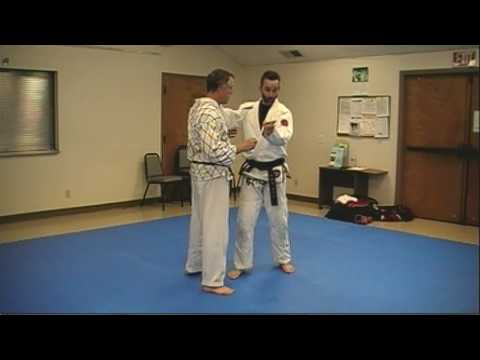
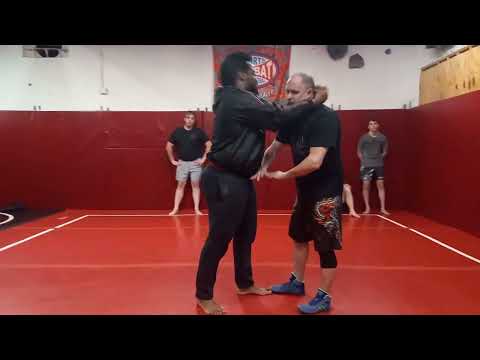
Proper head posture is important when getting clinched. Here we demonstrate proper head posture along with a few techniq…
Перевод: body clinch
The Body Clinch group comprises all standing clinch positions where the attacker's arms encircle the opponent's torso, creating direct body-to-body contact and control. [1] Body clinch positions provide the strongest physical connection between fighters, allowing the controller to directly manipulate the opponent's centre of gravity through lifting, squeezing, and directional pressure. [1],[2] This group includes bear hugs (arms encircling with locked grip), body locks (tight torso encirclement), and waist locks (grip focused around the hips), each offering different levels of control and offensive options. [2],[3] Body clinch positions are the foundation of Greco-Roman wrestling, where all attacks must originate from above the waist. [3]
Body clinch positions are among the most primal grappling techniques, depicted in the earliest known wrestling art from ancient Mesopotamia and Egypt. [1] The formalisation of body clinch work reached its peak in Greco-Roman wrestling, codified in 19th-century France and included in the first modern Olympic Games in 1896. [2] Every major wrestling tradition — Turkish oil wrestling, Mongolian bökh, Georgian chidaoba — places heavy emphasis on body clinch control. [2],[3]
Body lock takedowns are among the most common takedown methods in Greco-Roman wrestling at the Olympic level. [1]
Изображений для этой техники пока нет.
Войдите, чтобы предложить изображение.
Proper head posture is important when getting clinched. Here we demonstrate proper head posture along with a few techniq…
Demonstration of various takedowns from the clinch position.
Учебных курсов по этой технике пока нет.
Войдите, чтобы предложить курс.
Риск травмы для человека, к которому применяется техника
Body clinch positions enable throws and takedowns; rib compression risk
Уровень мастерства, необходимый для надёжного выполнения техники
Разрешена ли техника по основным соревновательным правилам
Freestyle Wrestling: A Complete Guide for Coaches and Wrestlers (Petrov, 1977)
Alias sources — [1] Greco-Roman Wrestling (Petrov, 1987) [2] Wrestling Physical Conditioning Encyclopedia (Welker, 2010) [3] Wrestling for Fighting (Couture, 2007)
Effectiveness sources — [1] Wrestling Physical Conditioning Encyclopedia (Petrov, 1977) [2] Kodokan Judo (Kano, 1986)
Standard katakana transliteration of Western martial arts terminology (外来語) — used in Japanese MMA, boxing, and BJJ communities
Alias sources — [1] Greco-Roman Wrestling (Petrov, 1987) [2] Wrestling Physical Conditioning Encyclopedia (Welker, 2010) [3] Wrestling for Fighting (Couture, 2007)
Effectiveness sources — [1] Wrestling Physical Conditioning Encyclopedia (Petrov, 1977) [2] Kodokan Judo (Kano, 1986)
arm length to wrap the torso, squeeze strength, hip drive
long arms and strong grip, powerful lower back
biceps, pectorals, forearms, erector spinae, glutes
Каждое движение в любом боевом искусстве обладает рядом универсальных свойств. Комбинируйте параметры ниже, чтобы найти нужный инструмент или сравнить аналоги из разных стилей.
The Bear Hug family covers clinch positions where the attacker wraps both arms around the opponent's torso and squeezes, using the encircling grip to compress and control the opponent's body. [1] Bear hugs are distinguished from body locks by the emphasis on squeezing force rather than locked grip mechanics — the bear hug uses muscular compression to restrict the opponent's breathing, mobility, and defensive options. [1,2] Bear hugs can be applied over the arms (pinning the opponent's arms to their sides) or under the arms (allowing the opponent's arms to remain free), each creating different tactical dynamics. [2,3]
The Body Lock family encompasses clinch positions where the attacker secures a tight, locked grip around the opponent's torso, with the emphasis on the lock configuration of the hands rather than compressive squeezing force. [1] Body locks differ from bear hugs in their focus on grip mechanics — the locked hands create a fixed connection that prevents the opponent from separating, while the body positioning (front, rear, or side) determines the available attacks. [1,2] Body lock positions are the primary platform for body lock takedowns, gut wrenches, and clinch throws in both wrestling and MMA. [2,3]
The Waist Lock family covers clinch positions where the attacker's locked grip is specifically positioned around the opponent's waist or hip line, providing direct control of the opponent's centre of gravity. [1] The waist lock is distinguished from the broader body lock by its specific focus on the waist-hip area, where controlling the opponent's base and balance is most effective. [1,2] Waist locks are the foundation of many wrestling takedown and return techniques, as hip control directly determines an opponent's ability to maintain balance and base. [2,3]
Body clinch techniques — bear hugs, body locks, waist locks — wrap around the opponent's torso for maximum control. Bear hug appears in 256 passages across 74 books. The body lock is the foundation of Greco-Roman wrestling where leg attacks are prohibited. (74+ books; FILA/UWW Greco-Roman manuals; wrestling texts)
Your head should rest on your opponent's chest rather than looking down at the ground. According to Don Kaecher, if you look down, your opponent can throw you more easily. Keeping your head up and in contact with him allows you to work on movement and defense while blocking knee strikes.
Close the distance by moving your hips tight against your opponent's hips—if your hips are pressed against theirs, they lose their base and balance needed to throw effective knees. Don Kaecher also recommends using a limbo-like hip movement, dropping your hips back as they pull you in to defend the thigh clinch.
Your arms can become pinned between your bodies when your opponent achieves a good body wrap, limiting your options. According to Don Kaecher, this arm positioning is a key advantage for the person controlling the clinch.
The Body Clinch group comprises all standing clinch positions where the attacker's arms encircle the opponent's torso, creating direct body-to-body contact and control. Body clinch positions provide the strongest physical connection between fighters, allowing the controller to directly manipulate the opponent's centre of gravity through lifting, squeezing, and directional pressure.
Body clinch positions are among the most primal grappling techniques, depicted in the earliest known wrestling art from ancient Mesopotamia and Egypt. The formalisation of body clinch work reached its peak in Greco-Roman wrestling, codified in 19th-century France and included in the first modern Olympic Games in 1896.
Unified MMA: разрешён — Legal — clinching is integral to MMA; IJF: разрешён — Legal — kumi-kata (grip fighting) is fundamental to judo; IBJJF: разрешён — Legal — standing grip fighting and clinch work permitted; IFMA: разрешён — Legal — the clinch is a core element of Muay Thai, clinch dominance is highly…; WBC/Boxing: ограничен — Holding is technically a foul — referee breaks clinch, excessive holding resu…; K: ограничен — 1/GLORY — One attack from clinch allowed, then referee breaks; WAKO: ограничен — Clinch generally broken by referee — limited or no clinch fighting in most fo…; UWW: разрешён — Legal — clinch is fundamental to wrestling, the primary position in Greco-Roman
Оценка опасности 4/10. Moderate — body clinch positions enable throws and takedowns; rib compression risk
Стандартная цепочка подготовки: Close Distance → Establish Primary Grip → Position the Hips → Apply Pressure.
Стандартные контрприёмы: Pummeling — fight for inside position by swimming arms under opponent's grips / Frame and Push — create distance using forearm frames against the chest or neck / Grip Break — systematically strip the opponent's controlling grips / Posture Up — straighten the spine and drive the hips forward to break clinch control.
Распространённые варианты: Front body lock (locked hands around the torso face-to-face); Rear body lock (hands locked around the torso from behind); Side body lock (angled body lock for trips and throws); Over-arms body lock (locking over both arms to pin the opponent's arms to thei…).
Body lock takedowns are among the most common takedown methods in Greco-Roman wrestling at the Olympic level.
Основные ошибки, на которые стоит обратить внимание: Locking hands too high on the chest instead of at the waist — waist-level locks provide better leverage for throws / Leaving space between your chest and the opponent's body — they create frames and escape / Interlacing fingers instead of using a Gable grip (palm-to-palm) — fingers break under load / Holding the body lock without attacking — you fatigue faster than the defender in a static body lock.
Body Clinch также известен как Bodi Kurinchi, Body Lock Position, Bear Hug Position, Torso Clinch.