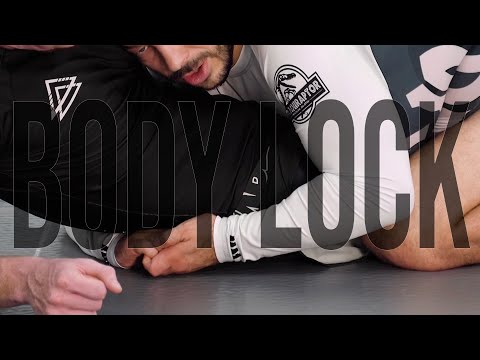
The Body Lock Grip
0
Side Body Lock·Absolute MMA St Kilda - Melbourne
The most common error I see in people using the body lock is incorrect grip placement. This video gives a rationale for …
Перевод: side body lock
The Side Body Lock subfamily covers positions where the attacker locks the grip around the opponent's torso from a lateral position, with the attacker's hip against the opponent's hip. [1] The side body lock creates a unique mechanical dynamic where the attacker can use their hip as a fulcrum for rotational throws and takedowns, leveraging the lateral angle to topple the opponent sideways. [1],[2] Side body lock positions commonly arise during transitions when front or rear body locks are partially defended and the fighters end up in a lateral configuration. [2],[3]
Side body lock positions have been part of wrestling systems as transitional clinch positions that occur naturally during body lock scrambles. [1] The position gained recognition as a distinct clinch category as coaches identified reliable offensive techniques available from the lateral angle. [2],[3]
The side body lock provides an angular clinch position that enables hip throws, trips, and lateral takedowns. [1]
Side body lock is used across wrestling, judo, and MMA as a transitional clinch position. [1]
The side body lock is used in Greco-Roman and freestyle wrestling to attack from an angular position, setting up lateral trips and lateral drop throws in competition. [1]
Изображений для этой техники пока нет.
Войдите, чтобы предложить изображение.
The most common error I see in people using the body lock is incorrect grip placement. This video gives a rationale for …
Учебных курсов по этой технике пока нет.
Войдите, чтобы предложить курс.
Риск травмы для человека, к которому применяется техника
Body clinch positions enable throws and takedowns; rib compression risk
Уровень мастерства, необходимый для надёжного выполнения техники
Разрешена ли техника по основным соревновательным правилам
Freestyle Wrestling: A Complete Guide for Coaches and Wrestlers (Petrov, 1977)
Alias sources — [1] Wrestling Physical Conditioning Encyclopedia (Welker, 2010) [2] Clinch Fighting for MMA (Couture, 2011) [3] Kodokan Judo (Kano, 1986)
Effectiveness sources — [1] Wrestling Physical Conditioning Encyclopedia (Petrov, 1977)
Standard katakana transliteration of Western martial arts terminology (外来語) — used in Japanese MMA, boxing, and BJJ communities
Alias sources — [1] Wrestling Physical Conditioning Encyclopedia (Welker, 2010) [2] Clinch Fighting for MMA (Couture, 2011) [3] Kodokan Judo (Kano, 1986)
Effectiveness sources — [1] Wrestling Physical Conditioning Encyclopedia (Petrov, 1977)
arm length to wrap the torso, squeeze strength, hip drive
long arms and strong grip, powerful lower back
biceps, pectorals, forearms, erector spinae, glutes
Каждое движение в любом боевом искусстве обладает рядом универсальных свойств. Комбинируйте параметры ниже, чтобы найти нужный инструмент или сравнить аналоги из разных стилей.
You want to pull the hips tight towards you to maintain control and prevent them from having too much space, which would make it harder to pass their knee line and weaken your grip pressure. According to Absolute MMA St Kilda, you need to ensure you're past the waistline but not positioned too high.
Use an S-grip with your palm facing up on the hand closest to the leg, and position your tricep and armpit as high as possible on the leg so you can apply weight through your forearm and body rather than your hands. Absolute MMA St Kilda emphasizes that the deeper your hand goes, the more pressure you can apply to pull the knee away from the chest.
The body lock connects your hands to your opponent in a way that sticks you together and makes it much harder for them to create space or escape with techniques like underhooks or cross faces, making it one of the most effective methods for passing the guard.
The Side Body Lock subfamily covers positions where the attacker locks the grip around the opponent's torso from a lateral position, with the attacker's hip against the opponent's hip. The side body lock creates a unique mechanical dynamic where the attacker can use their hip as a fulcrum for rotational throws and takedowns, leveraging the lateral angle to topple the opponent sideways.
Side body lock positions have been part of wrestling systems as transitional clinch positions that occur naturally during body lock scrambles. The position gained recognition as a distinct clinch category as coaches identified reliable offensive techniques available from the lateral angle.
Unified MMA: разрешён — Legal — clinching is integral to MMA; IJF: разрешён — Legal — kumi-kata (grip fighting) is fundamental to judo; IBJJF: разрешён — Legal — standing grip fighting and clinch work permitted; IFMA: разрешён — Legal — the clinch is a core element of Muay Thai, clinch dominance is highly…; WBC/Boxing: ограничен — Holding is technically a foul — referee breaks clinch, excessive holding resu…; K: ограничен — 1/GLORY — One attack from clinch allowed, then referee breaks; WAKO: ограничен — Clinch generally broken by referee — limited or no clinch fighting in most fo…; UWW: разрешён — Legal — clinch is fundamental to wrestling, the primary position in Greco-Roman
Оценка опасности 4/10. Moderate — body clinch positions enable throws and takedowns; rib compression risk
Стандартная цепочка подготовки: Close Distance → Secure Both Arms → Clasp Hands → Hip Drive.
Стандартные контрприёмы: Pummeling — fight for inside position by swimming arms under opponent's grips / Frame and Push — create distance using forearm frames against the chest or neck / Grip Break — systematically strip the opponent's controlling grips / Posture Up — straighten the spine and drive the hips forward to break clinch control.
Распространённые варианты: Front body lock (locked hands around the torso face-to-face); Rear body lock (hands locked around the torso from behind); Side body lock (angled body lock for trips and throws); Over-arms body lock (locking over both arms to pin the opponent's arms to thei…).
The side body lock is used in Greco-Roman and freestyle wrestling to attack from an angular position, setting up lateral trips and lateral drop throws in competition.
Основные ошибки, на которые стоит обратить внимание: Not pressing your hip into the opponent's hip — without hip contact, you have no throwing fulcrum / Wrapping too loosely — the lock must be tight to prevent the opponent from turning to face you / Not attacking immediately — the side position is transitional; the opponent will try to face you or turn away / Standing too upright at the side — bend your knees and get your hips below theirs.
Side Body Lock также известен как Saido Bodi Rokku, Side Bear Hug Lock, Lateral Body Lock, Yoko-Kumi.