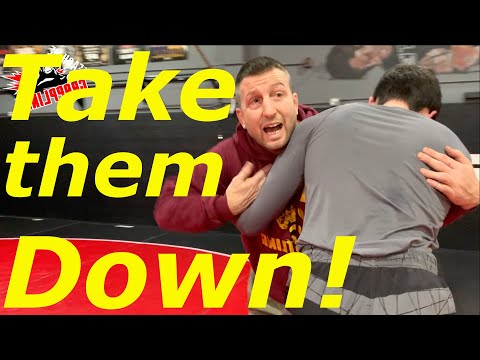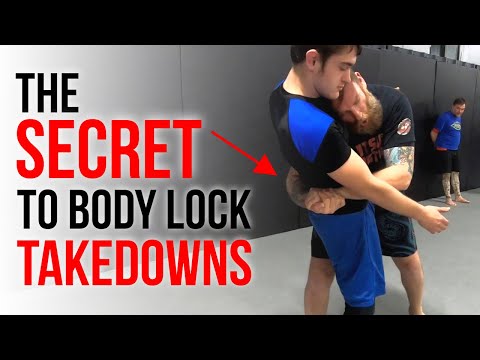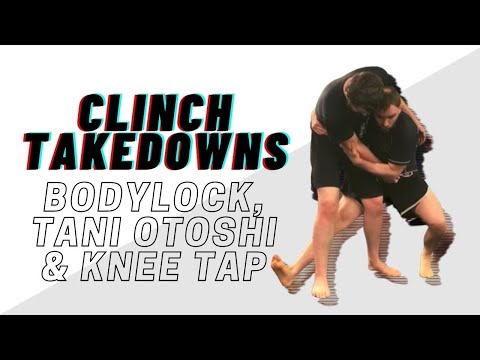
Clinch Takedowns! Bodylock, Tani Otoshi And Knee Taps!
0
Low Front Body Lock·Mick Hall
If you like what you see click Subscribe to see more!
Перевод: low front body lock
The Low Front Body Lock positions the locked grip low on the opponent's torso, around the hips or waist level, with the attacker driving their head into the opponent's chest. [1] The low grip position provides direct control of the opponent's hip line, which is the most critical point for initiating takedowns — controlling the hips controls the base. [1],[2] The low front body lock is the preferred position for body lock takedowns because the attacker can lift, trip, or laterally displace the opponent's hips from this low, powerful position. [2],[3]
The low front body lock wraps around the opponent's hips, used in freestyle and MMA for takedown entries. [1]
Изображений для этой техники пока нет.
Войдите, чтобы предложить изображение.
If you like what you see click Subscribe to see more!
This video I teach my morning class a basic series I like from the pummel position. Check out the details and you are s…
Your body is unique—your training should be too. Take our survey to get a FREE 14-day Jiu-Jitsu plan custom-tailored to …
The low front body lock is established from the clinch after successful pummeling to achieve an underhook position. TeachMeGrappling Coach Brian emphasizes maintaining a high grip on the back of the neck or using an S-grip while keeping elbows in, establishing a solid base to defend against headlock counters. TRITAC Martial Arts identifies the critical target zone as the "kink of the hips"—the space between the floating ribs and hip socket where the hands fit most effectively and leverage is maximized without relying on strength. Both instructors agree that once locked, the grip is secured by bringing the chest over the opponent and using body tension. Mick Hall provides detailed leg mechanics, emphasizing that the rear leg extends straight with the heel to the floor while hip position remains glued close to the opponent to prevent being lifted or extended away. All three instructors teach that the body lock functions as a platform for takedowns: Coach Brian describes lifting through the hips or using trips and knee blocks; TRITAC discusses level drops and leg sweeps; Mick Hall details the lap-pull leg lock combined with sitting into the opponent's buttocks. The technique's power derives not from muscular compression of the back but from positional control at the hip joint, allowing transitions to submissions like the kimura (TRITAC) or knee taps (Mick Hall).
Сформировано на основе 3 инструкторов
Учебных курсов по этой технике пока нет.
Войдите, чтобы предложить курс.
Риск травмы для человека, к которому применяется техника
Body clinch positions enable throws and takedowns; rib compression risk
Уровень мастерства, необходимый для надёжного выполнения техники
Разрешена ли техника по основным соревновательным правилам
Freestyle Wrestling: A Complete Guide for Coaches and Wrestlers (Petrov, 1977)
Alias sources — [1] Greco-Roman Wrestling (Petrov, 1987) [2] Wrestling Physical Conditioning Encyclopedia (Welker, 2010) [3] Clinch Fighting for MMA (Couture, 2011)
Effectiveness sources — [1] Greco-Roman Wrestling (Petrov, 1987) [2] Clinch Fighting for MMA (Couture, 2011)
Standard katakana transliteration of Western martial arts terminology (外来語) — used in Japanese MMA, boxing, and BJJ communities
Alias sources — [1] Greco-Roman Wrestling (Petrov, 1987) [2] Wrestling Physical Conditioning Encyclopedia (Welker, 2010) [3] Clinch Fighting for MMA (Couture, 2011)
Effectiveness sources — [1] Greco-Roman Wrestling (Petrov, 1987) [2] Clinch Fighting for MMA (Couture, 2011)
arm length to wrap the torso, squeeze strength, hip drive
long arms and strong grip, powerful lower back
biceps, pectorals, forearms, erector spinae, glutes
Keep your hips close and don't extend—lock into the hip to stop him from running away. Mick Hall emphasizes blocking his leg so he's forced to step, and maintaining this grip is critical to controlling the position.
Always try to land on top and turn back into it rather than falling backwards. Lock the hip, drag your butt to the mat, and run past his legs—if you run into his legs you risk landing in his guard, but running around them keeps you safe.
Coach Brian recommends coming up into a solid double under position so you have a stable base if your opponent tries to headlock you. If he head blocks you, use both hands to turn up and take a hard snap on the back of the shoulders.
TRITAC Martial Arts notes that once you have a body lock grip, you can transition to taking the back with just a small level change and duck without losing your grip or changing position, or shift to submissions like a Kimura using the same contact point.
The Low Front Body Lock positions the locked grip low on the opponent's torso, around the hips or waist level, with the attacker driving their head into the opponent's chest. The low grip position provides direct control of the opponent's hip line, which is the most critical point for initiating takedowns — controlling the hips controls the base.
The low front body lock has been a primary attacking position in wrestling, particularly valued for its direct access to the opponent's centre of gravity. MMA fighters adopted this position as one of the highest-percentage clinch takedown setups against the cage.
Unified MMA: разрешён — Legal — clinching is integral to MMA; IJF: разрешён — Legal — kumi-kata (grip fighting) is fundamental to judo; IBJJF: разрешён — Legal — standing grip fighting and clinch work permitted; IFMA: разрешён — Legal — the clinch is a core element of Muay Thai, clinch dominance is highly…; WBC/Boxing: ограничен — Holding is technically a foul — referee breaks clinch, excessive holding resu…; K: ограничен — 1/GLORY — One attack from clinch allowed, then referee breaks; WAKO: ограничен — Clinch generally broken by referee — limited or no clinch fighting in most fo…; UWW: разрешён — Legal — clinch is fundamental to wrestling, the primary position in Greco-Roman
Оценка опасности 4/10. Moderate — body clinch positions enable throws and takedowns; rib compression risk
Стандартная цепочка подготовки: Close Distance → Secure Both Arms → Clasp Hands → Hip Drive.
Стандартные контрприёмы: Pummeling — fight for inside position by swimming arms under opponent's grips / Frame and Push — create distance using forearm frames against the chest or neck / Grip Break — systematically strip the opponent's controlling grips / Posture Up — straighten the spine and drive the hips forward to break clinch control.
Распространённые варианты: Front body lock (locked hands around the torso face-to-face); Rear body lock (hands locked around the torso from behind); Side body lock (angled body lock for trips and throws); Over-arms body lock (locking over both arms to pin the opponent's arms to thei…).
The low front body lock clinch is used in wrestling and MMA to control the hips and set up mat returns and body lock takedowns. It is common in cage-fighting situations where the attacker drops their grip level to lift or trip the opponent.
Основные ошибки, на которые стоит обратить внимание: Not bending the knees enough to achieve a true low lock — your hips must be below the opponent's hips / Locking at the belly button level thinking it's low — true low lock is at or below the hip bones / Over-arching the back while in the low position — keep the spine neutral; the legs generate the force / Holding the low lock without immediately attacking — this dominant position should trigger an offensive sequence.
Low Front Body Lock также известен как Rō Furonto Bodi Rokku, Low Waist Body Lock, Low Front Bear Hug, Low Frontal Lock.