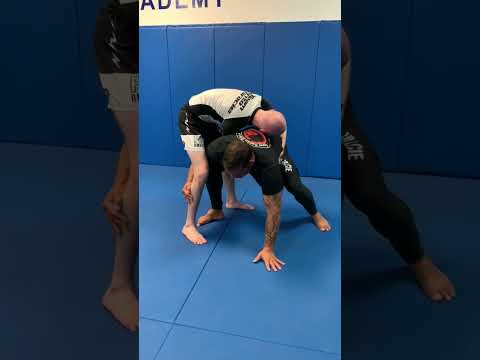
"Unlocking Devastating Submissions: Professor Mark Cerrone's Armdrag Recovery to Inside Ashi Garami
0
Standard Inside Arm Drag·Mark Cerrone
Перевод: standard inside arm drag
The Standard Inside Arm Drag executes the fundamental inside arm drag where the attacker grips the opponent's wrist with the same-side hand and the tricep with the cross hand, then pulls the arm sharply across the opponent's body while stepping to the outside. [1] The drag creates an opening to the opponent's back or side, allowing the attacker to secure a back clinch, collar tie, or takedown entry. [1],[2] Proper execution requires explosive timing — the drag must be fast enough that the opponent cannot retract the arm before the attacker has cleared to the side. [2],[3]
The standard inside arm drag is among the highest-percentage techniques for accessing the opponent's back in both wrestling and no-gi grappling. [1] Petrov describes it as 'one of the most reliable methods for gaining the outside angle,' a position from which the attacker can immediately threaten takedowns or back control. [1] Its effectiveness is amplified by its simplicity — the two-hand grip on wrist and tricep makes it teachable even to beginners. [2]
The standard inside arm drag is a core wrestling technique taught at all levels from youth through Olympic competition, and has been integrated into BJJ and MMA training. [1]
Изображений для этой техники пока нет.
Войдите, чтобы предложить изображение.
Учебных курсов по этой технике пока нет.
Войдите, чтобы предложить курс.
Риск травмы для человека, к которому применяется техника
Arm control positions limit opponent's offense; low direct injury risk
Уровень мастерства, необходимый для надёжного выполнения техники
Разрешена ли техника по основным соревновательным правилам
Freestyle Wrestling: A Complete Guide for Coaches and Wrestlers (Petrov, 1977)
Alias sources — [1] Coaching Youth Wrestling (USA Wrestling, 2005) [2] Freestyle Wrestling: A Complete Guide (Petrov, 2005) [3] Wrestling Physical Conditioning Encyclopedia (Welker, 2010)
Effectiveness sources — [1] Freestyle Wrestling: A Complete Guide (Petrov, 2005) [2] Wrestling Physical Conditioning Encyclopedia (Welker, 2010)
Standard katakana transliteration of Western martial arts terminology (外来語) — used in Japanese MMA, boxing, and BJJ communities
Alias sources — [1] Coaching Youth Wrestling (USA Wrestling, 2005) [2] Freestyle Wrestling: A Complete Guide (Petrov, 2005) [3] Wrestling Physical Conditioning Encyclopedia (Welker, 2010)
Effectiveness sources — [1] Freestyle Wrestling: A Complete Guide (Petrov, 2005) [2] Wrestling Physical Conditioning Encyclopedia (Welker, 2010)
grip strength, upper body endurance, balance under pressure
strong arms and shoulders, stable base
forearms, deltoids, core, hip muscles
The Standard Inside Arm Drag executes the fundamental inside arm drag where the attacker grips the opponent's wrist with the same-side hand and the tricep with the cross hand, then pulls the arm sharply across the opponent's body while stepping to the outside. The drag creates an opening to the opponent's back or side, allowing the attacker to secure a back clinch, collar tie, or takedown entry.
The standard inside arm drag is one of the most fundamental techniques in wrestling, taught at every level from youth programmes to Olympic competition. Its simplicity and effectiveness have made it a universal tool across all grappling disciplines.
Unified MMA: разрешён — Legal — clinching is integral to MMA; IJF: разрешён — Legal — kumi-kata (grip fighting) is fundamental to judo; IBJJF: разрешён — Legal — standing grip fighting and clinch work permitted; IFMA: разрешён — Legal — the clinch is a core element of Muay Thai, clinch dominance is highly…; WBC/Boxing: ограничен — Holding is technically a foul — referee breaks clinch, excessive holding resu…; K: ограничен — 1/GLORY — One attack from clinch allowed, then referee breaks; WAKO: ограничен — Clinch generally broken by referee — limited or no clinch fighting in most fo…; UWW: разрешён — Legal — clinch is fundamental to wrestling, the primary position in Greco-Roman
Оценка опасности 3/10. Moderate — arm control positions limit opponent's offense; low direct injury risk
Стандартная цепочка подготовки: Close Distance → Establish Primary Grip → Position the Hips → Apply Pressure.
Стандартные контрприёмы: Pummeling — fight for inside position by swimming arms under opponent's grips / Frame and Push — create distance using forearm frames against the chest or neck / Grip Break — systematically strip the opponent's controlling grips / Posture Up — straighten the spine and drive the hips forward to break clinch control.
Распространённые варианты: Single collar tie (one hand on the nape controlling the head); Double collar tie (plum) (both hands behind the head for maximum control); Collar tie with wrist control (one hand on the nape, other controlling the wrist).
Marcelo Garcia made the arm drag his signature technique in ADCC competition, using it to win five ADCC World Championships (2003, 2005, 2007, 2009, 2011). Garcia's arm drag to back take became one of the most studied sequences in submission grappling history.
Основные ошибки, на которые стоит обратить внимание: Cross-gripping the wrist without the tricep cup — the two-on-one is essential for control / Pulling the arm but keeping your feet planted — the step is half the technique / Stepping to the inside instead of the outside — you want to get behind the opponent, not in front / Releasing the grips immediately after the pull — maintain control until you've secured the back or underhook.
Standard Inside Arm Drag также известен как Sutandādo Insaido Āmu Doraggu, Basic Inside Arm Drag, Cross Drag, Fundamental Arm Drag.