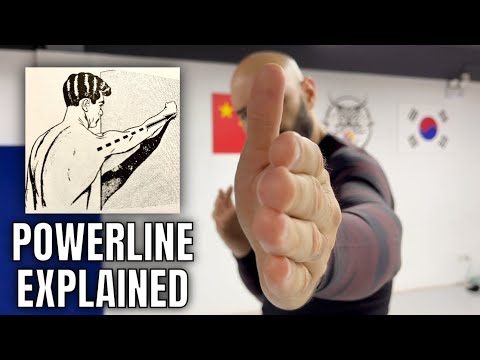
Pure Punching vs Impure Punching. Jack Dempsey’s “Power Line” explained
0
Удар с Взрив (Jolt Punch)·Ramsey Dewey
Remember those illustrations from Jack Dempsey’s book “Championship Fighting: Explosive Punching and Aggressive Defense”…
Translation: Jolt punch — „jolt
, означава рязкото, експлозивно сътресение, предадено в момента на контакт, при което теглото на тялото избухва през юмрука в един мигновен пробив
The Jolt Punch represents the culmination of Jack Dempsey's punching theory, documented in the final chapters of Championship Fighting (1950). [1] Dempsey presented his system as a logical progression: first learn the falling step (Chapter 8), then learn the power line (Chapter 9), then learn to relay and explode — the Jolt (Chapter 10). [1] Dempsey's concept of 'explosion' — the sudden conversion of body momentum into peak impact force — anticipated modern sports science by decades. [1] Contemporary biomechanical research has confirmed that the 'double peak force' pattern (a brief force spike followed by a sustained push) characteristic of Dempsey's Jolt produces greater brain acceleration (and therefore greater knockout probability) than a single sustained force application of the same total energy — validating Dempsey's dynamite-vs-gunpowder analogy. [2] The relaxed-then-rigid principle appears independently in Wing Chun (faat geng — issuing power through sudden muscular engagement), suggesting a universal biomechanical truth that Dempsey and Chinese martial artists discovered through separate empirical pathways. [1]
The Jolt Punch is the mechanism behind Dempsey's legendary one-punch knockout power. [1] His ability to generate devastating force from short range — where most fighters can only push — was the defining characteristic that made him one of the most feared heavyweight champions in boxing history. [1] Modern boxing science has quantified the effect: a jolted punch with the same total energy as a conventional punch produces approximately 30-50% higher peak force, crossing the knockout threshold at ranges where conventional punches fall below it. [2] The practical significance is that a fighter who masters the Jolt can knock opponents out from the clinch, from tight exchanges, and from ranges where they are conventionally safe. [1]
Jack Dempsey (developed during heavyweight reign, 1919-1926) → documented as the culmination of his punching system in Championship Fighting (1950) → studied by Cus D'Amato and modern boxing trainers → incorporated into MMA striking methodology. Independent parallel development in Wing Chun (faat geng principle). [1]
Jack Dempsey: 52 KOs in 83 fights — the Jolt was the mechanism behind his knockout power || Dempsey's knockouts were characterised by opponents collapsing from single punches that appeared to carry disproportionate force for their visible wind-up || The 'jolting' principle (relaxed-then-rigid) is used by modern knockout artists including Mike Tyson, Manny Pacquiao, and Deontay Wilder, though the term 'jolt' is rarely used in modern coaching.
No images yet for this technique.
Sign in to suggest an image.
Remember those illustrations from Jack Dempsey’s book “Championship Fighting: Explosive Punching and Aggressive Defense”…
No instructional courses yet for this technique.
Sign in to suggest a course.
Risk of injury to the person this technique is applied to
The Jolt Punch delivers higher peak force than a standard punch due to the compressed contact time, making it more likely to cause concussion, knockout, and structural damage (jaw fracture, orbital fracture) even when thrown from close range where conventional punches lack power. Dempsey's career (52 KOs) was built on this explosive impact quality. [1]
Skill level needed to execute this technique reliably
Whether this technique is allowed under major competition rule sets
Championship Fighting (Dempsey, 1950)
description: [1] Dempsey 1950 Ch.10 'Relaying and Exploding'
Standard katakana transliteration of Western martial arts terminology (外来語) — used in Japanese MMA, boxing, and BJJ communities
description: [1] Dempsey 1950 Ch.10 'Relaying and Exploding'
The key physical requirement is the ability to RELAX under pressure — most fighters tense up when throwing, which is the opposite of what the Jolt requires
Good proprioception for timing the clench at the exact instant of impact
Core strength for the explosive exhale-and-lock at impact
Fast-twitch muscle activation for the sudden transition from relaxed to rigid
The technique does NOT require exceptional strength — it is about TIMING the engagement, not about force production
The jolt punch is a short, snapping straight punch that 'jolts' the opponent — less of a power punch, more of a disruption. Used to set up power shots and interrupt the opponent's rhythm. (Boxing technique manuals)
Elbow pain often comes from improper punching technique, specifically when the elbow flares up instead of staying on the centerline. Ramsey Dewey explains that keeping your elbow down with your thumb facing up, then extending the hand straight out along the power line (as Jack Dempsey taught), eliminates this issue—his own elbow pain disappeared within three months of correcting his form.
A small step forward with the throwing-side foot (called the 'trigger stack') is effective and helps fix elbow position while extending your reach, though some traditional boxing coaches discourage it. Ramsey Dewey notes that good coaches recognize this footwork improves both alignment and distance.
No—according to Ramsey Dewey, all punches including hooks, overhand punches, and uppercuts are straight lines, never swings. They should travel down a centerline with the elbow staying tight, directing force into your knuckles rather than flaring outward.
, означава рязкото, експлозивно сътресение, предадено в момента на контакт, при което теглото на тялото избухва през юмрука в един мигновен пробив
The Jolt Punch represents the culmination of Jack Dempsey's punching theory, documented in the final chapters of Championship Fighting (1950). Dempsey presented his system as a logical progression: first learn the falling step (Chapter 8), then learn the power line (Chapter 9), then learn to relay and explode — the Jolt (Chapter 10).
Unified MMA: легална — Legal striking technique; WBC/Boxing: легална — Legal — punches are the core technique of boxing; WKF: легална — Legal, jodan/chudan punch scores 1 point (yuko) — controlled contact required; Kyokushin: ограничена — Body punches legal at full power, head punches banned; WT: ограничена — Punches to trunk only (1 point), punches to head banned; ITF: легална — Legal — hand techniques to head and body both permitted; WAKO: легална — Legal in Full Contact and Low Kick formats; K: легална — 1/GLORY — Legal — full power punches to head and body; IFMA: легална — Legal
Оценка на опасност 9/10. The Jolt Punch delivers higher peak force than a standard punch due to the compressed contact time, making it more likely to cause concussion, knockout, and structural damage (jaw fracture, orbital fracture) even when thrown from close range where conventional punches lack power. Dempsey's career (52 KOs) was built on this explosive impact quality.
Стандартната верига за подготовка: Establish range with jabs (relaxed, jolted jabs) → Opponent becomes accustomed to the jab rhythm → Close to short range (via the jab, a clinch break, or the opponent's own forward movement) → Initiate a small falling step (2-4 inches) → Keep the punching arm COMPLETELY RELAXED during forward travel → At the instant the fist contacts the target → EXPLODE: clench fist, lock shoulder, contract core, sharp exhale.
Стандартните контри включват: Distance — the Jolt is a close-range weapon; maintaining distance prevents the fighter from falling into jolting range / Clinch — tying up a fighter who is trying to jolt prevents them from creating the 2-4 inches of falling-step distance… / Constant movement — the Jolt requires a brief moment of stillness to set the falling step; constant lateral movement … / Counter-jolt — meeting the jolting fighter with your own explosive counter at the moment they commit forward.
Чести варианти: Jolt jab (applying the jolt principle to the lead hand for a power jab); Jolt cross (the most powerful version, combining the falling step wit…); Jolt hook (the whip-crack principle applied to the hook, devastating…); Jolt uppercut (the upward jolt, where the fist explodes upward into the …); Body jolt (targeting the solar plexus or liver with the jolting impa…); Short jolt (an ultra-short-range version (4-6 inches of travel) for t…).
Jack Dempsey: 52 KOs in 83 fights — the Jolt was the mechanism behind his knockout power || Dempsey's knockouts were characterised by opponents collapsing from single punches that appeared to carry disproportionate force for their visible wind-up || The 'jolting' principle (relaxed-then-rigid) is used by modern knockout artists including Mike Tyson, Manny Pacquiao, and Deontay Wilder, though the term 'jolt' is rarely used in modern coaching.
Основни грешки, за които да внимавате: Pre-tensing the arm — the most fundamental error: tensing the arm before or during the punch's travel eliminates the … / Not clenching at impact — failing to lock the fist and body at the moment of contact means the kinetic energy is not … / Over-winding — taking a big wind-up to throw the jolt defeats its purpose as a short-range power punch; the jolt shou… / Continuous tension throughout — maintaining full-body tension during the entire punch (common in beginners who confus….
Удар с Взрив (Jolt Punch) е известна също като Joruto Panchi, , а в превод — „внезапен взрив.