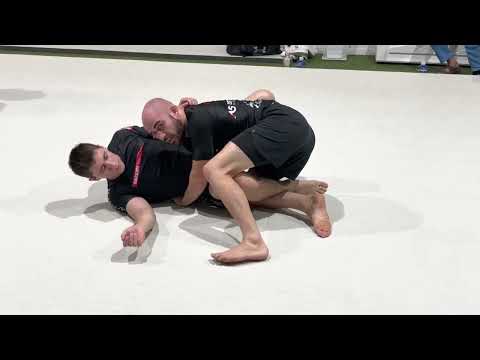
Advanced Body lock passing with James Woonton
0
Висок преден захват на тялото·Arte Suave - BJJ Brisbane·Added by Admin
James breaks down his famous body lock pass with incredible troubleshooting details versus stiff arms, half butterfly pl…
Translation: висок преден захват на тялото
При високия преден захват на тялото ключалката се поставя високо на тялото на противника — около горната част на гърба или ребрената дъга, като ръцете на атакуващия обхващат противника над кръста. [1] Високото положение на захвата осигурява по-добър контрол върху горната половина на тялото и стойката на противника, но намалява способността за контрол на бедрата. [1],[2] Високият преден захват на тялото е особено ефективен при инициирането на хвърляния гърди в гърди и при контролиране на противници, които поддържат изправена, вертикална стойка в близкия бой. [2],[3]
Dummy
Dummy
Dummy
Dummy
No images yet for this technique.
Sign in to suggest an image.
James breaks down his famous body lock pass with incredible troubleshooting details versus stiff arms, half butterfly pl…
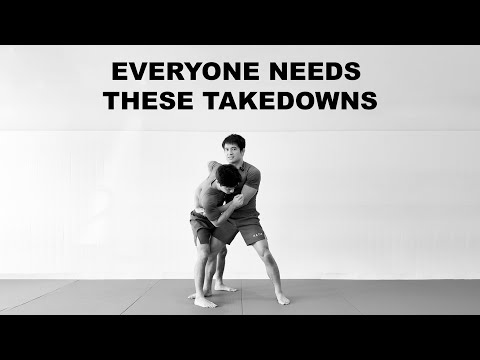
When building skills in the standing position, the first place every practitioner should start is the body lock takedown…
🏆 We Transform Jiu Jitsu Practitioners Into Takedown Pros↴ Start your transformation today with our zero-cost, takedow…
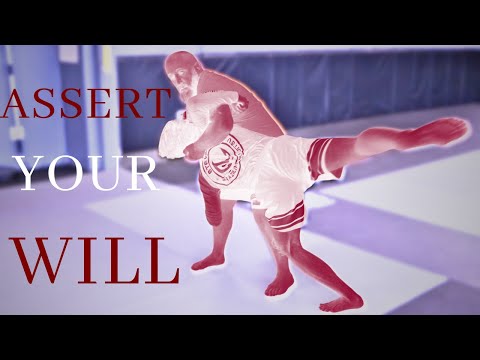
The high front body lock is a dominant clinching position emphasized across multiple grappling contexts—both standing takedowns and ground passing. Kata Jiu Jitsu identifies the double underhook front body lock as "the king of all takedowns," highlighting that the underhook is the strongest grip available in the clinch, superior to collar ties or wrist control. Establishment requires closing distance via hip-driven movement rather than chest-forward reaching, which creates vulnerability to counter throws. Once locked (using either S-grip or gable grip), the position demands immediate hip crowding to prevent opponent escape or separation. Kata Jiu Jitsu teaches three primary finish sequences: (1) a hips-in, pop-and-bump hip toss for upright opponents; (2) a step-pull leg scoop when the opponent folds their chest forward; and (3) a penetration-step into rotation/power twist when the opponent steps back to create space. Wrestling University's Greco-Roman approach, presented by a national champion, emphasizes pulling the opponent's head to one side to create a gap for underhook entry, then securing face-to-chest contact before manipulating feet positioning and executing a controlled descent. Arte Suave—BJJ Brisbane focuses on the front body lock in ground passing scenarios from half guard, where the lock bypasses the typical knee shield problem and enables chest-to-chest flattening. Their technical approach centers on clearing the half-guard hook through pummeling, S-grip control, and either stepping over or sprawling the leg while maintaining cross-face pressure. All three instructors agree on the fundamental principle: establish underhooks, lock the grip securely, maintain chest-to-chest connection, and control opponent posture through hip positioning and pressure.
Synthesized from 3 instructors
No instructional courses yet for this technique.
Sign in to suggest a course.
Risk of injury to the person this technique is applied to
DummySkill level needed to execute this technique reliably
Whether this technique is allowed under major competition rule sets
Mastering Jujitsu (Renzo Gracie & John Danaher, 2003)
Alias sources — [1] Greco-Roman Wrestling (Petrov, 1987) [2] Wrestling Physical Conditioning Encyclopedia (Welker, 2010) [3] Clinch Fighting for MMA (Couture, 2011)
Effectiveness sources — [1] Greco-Roman Wrestling (Petrov, 1987)
Standard katakana transliteration of Western martial arts terminology (外来語) — used in Japanese MMA, boxing, and BJJ communities
Alias sources — [1] Greco-Roman Wrestling (Petrov, 1987) [2] Wrestling Physical Conditioning Encyclopedia (Welker, 2010) [3] Clinch Fighting for MMA (Couture, 2011)
Effectiveness sources — [1] Greco-Roman Wrestling (Petrov, 1987)
Dummy
Kata Jiu Jitsu recommends using an S-grip rather than a gable grip because it puts less strain on your forearms while still allowing you to lock up your partner's upper back effectively.
The biggest mistake is reaching your chest forward into your partner, which creates danger—if they shuck and step in front, they can blast you. Instead, keep your chest upright and pull yourself into them rather than pulling them to you.
Bring your hips in close to your partner by pulling yourself to them (not pulling them to you), then pop with your hips and bump their leg forward with your rear leg. Once their feet lift off the ground, shelf them onto your rear leg and release your hand so they don't fall on the lock.
No—only practice takedowns with partners who are trained in takedowns and can fall safely. It's critical that your partner (uke) learns how to fall properly and stay relaxed, not stiff, as this is the primary reason people get injured during takedown training.
При високия преден захват на тялото ключалката се поставя високо на тялото на противника — около горната част на гърба или ребрената дъга, като ръцете на атакуващия обхващат противника над кръста. Високото положение на захвата осигурява по-добър контрол върху горната половина на тялото и стойката на противника, но намалява способността за контрол на бедрата.
Dummy
Dummy
Стандартната верига за подготовка: Dummy.
Стандартните контри включват: Dummy.
Чести варианти: От борба за поддръжки; Спечелете двоен поддръжка, влезте в стъпка и заключете ръцете около тялото.
Dummy
Основни грешки, за които да внимавате: Dummy.
Висок преден захват на тялото е известна също като Hai Furonto Bodi Rokku, Висок захват на гърдите, Горен преден захват на тялото, Висок захват тип мечешка прегръдка.