Introduction and Foundational Rationale
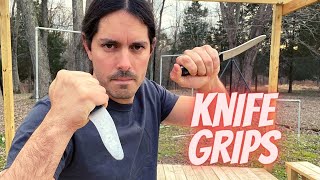
Knife switching—whether grip or hand transitions—serves two primary purposes: gaining tactical advantage against an opponent or compensating for hand injury. Practitioners must execute these transitions smoothly and efficiently without disengaging from the encounter or breaking visual focus on their opponent.
Three Essential Switch Methods
This instructional sequence covers three distinct switching techniques: maintaining the same grip while switching hands, executing simultaneous grip and hand switches, and performing grip switches within a single hand. Each method builds upon foundational tactile sensitivity and spatial awareness.
Switch One: Hand Switch with Grip Retention
The foundational hand switch maintains the current grip (Saksa or Pakal) while transferring the knife between hands. Rather than throwing, the wielding hand passes the blade with precision, replacing finger position exactly—thumb to thumb, index to index—similar to a controlled clapping motion performed without visual reference.
Switch Two: Combined Grip and Hand Transition
The second technique transitions both grip and hand simultaneously, converting Saksa to Pakal (or vice versa). The receiving hand locates the wielder's forearm using the wrist, slides upward until contacting the knife's butt, then receives the blade as both palms face upward. With practice, the reference point moves closer to the wrist.
Switch Three: Single-Hand Grip Transition via Pinch
The pinch grip switch represents the most technically demanding technique, requiring the knife to be positioned between thumb and index or middle finger. The practitioner rotates the blade to face themselves, establishes the pinch, allows gravity to rotate the blade downward, then regrips into the target orientation. The reverse motion follows the same sequence in opposite direction.
Critical Safety and Performance Standards
All switch techniques must meet three non-negotiable criteria: the knife must never be dropped, the practitioner must not cut themselves, and the blade must achieve the correct edge orientation (edge-in or edge-out) immediately upon completion. Proper technique ensures efficiency under pressure without visual verification.
Training Progression and Integration
Practitioners should master each switch individually before combining techniques into flowing sequences. Initial training requires deliberate, controlled movements and should utilize training blades rather than live steel until sufficient proficiency is achieved. Progressive integration of momentum enhances speed and efficiency as competency develops.
3 Ways to Effectively and Safely Switch Knife Grips | Filipino Martial Arts | Kali, Arnis, Escrima
Key Takeaways
- •Introduction and Foundational Rationale
- •Three Essential Switch Methods
- •Switch One: Hand Switch with Grip Retention
- •Switch Two: Combined Grip and Hand Transition
Knife Switching is a controversial topic. Many debate about not just its uses but the best ways to switch grips and switch hands. Regardless of why one would switch knife hands or grips, being able to do so adds a valuable tool to ones arsenal. Here Tuhon Aditya is sharing 3 Knife Switching Drills that deal with switching hands, switching grips within the same hand and switching hands while simultaneously switching grips. Chapters : 0:00 Intro 0:09 The Why 0:58 The What 1:14 The How If you enjoyed or learnt something from this video, please like and subscribe to our channel. To enrol for our daily classes in Goa, register for our Residential Program or if you want to just get in touch with us message us here or email us at [email protected] To learn more about our Residential Program : https://www.lighthavenindia.com/residentialcourses Our Patreon Page : https://www.patreon.com/lighthavenindia To follow us on Instagram : https://www.instagram.com/lighthavenindia/ Our website : https://www.lighthavenindia.com/ Our Facebook Page: https://www.facebook.com/LightHavenIndia/
Frequently Asked Questions
What does this video teach about standard knife redirect?
This video covers introduction and foundational rationale, three essential switch methods, switch one: hand switch with grip retention. It provides detailed instruction from LightHaven India.
How long does it take to learn standard knife redirect?
The basic mechanics can be understood in a single session, but developing reliable execution requires consistent drilling over weeks of practice. This 7-part breakdown helps structure your training by isolating each phase of the technique.
What are the key details for finishing standard knife redirect?
All switch techniques must meet three non-negotiable criteria: the knife must never be dropped, the practitioner must not cut themselves, and the blade must achieve the correct edge orientation (edge-in or edge-out) immediately upon completion. Proper technique ensures efficiency under pressure without visual verification.