Introduction to Closed Guard Submissions
This instructional focuses exclusively on submission techniques from the closed guard position, rather than sweeps or combinations. The instructor will demonstrate multiple submission options at varying levels of opponent resistance, starting with the most accessible techniques when the opponent has established basic posture.
Cross Collar Choke - Under Pass
The first submission exploits an opponent with established posture by obtaining a deep grip inside the collar with the palm facing upward. The second hand passes underneath the opponent's arm with the same palm-up orientation. The technique finishes by pulling the opponent downward while rotating the wrist inward to constrict the neck.
Cross Collar Choke - Over Pass
When the opponent blocks the under-pass by controlling the attacking arm's bicep, the technique transitions to an over-pass grip. The second hand either secures the collar with the thumb inside or grabs the collar material at the shoulder. The forearms connect and the choke finishes by pulling downward.
Armlock from Blocked Cross Collar
If the opponent successfully blocks both under and over collar passes, the guard player transitions to an armlock attack. The technique involves controlling the opponent's tricep, placing one foot on their hip, and rotating to establish a triangle frame with the knee positioned high in the armpit. The armlock finishes by squeezing both knees together while controlling the wrist.
Triangle Choke from Armlock Defense
When the opponent escapes the initial armlock by pulling their arm free and repositioning, the guard player closes their legs and adjusts the angle to establish a triangle choke. This submission occurs as a natural follow-up when the opponent attempts to regain posture after defending the armlock.
High Posture Armlock with Head Hook
If the opponent regains high posture while pulling their arm free, the guard player hooks behind the opponent's neck with one leg. The guard player then shifts their hips to the opposite side of the opponent's arm, secures both the wrist and elbow, and finishes the armlock by bringing the leg back around while maintaining the neck hook.
Omoplata Transition and Variations
When the opponent aggressively pulls their arm free, the guard player establishes a figure-four leg lock on the arm and uses foot placement to control the floor. The technique transitions into an omoplata by driving the shoulder to the mat, then uncrossing the legs to position for the final shoulder lock submission with the knee driving forward.
Omoplata Rollover and Re-attack
If the opponent drives weight forward while the guard player initiates the omoplata, a rollover occurs. The guard player can either finish a short armlock or establish a figure-four leg configuration under the opponent's neck. The submission re-establishes by placing weight on the hip and wrist while lifting the guard player's own leg to create maximum shoulder pressure.
Sleeve Break and Arm Trap
When the opponent establishes strong posture with both arms posted, the guard player grabs the sleeve and shoots their wrist underneath to break the grip laterally. This break lowers the opponent's shoulder and allows the guard player to wrap the arm in and create new submission angles including collar chokes and shoulder locks.
Knee Slice Shoulder Lock
As an alternative to collar attacks following the arm trap, the guard player places their foot on the opponent's hip and maintains elbow control while smashing their knee downward across the opponent's body. This technique primarily attacks the elbow with potential pressure extending to the shoulder depending on arm angle.
Hip Bump Collar Break and Finish
When the opponent maintains high posture throughout the exchange, the guard player holds the sleeve and grabs the wrist before bumping their hips upward to dislodge the opponent's grip. As the guard player's hips return downward, they wrap through and shift laterally to create the final collar choke submission.
Jiu-Jitsu Submissions | Lots of Closed Guard Submissions
Key Takeaways
- •Introduction to Closed Guard Submissions
- •Cross Collar Choke - Under Pass
- •Cross Collar Choke - Over Pass
- •Armlock from Blocked Cross Collar
So much more at Patreon.com/KnightJiuJitsu Here are quite a lot of submissions from closed guard. These go from pretty basic to a little more complex, but all are pretty useful and high percentage after some practice and drilling. Let me know what you think and please like and subscribe! Thank you for your continued support through watching and subscribing. Turn on those notifications to know as soon as I post! Hundreds more class instruction videos at Patreon.com/KnightJiuJitsu & BJJ Fanatics. Become a member of this channel for exclusive class videos not available for free. Super cheap cost for access to lots of exclusive content. • Exclusive Class Content at Patreon.com/KnightJiuJitsu • BJJ Fanatics Instructionals here: https://tinyurl.com/y4ujekp6 • T-Shirts available here: tinyurl.com/wzu6ufb • Instagram @knight_jiu_jitsu_ • TikTok @knightjiujitsu
Frequently Asked Questions
What does this video teach about from guard?
This video covers introduction to closed guard submissions, cross collar choke - under pass, cross collar choke - over pass. It provides detailed instruction from Knight Jiu-Jitsu.
How long does it take to learn from guard?
The basic mechanics can be understood in a single session, but developing reliable execution requires consistent drilling over weeks of practice. This 11-part breakdown helps structure your training by isolating each phase of the technique.
What are the key details for finishing from guard?
As an alternative to collar attacks following the arm trap, the guard player places their foot on the opponent's hip and maintains elbow control while smashing their knee downward across the opponent's body. This technique primarily attacks the elbow with potential pressure extending to the shoulder depending on arm angle.
Related videos
Elevated Basics: The Ultimate No-Gi Closed Guard Guide
IsakIvanovicjj
How to NEVER Get Stuck in the Closed Guard Again! | Jiu Jitsu Tutorial
Matt Arroyo Jiu Jitsu
SHALLOW K GUARD | Matrix Back Take & Calf Slicer | 4K
玉木強 / YOSHI JIU-JITSU TECH
SLX Matrix Calf Slicer to the Back - Adam Benayoun | #BJJ #NOGI
Digitsu
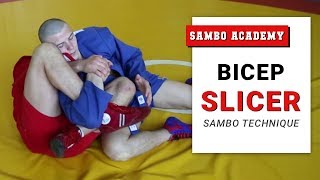
Bicep slicer. Very painful submission
IVAN VASYLCHUK. SILA PARTERA