Distance Control as Foundation
Effective head movement relies primarily on footwork and distance management rather than head motion alone, with practitioners maintaining an arm's-length distance where both fighters' extended arms meet glove-to-glove. This optimal distance allows sufficient time to perceive and react to incoming strikes. Closer distances significantly increase defensive difficulty, which is why toe-to-toe fighters resort to shell guards.
Visual Focus and Reactive Spacing
Practitioners should maintain visual focus on the opponent's chest while using peripheral vision to detect forward movement, adjusting backward distance proportionally. This technique enables fighters to maintain reactive spacing even with hands lowered, as demonstrated by fighters like Stephen Thompson who can evade strikes from a hand-down position through superior distance awareness.
Stance Positioning for Mobility
A bladed stance improves footwork speed, balance, and head mobility while reducing target profile and facilitating rearward slipping motion. Maintaining position on the balls of the feet enables faster, more explosive footwork—critical since defensive footwork comprises approximately 80 percent of effective head movement technique.
Close-Range Head Positioning
When an opponent closes distance despite proper spacing, slipping the head into their armpit creates a temporary safe zone where striking is impossible. From this position, practitioners can disengage by backing up, circle toward the opponent's back, or establish clinch control for wrestling-based arts.
Integration of Blocks with Head Movement
Head movement functions most effectively in combination with blocking techniques rather than as a standalone defense. Advanced practitioners may employ methods like the Philly shell despite known vulnerabilities, as technical mastery allows deliberate rule-breaking with conscious awareness of consequences.
Head Movement as Secondary Defense
Head movement serves as a backup defense when primary blocking fails, such as when hands become trapped or overcommitted. Moving the head proves faster than retracting blocking hands after offensive exchanges, making it an efficient secondary option when primary defenses are compromised.
Offensive Head Positioning
During punching, practitioners should move the head off-center while fully extending arms and rotating the torso, maintaining maximum distance from the opponent while striking. This positioning allows simultaneous offense and defense by keeping the head far enough away to perceive and evade incoming counters.
Appropriate Training Progression
Skill development requires training with partners who accommodate learning without causing injury, or with less experienced fighters against whom techniques can be safely practiced. Similar to progressive strength training, head movement proficiency develops through graduated difficulty rather than immediate high-intensity sparring.
8 Tips that LEVELED up my Head Movement
Key Takeaways
- •Distance Control as Foundation
- •Visual Focus and Reactive Spacing
- •Stance Positioning for Mobility
- •Close-Range Head Positioning
Head movement seems very advanced, but understanding these 8 tips will make you realize it isn't that difficult! 0:00 - Tip 1 - 80% footwork 20% head movement 1:02 - Tip 2 - Look at opponent’s chest to control distance 1:29 - Tip 3 - Use a bladed stance 1:59 - Tip 4 - Slip into the pocket or tie up when you can’t control distance 3:56 - Tip 5 - Mix your head movement with blocking 5:03 - Tip 6 - Use head movement as a second line of defense 5:48 - Tip 7 - Take head off centreline when punching 6:51 - Tip 8 - Train with the right sparring partners Get ALL the head movement secrets HERE: https://www.mmashredded.com/headmovement FIND ME: ➥ IG: https://www.instagram.com/mmashredded/ ➥ TIKTOK: https://www.tiktok.com/@mmashredded ➥ WEB: https://www.mmashredded.com ➥ FB: https://www.facebook.com/mmashredded/ ➥ SUPPORT ME & JOIN THE COMMUNITY: https://www.patreon.com/mmashredded
Related Techniques
Frequently Asked Questions
What does this video teach about movement defence?
This video covers distance control as foundation, visual focus and reactive spacing, stance positioning for mobility. It provides detailed instruction from Jeff Chan MMAShredded .
How long does it take to learn movement defence?
The basic mechanics can be understood in a single session, but developing reliable execution requires consistent drilling over weeks of practice. This 8-part breakdown helps structure your training by isolating each phase of the technique.
What are the key details for finishing movement defence?
During punching, practitioners should move the head off-center while fully extending arms and rotating the torso, maintaining maximum distance from the opponent while striking. This positioning allows simultaneous offense and defense by keeping the head far enough away to perceive and evade incoming counters.
Related videos
Julio Cesar Chavez Sr.'s Aggressive Pressure Style & Head Movement Explained - Technique Breakdown
The Modern Martial Artist
SABAKI - TYPES OF DEFENCE MOVEMENT
KARATE ORGANIZATION INDIA
Keep the Pendulum Rhythm Throughout the Round
Russian School of Boxing
Basics: Soviet Pendulum Step🥊#BoxenLernen#Boxtraining #BoxenFürAnfänger #FitDurchBoxen#MentaleStärke
jaso.boxing
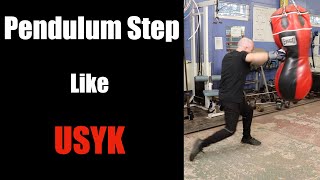
Boxing Drills to Build a Pendulum Step Worthy of Oleksandr Usyk
MyBoxingCoach