Strike & defenceLocksClose rangeFighting multiple people
Distance
CloseMiddleLong
Overview
The Movement Defence family covers body movement techniques that avoid strikes through head movement, torso displacement, and body angles rather than blocking — the most sophisticated and energy-efficient form of defence in striking arts. [1] Movement defence includes slipping (moving the head laterally off the punch line), bobbing and weaving (dipping under hooks and rising on the other side), pulling (leaning back to make strikes fall short), ducking (dropping the level under high attacks), and the lean-back (shifting weight to the rear foot). [1],[2] These techniques are considered superior to blocking because they avoid damage entirely (rather than absorbing reduced impact through a block), leave both hands free for immediate counter-attacks, and conserve energy compared to absorbing strikes. [2],[3] Masters of movement defence — Muhammad Ali's head movement, Pernell Whitaker's body evasion, and Anderson Silva's Matrix-like leaning — represent the highest level of striking defence achievable. [3]
Also known as
Evasive MovementDefensive MovementBody Movement Defence
Movement defence has been central to boxing since the sport's earliest days, but it was elevated to an art form in the 20th century. [1] Jack Johnson (1900s–1910s) pioneered defensive head movement against aggressive white opponents in the racially charged era. [1],[2] Muhammad Ali (1960s–70s) transformed movement defence with his 'float like a butterfly, sting like a bee' philosophy, combining footwork and head movement into a seamless defensive system. [2],[3] Pernell Whitaker (1980s–90s) is widely considered the greatest pure defensive mover in boxing history. Anderson Silva (2000s–10s) brought boxing-style head movement to MMA, famously evading Forrest Griffin's punches while leaning back. [3]
Country of origin· shown in random order
🇬🇧EnglandBoxing
🇬🇷GreeceBoxing
🇧🇷BrazilMMA
🇺🇸USAMMA, Kickboxing
🇯🇵JapanKickboxing
🇹🇭ThailandMuay Thai
🇨🇳ChinaWing Chun
Effectiveness
Movement defence is the most effective form of striking defence because it avoids damage entirely — a punch that doesn't land does zero damage, while even a well-blocked punch transfers some force. [1] Fighters with superior movement defence have longer careers and less accumulated brain damage. [2] In MMA, movement defence has become increasingly important as striking has become more sophisticated, with fighters like Israel Adesanya and Max Holloway demonstrating elite head movement. [3]
Lineage
Movement defence lineage: bare-knuckle era evasion → Jack Johnson → Muhammad Ali → Pernell Whitaker → Floyd Mayweather Jr. (boxing) and Anderson Silva → Israel Adesanya (MMA). [1],[2]
Competition Record
Fighters with elite movement defence consistently achieve the longest championship reigns and best records in boxing and MMA history. [1],[2]
Images
No images yet for this technique.
Sign in to suggest an image.
Biomechanical Mechanism
Primary Action — Displacing the head and body from the attack line so strikes pass through empty space, without using the arms for blocking
Joints Involved — Neck (slipping involves lateral neck flexion; pulling involves neck extension), knees (bending for ducking and level changes), hips (shifting weight forward or backward for slipping and pulling), waist (bending for bobbing and weaving under hooks)
Force Vector — Lateral (slipping moves the head sideways off the punch line), downward (ducking drops below the strike), backward (pulling creates distance), and circular (bobbing and weaving follows a U-shaped path under hooks)
Defence Mechanic — Movement defence works on the principle that a punch aimed at where the head WAS, not where it IS, misses completely — by moving the head 2-4 inches off the centre line (slipping) or 6-8 inches vertically (ducking), the defender makes the attack miss entirely while remaining in range to counter-attack
Position & Entry
Slip (against jab or cross) — When a straight punch comes, shift the weight slightly to one side, bending at the waist, moving the head just enough that the punch passes over the shoulder — the slip should be minimal (2-4 inches) to stay in counter range [1]
Bob and weave (against hook) — When a hook is thrown, bend the knees to drop below the arc of the hook, then shift the weight laterally and rise on the opposite side — the body traces a U-shaped path under the hook
Pull back (against cross) — Shift the weight to the rear foot, leaning the head and shoulders slightly backward so the opponent's cross falls short by inches — immediately shift weight forward to counter as they recover [2]
Duck (against head kick or high strike) — Drop the level by bending the knees rapidly, lowering the entire body below the incoming head-level attack — commonly used against head kicks in MMA
Head movement seems very advanced, but understanding these 8 tips will make you realize it isn't that difficult!
0:00 -…
2 videos
Learn This Technique
No instructional courses yet for this technique.
Sign in to suggest a course.
Ratings
Danger Rating
Risk of injury to the person this technique is applied to
3
Moderate3/10
Movement defence avoids contact entirely; the primary risk is mistiming the movement (moving too early or too late) and getting clipped; also, dropping the head too low while bobbing invites uppercuts and knees (in MMA/Muay Thai)
Difficulty
Skill level needed to execute this technique reliably
Intermediate
Competition Legality
Whether this technique is allowed under major competition rule sets
✓Slipping should be minimal — move the head 2-4 inches off the centre line, not a foot; over-slipping puts you out of counter range and off-balance (boxing coaching principle) [1]
✓Bob and weave must follow a U-shape — don't just duck straight down (that invites uppercuts); move sideways under the hook and rise on the other side
✓Practice movement against actual punches — a partner throws controlled punches while you practice the specific evasion; start slow and increase speed gradually
✓Movement defence is exhausting at first — the constant bending, weaving, and lateral shifting builds core and leg endurance; it gets easier with conditioning
✓Pair every movement with a counter — slip the jab, throw the cross; duck the hook, throw the uppercut; the movement-counter combination is the basic unit [2]
✓In MMA, be cautious with deep ducks — in boxing, ducking is safe because only punches are allowed; in MMA, ducking into a knee is devastating
✓Watch Muhammad Ali and Pernell Whitaker footage — their head movement mastery set the standard for movement defence
✓Train with the slip bag (double-end bag or rope) — the rhythmic slipping motion develops the timing and muscle memory for lateral head movement
Common Mistakes
!Over-slipping — moving the head too far off the centre line loses counter position and balance
!Closing the eyes — a natural flinch response that must be trained out; eyes must stay open to see counter opportunities
!Ducking straight down under hooks — dropping straight down invites uppercuts and knees; always bob and weave in a U-shape
!Leaning too far back on pulls — excessive lean-back loses balance and prevents the forward step needed to counter
!Using movement defence only against straight punches — hooks, uppercuts, kicks, and elbows require different evasive movements; develop a complete movement vocabulary
!Standing straight up after ducking — rising directly up from a duck puts the head back on the centre line; rise to one side
!Neglecting footwork — head movement works best combined with foot movement; stationary head movement has limited effectiveness
2Read the Attack — identify the incoming punch type and trajectory
3Execute Movement — perform the specific evasion (slip, duck, bob, pull)
4Counter — deliver the prepared counter-punch through the opening created by the opponent's miss
5Exit or Continue — either exit to safety or continue with a follow-up combination
6Reset — return to balanced stance with guard up
Sources & References
Primary Source
Championship Fighting (Jack Dempsey, 1950)
1BookChampionship Fighting (Dempsey, 1950)
Description sources — [1] Championship Fighting (Dempsey, 1950) on slipping mechanics [2] Boxing Mastery (Hatmaker, 2004) on evasive movement [3] Anderson Silva and modern MMA head movement
2BookTao of Jeet Kune Do (Lee, 1975)
History sources — [1] Jack Johnson biography [2] Muhammad Ali career [3] Pernell Whitaker and Anderson Silva careers
3BookBoxing Mastery (Hatmaker, 2004)
4BookThe Arc of Boxing (Silver, 2008)
5CitationChampionship Fighting (Dempsey, 1950)
Description sources — [1] Championship Fighting (Dempsey, 1950) on slipping mechanics [2] Boxing Mastery (Hatmaker, 2004) on evasive movement [3] Anderson Silva and modern MMA head movement
6CitationTao of Jeet Kune Do (Lee, 1975)
History sources — [1] Jack Johnson biography [2] Muhammad Ali career [3] Pernell Whitaker and Anderson Silva careers
7CitationBoxing Mastery (Hatmaker, 2004)
8CitationThe Arc of Boxing (Silver, 2008)
Community
Athletics
Requires
quick reflexes, core flexibility (bending and rotating the torso), strong legs (maintaining bent-knee stance during movement), spatial awareness
Favours
quick reaction time, flexible waist, strong core, good depth perception
Key muscles
obliques (lateral bending for slips), quadriceps (maintaining bent stance during bobs), neck muscles (supporting head movement), core (rotational movement)
Sub-techniques
Find by what a technique does — not its name
Every move, in any martial art, shares a few universal traits. Mix and match below to pinpoint the right tool — or compare equivalents across styles.
Movement defense — using footwork and body positioning to avoid attacks entirely — is considered superior to blocking in most striking arts. The principle: the best defense is not being there when the attack arrives. (Boxing, MMA, and striking manuals across corpus)
Frequently Asked Questions
What's the ideal distance to maintain for effective head movement defense?
According to Jeff Chan (MMAShredded), you want to maintain an arm's-length distance where both fighters' extended arms just touch—this allows you to see strikes coming and have time to react. If you're any closer, head movement becomes significantly harder to execute effectively.
How should I use head movement if my opponent traps my hand or I overcommit on a parry?
Jeff Chan emphasizes using head movement as a second line of defense: instead of trying to bring your parrying hand back to block, simply move your head to evade the punch. This prevents leaving your face exposed when your hands are committed or trapped.
What should I do when my opponent closes the distance on me?
When an opponent successfully closes distance, Jeff Chan recommends slipping your head into their armpit to create a clinch position rather than trying to maintain outside distance.
How can I use framing and head movement together in close range?
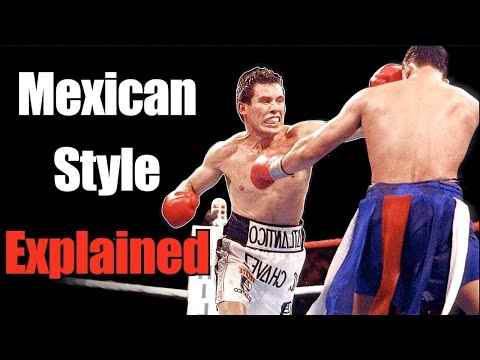
The Modern Martial Artist explains that Julio Cesar Chavez Sr. used framing with his elbow combined with head movement to smother his opponent's guard, push them off balance, and lift their chin—setting up superior positions while disturbing the opponent's balance.
How does the Movement Defence work?
The Movement Defence family covers body movement techniques that avoid strikes through head movement, torso displacement, and body angles rather than blocking — the most sophisticated and energy-efficient form of defence in striking arts. Movement defence includes slipping (moving the head laterally off the punch line), bobbing and weaving (dipping under hooks and rising on the other side), pulling (leaning back to make strikes fall short), ducking (dropping the level under high attacks), and the lean-back (shifting weight to the rear foot).
Where does the Movement Defence come from?
Movement defence has been central to boxing since the sport's earliest days, but it was elevated to an art form in the 20th century. Jack Johnson (1900s–1910s) pioneered defensive head movement against aggressive white opponents in the racially charged era.
Danger rating 3/10. Low — movement defence avoids contact entirely; the primary risk is mistiming the movement (moving too early or too late) and getting clipped; also, dropping the head too low while bobbing invites uppercuts and knees (in MMA/Muay Thai)
How do I set up the Movement Defence?
The standard setup chain: Establish Defensive Stance → Read the Attack → Execute Movement → Counter → Exit or Continue → Reset.
How do I defend against the Movement Defence?
Standard counters include: Uppercuts — effective against fighters who duck or bob too low / Knees — in MMA/Muay Thai, fighters who duck into knee range are vulnerable / Hooks to the body — targeting the body when the head moves / Combination Attacks — sustained combinations are harder to evade than single punches.
What are the variants of the Movement Defence?
Common variants: Slip (lateral head movement to avoid straight punches; the most…); Bob and weave (U-shaped dip under hooks, rising on the opposite side; th…); Pull back (lean-away) (shifting weight backward to make punches fall short; the …); Duck (rapid level change to avoid high strikes; essential again…); Shoulder roll (from the Philly shell, rolling the lead shoulder to defle…); Sway (lean-back) (leaning the upper body backward while keeping the feet pl…); Body rotation (turning the torso to present a narrower target; reducing …).
How effective is the Movement Defence in competition?
Fighters with elite movement defence consistently achieve the longest championship reigns and best records in boxing and MMA history.
What are common mistakes when doing the Movement Defence?
Top errors to watch for: Over-slipping — moving the head too far off the centre line loses counter position and balance / Closing the eyes — a natural flinch response that must be trained out; eyes must stay open to see counter opportunities / Ducking straight down under hooks — dropping straight down invites uppercuts and knees; always bob and weave in a U-s… / Leaning too far back on pulls — excessive lean-back loses balance and prevents the forward step needed to counter.
What are other names for the Movement Defence?
The Movement Defence is also known as Mūbumento Difensu, Evasive Movement, Defensive Movement, Body Movement Defence.