Introduction to Mount Position Combinations
This instructional sequence builds upon fundamental cross collar choke attacks from the mount position. The instructor demonstrates practical reactions and effective counter-attacks when opponents defend against initial choking attempts.
Understanding Defensive Bridge and Roll Response
When an opponent bridges and rolls to escape a cross collar choke, the instructor responds by jamming the arm and transitioning to a seated mount position. This creates an opportunity to set up an armbar attack from a dominant controlling position.
Adapting When the Armbar Defense Succeeds
If the opponent successfully covers and tightens their defense against the armbar, the instructor pivots to alternative choking techniques. Rather than forcing an unavailable submission, the skilled practitioner recognizes when to abandon the initial attack and execute a different high-percentage technique.
Establishing Seated Mount Control
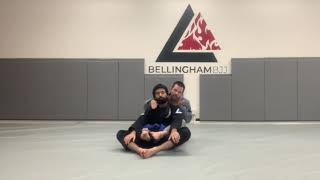
The foundation for both techniques requires proper seated mount positioning: hip pressure behind the opponent's ribs, knee positioned behind the head, and heel firmly placed in the stomach. A live foot remains in contact to enable quick movement and maintain tactical flexibility.
Single Wing Choke Mechanics
From seated mount, the instructor drops body weight directly onto the opponent while threading the hand behind the neck and under the chin. The grip is secured by wrapping the gi collar deeply into the palm with all five fingers, particularly ensuring the pinky finger engages the collar.
Completing the Single Wing Choke
After securing the collar grip, the second hand shoots through the opponent's trapped arm and cuts down the instructor's own arm to apply pressure. The instructor sits upright while driving the hips forward, creating the finishing compression that completes the single wing choke.
The Bow and Arrow Choke Setup
When the opponent turns away from the initial choke attack, the instructor transitions to the bow and arrow choke by gripping below the opponent's knee rather than the thigh. This grip placement is critical for effective foot positioning in the final submission.
Executing the Bow and Arrow Finish
The back foot transitions to align even with the opponent's back while the instructor sits back with the knee grip secured. As the instructor leans back, the foot drives through, creating the distinctive bow and arrow configuration that applies pressure to complete the choke submission.
Critical Grip Positioning Details
The instructor emphasizes maintaining the grip hand in a proper motorcycle throttle position rather than bowing the hand forward. Proper hand angle and deep collar control are essential mechanical details that determine submission efficiency and prevent grip failure during execution.
Single Wing & Bow Choke from the Mount - Jiu Jitsu Training
Key Takeaways
- •Introduction to Mount Position Combinations
- •Understanding Defensive Bridge and Roll Response
- •Adapting When the Armbar Defense Succeeds
- •Establishing Seated Mount Control
A basic tutorial for the single wing and bow choke from the mounted position, performed by Gracia Barra Jiu Jitsu in St Louis, MO. Brazilian Jiu Jitsu St Louis. Train with Gracie Barra, the #1 ranked team by the IBJJF (international Brazilian jiu-jitsu federation ). For a limited time, get a free class at one of our St Louis locations by signing up on our website: https://gbofallon.com/. Follow us on Facebook: https://www.facebook.com/Graciebarraofallon/ Follow us on Twitter: https://twitter.com/gbofallonbjj Follow us on Google: https://plus.google.com/+GracieBarraStLouisOFallon For a limited time, get a free class at one of our St Louis locations by signing up on our website: https://gbofallon.com/.
Frequently Asked Questions
What does this video teach about one wing collar choke?
This video covers introduction to mount position combinations, understanding defensive bridge and roll response, adapting when the armbar defense succeeds. It provides detailed instruction from Gracie Barra O'Fallon.
How long does it take to learn one wing collar choke?
The basic mechanics can be understood in a single session, but developing reliable execution requires consistent drilling over weeks of practice. This 9-part breakdown helps structure your training by isolating each phase of the technique.
What are the key details for finishing one wing collar choke?
The back foot transitions to align even with the opponent's back while the instructor sits back with the knee grip secured. As the instructor leans back, the foot drives through, creating the distinctive bow and arrow configuration that applies pressure to complete the choke submission.
Related videos
Grappling Concepts for MMA or Self Defence - Develop a FAST Rear Naked Choke with Rene Dreifuss
Stuart Tomlinson
4 ways to finish a collar choke off of the 1st relevant grip...
Code 4 Concepts Chad Lyman
Head And Arm Rear Naked Choke by Heath Pedigo
BJJ Fanatics
Sode Guruma Jime || Sleeve Wheel Choke
The Judo Way of Life
Fundamentals: Gable Grip Choke from the Back
Bellingham BJJ