Introduction to Finger Lock Effectiveness
Professor James Hunden addresses whether finger locks function in actual fighting scenarios. He explains that finger locks can be effective when practitioners understand the underlying sensitivity and structural mechanics required to execute them properly.
Common Misconceptions About Finger Lock Entry
Hunden emphasizes that grabbing or snatching at fingers in the air is an ineffective approach to establishing finger locks. The correct method involves using fundamental Jeet Kune Do trapping principles to create the opportunity for the lock, rather than attacking the fingers directly.
First Technique: Index Finger Lock from Backhand Entry
The instructor demonstrates a trapping sequence beginning with a backhand slap followed by an eye rake to force the opponent's arm into a trapped position. From this trapped state, he applies downward palm pressure on the opponent's index and middle fingers while dropping body weight, then rotates his body to complete the lock and control the opponent's movement.
Second Technique: Thumb Lock from Palm-to-Palm Engagement
Hunden shows an alternative entry where the opponent maintains center-line control, allowing him to step and match palms with the opponent. He then applies finger pressure to the base of the thumb while rotating his body, using a sweeping motion that brings the opponent's hand across his midsection and compels the opponent to rotate and move.
Position Control and Follow-Up Options
Once the finger lock is established, Hunden demonstrates that the practitioner gains substantial control over the opponent's structure and mobility. From the locked position, the practitioner can execute additional strikes, control the opponent's base through knee placement, or transition to ground control techniques.
Multiple Entry Points and Adaptability
Hunden demonstrates several variations of finger lock entries that can be applied in response to different defensive actions by the opponent. These variations include trapping both hands, controlling the center line with interior parries, and adjusting hand positioning to accommodate different opponent responses.
Do Finger Locks Work In A Street Fight?
Key Takeaways
- •Introduction to Finger Lock Effectiveness
- •Common Misconceptions About Finger Lock Entry
- •First Technique: Index Finger Lock from Backhand Entry
- •Second Technique: Thumb Lock from Palm-to-Palm Engagement
When we were all in school, we knew the feeling of someone grabbing our fingers and pulling on them. But do finger locks work in a street fight? Self Defense instructor James Hundon takes us through a deep dive on finger locks.
Frequently Asked Questions
What does this video teach about grip finger lock?
This video covers introduction to finger lock effectiveness, common misconceptions about finger lock entry, first technique: index finger lock from backhand entry. It provides detailed instruction from Budo Brothers.
How long does it take to learn grip finger lock?
The basic mechanics can be understood in a single session, but developing reliable execution requires consistent drilling over weeks of practice. This 6-part breakdown helps structure your training by isolating each phase of the technique.
What are the key details for finishing grip finger lock?
Once the finger lock is established, Hunden demonstrates that the practitioner gains substantial control over the opponent's structure and mobility. From the locked position, the practitioner can execute additional strikes, control the opponent's base through knee placement, or transition to ground control techniques.
Related videos
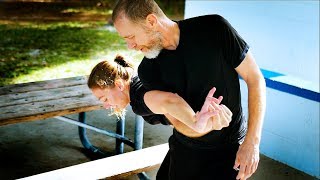
Finger Joint Lock Flow Training | Core JKD Method
corejkd

Head And Arm Rear Naked Choke by Heath Pedigo
BJJ Fanatics

How To Do Rear Ezekiel Choke In Gi & No-Gi
Resenha BJJ

Sode Guruma Jime || Sleeve Wheel Choke
The Judo Way of Life
High Wrist Guillotine Choke Submission in Turtle. Arm In, High Elbow, Side Control, Mount, Butterfly
Pica Pau Jiu Jitsu & Grappling