50/50 Clinch Position Fundamentals
The 50/50 clinch is a common position in MMA, BJJ, and self-defense where both competitors have equal access to control. The instructor emphasizes maintaining active engagement on both sides, with the underhook side connecting to the opponent's lat and the opposite hand securing a c-grip around the bicep. Proper pummeling and hand-fighting create the tactile awareness necessary to identify and execute follow-up techniques.
Lat Drag Setup and Angle Change
The lat drag begins with a back step using the dominant side leg while pulling with the corresponding underhook hand, creating an off-balance and angle change. The practitioner then steps with the opposite leg and places the hand behind the opponent's knee, establishing connection points for the upcoming takedown. This two-step sequence creates the necessary positioning before committing to the takedown itself.
Upper Body Integration in Lat Drag
Rather than simply dragging laterally, the instructor emphasizes punching the opponent's shoulder with the forearm in the direction of movement. This aggressive upper body action, combined with the lat drag, generates greater control and momentum toward the takedown. The integration of upper and lower body mechanics prevents a passive or ineffective technique execution.
Knee Pick Takedown and Hip Switch Options
Two primary takedown finishes follow the lat drag: an outside leg trip using the foot, or a hip switch that rotates the practitioner's hips toward the targeted leg. Both options allow the practitioner to control the opponent's landing and maintain top position. The choice between them depends on positioning and the opponent's defensive response during the drag.
Standing Ankle Lock from Knee Pick
After securing the knee pick takedown, the practitioner can transition to a standing ankle lock by controlling the opponent's foot and extending the leg. The practitioner positions their knee behind the opponent's hip socket while rotating to apply pressure. This submission can be executed aggressively for quick taps or controlled for safer practice.
Maintaining Elevation and Control
Throughout the takedown sequence, the instructor stresses maintaining proper elevation rather than dropping level excessively. Staying high while executing the lat drag and knee pick preserves leverage and makes the technique more difficult for the opponent to defend. After the takedown, maintaining hip connection and staying elevated prevents the opponent from achieving a favorable bottom position.
2 Takedowns from 50/50 clinch To Standing Ankle Lock
Key Takeaways
- •50/50 Clinch Position Fundamentals
- •Lat Drag Setup and Angle Change
- •Upper Body Integration in Lat Drag
- •Knee Pick Takedown and Hip Switch Options
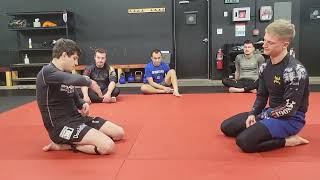
The 50/50 Clinch is such a common position if any form of combat. The lat drag is a great tool to off-balance your opponent and setup a variety of wrestling takedowns. In this TRITAC Martial Arts video, coach Matt Bryers shows 3 takedowns off of the lat drag a well as a vicious standing ankle lock from Japanese Jujitsu. To develop more grappling flows for MMA, self defense and grappling - check out our Free TRITAC Intro Course: https://tritacmartialarts.com/course
Frequently Asked Questions
What does this video teach about clinch lock?
This video covers 50/50 clinch position fundamentals, lat drag setup and angle change, upper body integration in lat drag. It provides detailed instruction from TRITAC Martial Arts.
How long does it take to learn clinch lock?
The basic mechanics can be understood in a single session, but developing reliable execution requires consistent drilling over weeks of practice. This 6-part breakdown helps structure your training by isolating each phase of the technique.
What are the key details for finishing clinch lock?
After securing the knee pick takedown, the practitioner can transition to a standing ankle lock by controlling the opponent's foot and extending the leg. The practitioner positions their knee behind the opponent's hip socket while rotating to apply pressure. This submission can be executed aggressively for quick taps or controlled for safer practice.
Related videos
From the Clinch
Bernard Rizon
Head And Arm Rear Naked Choke by Heath Pedigo
BJJ Fanatics
How To Do Rear Ezekiel Choke In Gi & No-Gi
Resenha BJJ
Sode Guruma Jime || Sleeve Wheel Choke
The Judo Way of Life
High Wrist Guillotine Choke Submission in Turtle. Arm In, High Elbow, Side Control, Mount, Butterfly
Pica Pau Jiu Jitsu & Grappling