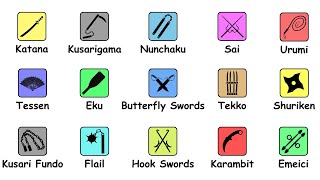
Katana
The katana is a curved Japanese sword forged through centuries of traditional metalworking. Its sharp edge was designed to cut through flesh and bone efficiently, and in skilled hands could execute swift decapitations or dismemberments in single motions. The blade's curvature and construction represent both artistic craftsmanship and combat optimization.
Nine-Section Whip
The nine-section whip originated in ancient China as a flexible weapon composed of metal rods connected by chain and topped with a sharp dart. Its unpredictable movements and ability to bypass defenses made it effective in combat, though it required exceptional precision and control from the wielder. The weapon could inflict severe lacerations, bone fractures, and targeted incapacitating strikes.
Wakizashi
The wakizashi was a shorter Japanese blade developed in the 15th-16th centuries as a secondary weapon paired with the katana in the samurai's daisho combination. Crafted from refined steel, it excelled in close-quarters combat and could puncture armor while delivering quick lethal strikes. Its versatility made it an indispensable part of the samurai's arsenal.
Podao
The podao is a single-edged Chinese weapon featuring a broad blade on a 1-2 meter handle, earning it the battlefield reputation as a 'horse cutter sword' for its effectiveness against cavalry. Similar weapons appeared across Asia, including Japan's nagamaki and Korea's hyopdo. In skilled hands, the podao delivered sweeping strikes capable of dismembering and causing catastrophic injuries.
Shuanggu (Hook Swords)
Shuanggu are curved Chinese hook swords designed for close combat, featuring blades capable of slashing, pointed hilts for stabbing, and crescent guards for trapping. The hooks allow practitioners to ensnare and trip opponents, setting them up for crippling falls or finishing strikes. When used in pairs, these weapons extend lethal range and catch opponents with unexpected grievous strikes.
Kusarigama
The kusarigama combines a sickle with a weighted chain, originating from Japan's Muromachi period as a tool for ensnaring and controlling opponents. The chain immobilizes an adversary's weapon or limbs, leaving them vulnerable to fatal strikes from the sickle blade. The weapon demands high skill to avoid self-injury while providing strategic control over distance and movement in combat.
Kyoketsu Shouge
The kyoketsu shouge is a ninja weapon from Iga Province combining a dual-edged blade and hook with a lengthy chain or rope topped by a metal ring. The blades enabled efficient slashing and lethal stabs while the rope served for scaling, binding, or pulling enemies into vulnerable positions. The ring could strike with blunt force, parry attacks, or sweep opponents.
Kama
The kama originated as a Southeast Asian farming tool for cutting crops before becoming integrated into Okinawan martial arts and karate. Despite historical questions about its weapon origins, its combat effectiveness is established through blocking, trapping, and disarming applications. Used singly or in pairs, its sharp edge and pointed tip make it a lethal weapon in trained hands.
Keris
The keris is a distinctive wavy-bladed dagger from Java, Indonesia, deeply embedded in penkak silat tradition. Its unique blade design creates irregular tearing wounds that amplify physical damage and complicate medical treatment. Historical associations with poison further increased the keris's lethal potential in close combat.
Shikomizu & Naginata
The shikomizu is a medium-length sword blade concealed within a cane, allowing samurai and ninjas to carry weapons unnoticed for surprise attacks and espionage. The naginata is a long-reach curved blade weapon from feudal Japan capable of delivering devastating wounds through wide sweeping slashes and powerful thrusts. Both weapons represented innovations in Japanese combat strategy and design.
Every DEADLIEST MARTIAL ARTS WEAPON Explained in 10 Minutes
Key Takeaways
- •Katana
- •Nine-Section Whip
- •Wakizashi
- •Podao
► Learn Martial Arts In The Comfort Of Your Own Home: https://globalmartialarts.university/?ref=mzmyogq #martialarts #weapons #deadly Every Deadly Martial Arts Weapon Explained in X Minutes TimeStamps 00:00 Katana 00:54 Nine Section Whip 01:36 Wakizashi 02:27 Podao 03:11 Shuang Gou (Hook Sword) 03:52 Kusarigama 04:36 Kyoketsu-shoge 05:19 Kama 05:56 Kris 06:36 Shikomizue 07:08 Naginata 07:45 Sai 08:19 Escrima Sticks 08:59 Karambit 09:31 Jian Disclaimer: Some of the links above may be affiliate links, which means that if you click on them, I may receive a small commission. The commission is paid by the retailers at no cost to you, and this helps to support our channel and keep our videos free. Thank you!
Frequently Asked Questions
What does this video teach about weapon?
This video covers katana, nine-section whip, wakizashi. It provides detailed instruction from Plainly Put.
How long does it take to learn weapon?
The basic mechanics can be understood in a single session, but developing reliable execution requires consistent drilling over weeks of practice. This 10-part breakdown helps structure your training by isolating each phase of the technique.
What are the key details for finishing weapon?
The keris is a distinctive wavy-bladed dagger from Java, Indonesia, deeply embedded in penkak silat tradition. Its unique blade design creates irregular tearing wounds that amplify physical damage and complicate medical treatment. Historical associations with poison further increased the keris's lethal potential in close combat.