Kinetic Chain Foundation
The headbutt's power originates from the ground up through proper footwork and body mechanics. A practitioner must drive from the back foot and maintain grounding to generate force, rather than relying solely on head and neck movement. Without this kinetic chain, the technique loses significant power and increases injury risk to the attacker.
Contact Surface and Target Selection
The upper forehead and brow ridge area provide the optimal striking surface for headbutt delivery. The practitioner should aim for the soft tissue around the eyes (the goggle area) or under the opponent's chin when space permits. Contact with the teeth or hard cranial bone should be avoided to minimize damage to both parties.
Adaptations Based on Height and Position
Target availability changes depending on relative height and positioning. When an opponent is significantly taller, targeting under the chin becomes unavailable; in such cases, a shoulder bump followed by an elbow strike may be more practical than forcing an ineffective headbutt. Spatial awareness and tactical flexibility determine which variation applies.
Shoulder Bump as Setup
A shoulder bump precedes the headbutt to create distance and establish contact. The entire body moves as a unit during this motion, generating momentum that transitions seamlessly into the headbutt. This integrated approach maximizes force transfer rather than isolating the head.
Energy Dissipation and Head Control
When executing a headbutt, the striking practitioner must allow the opponent's head to move freely rather than stabilizing it, as fixing the head transmits recoil force back to the attacker. Practitioners should release pressure after impact or follow through with forward momentum to avoid mutual knockout scenarios. Energy management prevents both the attacker and defender from losing consciousness.
Combination Drill: Bump-Headbutt-Elbow
The standard progression combines a shoulder bump, headbutt, and finishing elbow strike in sequence. If the initial bump meets resistance, a preceding distraction to the low line can loosen the opponent before executing the bump. This three-part combination provides options across different ranges and opponent responses.
HOW TO GIVE A HEADBUTT
Key Takeaways
- •Kinetic Chain Foundation
- •Contact Surface and Target Selection
- •Adaptations Based on Height and Position
- •Shoulder Bump as Setup
ONLINE COURSES AND MORE INFO: www.schoolofselfprotection.com NEW COURSES ONLINE! https://schoolofselfprotection.thinkific.com/collections MERCHANDISE: https://school-of-self-protection.myspreadshop.nl/ FOR SEMINARS AND WORKSHOPS: [email protected]
Frequently Asked Questions
What does this video teach about standard forward headbutt?
This video covers kinetic chain foundation, contact surface and target selection, adaptations based on height and position. It provides detailed instruction from URBAN COMBATIVES: SCHOOL OF SELF-PROTECTION.
How long does it take to learn standard forward headbutt?
The basic mechanics can be understood in a single session, but developing reliable execution requires consistent drilling over weeks of practice. This 6-part breakdown helps structure your training by isolating each phase of the technique.
What are the key details for finishing standard forward headbutt?
When executing a headbutt, the striking practitioner must allow the opponent's head to move freely rather than stabilizing it, as fixing the head transmits recoil force back to the attacker. Practitioners should release pressure after impact or follow through with forward momentum to avoid mutual knockout scenarios. Energy management prevents both the attacker and defender from losing consciousness.
Related videos
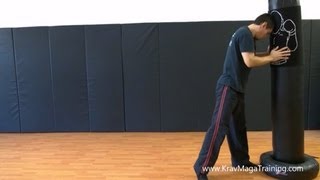
Krav Maga - Forward Headbutt (Tips to Improve Power)
Krav Maga Worldwide - Fort Lauderdale, Florida
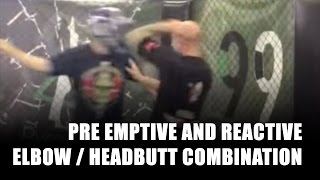
Technique For The Street, Pre emptive and reactive elbow / headbutt combination
Martial Arts Guardian
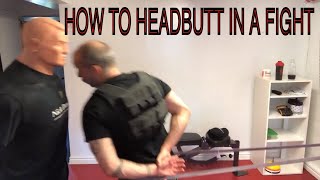
Krav Maga - How to Train a Headbutt
Nick Drossos Defensive Tactics

Finish the Fight with a Headbutt
Karate TV

2 Simple Ways To Defend Against A HEADBUTT!
Simple Self Defence