Hand Connection Principles
The instructor emphasizes that hands should remain separated during positioning and only connect when ready to execute the attack. Premature hand connection allows the opponent to "climb the rope" by pulling the extended arm, transforming the defender's grip into the attacker's advantage. Hand connection signals the beginning of the choke attempt, not a holding position.
Initial Hand Placement
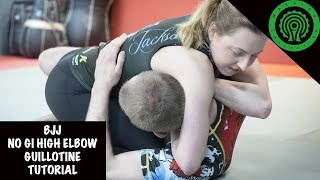
The attacking hand placement consists of one hand on the opponent's chin and the other on the back of the armpit or elbow, depending on the technique variation. The instructor cautions that the bottom player should keep their mouth closed to avoid tongue injury during the chin control. This setup prevents the opponent from securing a safe defensive position.
Shoulder Placement and Neck Control
The attacker's shoulder must sit directly on the center of the opponent's neck, not on the back or shoulder blades. Placing weight on the back enables the opponent to generate upward drive similar to a squat position, whereas neck pressure neutralizes hip elevation and prevents escape. Proper shoulder positioning makes it extremely difficult for the opponent to initiate any defense.
Arm Extension and Response Prediction
The instructor circles the opponent while maintaining chin pressure and pulling the arm forward. Most opponents naturally resist having their arm extended far forward and will reflexively pull the elbow back toward their body. The attacker exploits this predictable defensive response to transition into the high elbow guillotine.
High Elbow Guillotine Transition
As the opponent pulls their elbow back in resistance, the attacker releases the initial grip and allows the elbow to rise while establishing the guillotine choke. The key principle is maintaining the attacking arm parallel to the floor while leaning the head significantly forward over the choke. This positioning creates a mechanically superior angle that makes defense extremely difficult.
Finishing Mechanics and Body Angle
The attacker's head must lean far forward over the opponent's body rather than remaining upright, as this angle creates maximum pressure on the carotid artery. When executed correctly, the choke can be finished from the knees without needing to transition to guard pulling. The high elbow position combined with forward lean makes the technique nearly indefensible once properly set.
High Elbow Guillotine from the Front Headlock
Key Takeaways
- •Hand Connection Principles
- •Initial Hand Placement
- •Shoulder Placement and Neck Control
- •Arm Extension and Response Prediction
Nogi BJJ technique Xtreme Couture coach Robert Follis EM5II
Related Techniques
Frequently Asked Questions
What does this video teach about reverse guillotine from front headlock?
This video covers hand connection principles, initial hand placement, shoulder placement and neck control. It provides detailed instruction from Rich Castro.
How long does it take to learn reverse guillotine from front headlock?
The basic mechanics can be understood in a single session, but developing reliable execution requires consistent drilling over weeks of practice. This 6-part breakdown helps structure your training by isolating each phase of the technique.
What are the key details for finishing reverse guillotine from front headlock?
As the opponent pulls their elbow back in resistance, the attacker releases the initial grip and allows the elbow to rise while establishing the guillotine choke. The key principle is maintaining the attacking arm parallel to the floor while leaning the head significantly forward over the choke. This positioning creates a mechanically superior angle that makes defense extremely difficult.