Understanding Weight Transfer Mechanics
Ko Uchi Gari succeeds by targeting the precise moment when an opponent transfers weight to their stepping leg before it fully contacts the ground. During normal walking, a person catches themselves by shifting weight; this vulnerable instant—similar to stepping on a banana peel—is when the foot has no friction or stability. The instructor emphasizes timing this weight-in-transition phase as the critical window for the sweep.
Positioning for the Sweep
The sweeping leg requires adequate space to execute properly. The practitioner must take an exaggerated step away from their own leg to create a clear lane for the sweep, preventing the attacking leg from being blocked or abbreviated by their own stance. Failing to create this space results in a compromised technique that lacks power and effectiveness.
Synchronized Hand and Foot Coordination
All movements—hands and feet—must work as one connected unit rather than rotating independently like a wheel. When the foot moves to execute the sweep, the hands simultaneously pull the opponent off balance in coordinated fashion. This unified motion amplifies the technique's effectiveness and generates proper kuzushi (off-balancing).
Timing Through Movement Flow
Successful Ko Uchi Gari execution requires reading the opponent's weight distribution as they move. The practitioner dances or flows with the opponent, becoming familiar with their footwork patterns and identifying optimal moments for the sweep. Direction changes and weight transfers during normal movement provide high-probability opportunities for technique application.
Directional Changes as Setup Opportunities
Transitions from forward to backward movement create vulnerable weight-transfer moments ideal for Ko Uchi Gari. Immediately after an opponent shifts direction, their weight momentarily becomes unanchored, offering an optimal window to execute the sweep. These natural breaks in momentum are consistently reliable setup points.
Developing Footwork Awareness
Practitioners should practice maintaining awareness of their feet and their opponent's position without constant visual focus. While beginners may watch their feet during practice, developing proprioceptive sensitivity allows for smoother technique execution and better timing. This awareness develops naturally through repetition and relaxed practice conditions.
Accepting Missed Opportunities
Missing a Ko Uchi Gari attempt is acceptable provided the practitioner doesn't compromise their own balance or position in the process. The key principle is maintaining defensive stability even when the sweep fails to connect. Poor timing should never result in the attacking player being off-balanced or in a worse position than before the attempt.
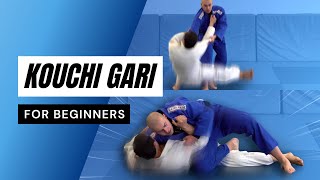
How To Do Kouchi-Gari in Judo | Ronda Rousey's Dojo #17
Key Takeaways
- •Understanding Weight Transfer Mechanics
- •Positioning for the Sweep
- •Synchronized Hand and Foot Coordination
- •Timing Through Movement Flow
Continuing the ashi waza drills, Ronda shows you how to do one of the original 40 throws in judo! Those fast feet are already paying off. #RondasFeet Join the dojo now for over 70 instruction videos from Ronda herself: https://www.rondarousey.com/dojo/ What is RondaRousey.com? It’s the Ronda Rousey database, a living documentary of Ronda’s adventures and a one on one platform for her to communicate with her fans. Yes, there’s the WWE Network, but this is a Ronda channel. Ronda’s constantly traveling the world. Get the latest news and follow her on her adventures to follow her here on YouTube and on RondaRousey.com! Connect with Ronda on social media: Twitter: https://twitter.com/RondaRousey Facebook: https://www.facebook.com/gaming/RondaRousey Instagram: https://www.instagram.com/rondarousey Don’t forget to click that subscribe button! So much more is coming. So much. #RondaRousey #Throw #Judo
Frequently Asked Questions
What does this video teach about standard ko uchi gari?
This video covers understanding weight transfer mechanics, positioning for the sweep, synchronized hand and foot coordination. It provides detailed instruction from Ronda Rousey.
How long does it take to learn standard ko uchi gari?
The basic mechanics can be understood in a single session, but developing reliable execution requires consistent drilling over weeks of practice. This 7-part breakdown helps structure your training by isolating each phase of the technique.
What are the key details for finishing standard ko uchi gari?
Practitioners should practice maintaining awareness of their feet and their opponent's position without constant visual focus. While beginners may watch their feet during practice, developing proprioceptive sensitivity allows for smoother technique execution and better timing. This awareness develops naturally through repetition and relaxed practice conditions.