Introduction to Figueiredo's Greatsword System
Oskar presents a comprehensive tutorial on Portuguese fencing master Don Jogo Gomes de Figueiredo's fight book, which consists of 32 sequences divided into simple and composite rules. This instructional series focuses on the simple rules, which form the foundational movement vocabulary for greatsword combat. Understanding these basic sequences is essential before progressing to more advanced composite techniques.
Rules 1-5: Fundamental Movement Patterns
The first five rules establish core cutting and thrusting mechanics through progressive complexity. Rule 1 teaches upward cuts using the long edge from the right (tié-out) and short edge from the left (dreves) to avoid arm crossing. Rules 2-5 build upon this foundation by introducing downward cuts, double cuts per step, thrust mechanics, and alternating thrust-and-cut combinations to develop rhythm and repetition.
Rule 6: Parry-Riposte Against Greatsword Opponents
When facing another greatsword wielder, practitioners employ parry-riposte techniques targeting shallow targets such as hands and legs. This rule addresses the tactical approach needed in blade-to-blade engagement, emphasizing precision targeting over broad cutting patterns. The technique requires understanding distance management and reposte timing.
Rule 7: Corridor Control with Continuous Cuts
This rule enables a single fighter to deny passage through a narrow space by moving side-to-side while delivering mutiny-like cuts through consistent vertical lines. The practitioner reverses direction midway, creating a defensive barrier through controlled offensive movement. This sequence develops footwork coordination with sequential overhead strikes.
Rule 8: Shield Defense Against Rotella
Rule 8 addresses combat against shield-armed opponents by employing angular cuts that force constant shield repositioning and fatigue the defender. The instructor recommends subtle head rotation during the second cut to create more horizontal cutting angles that prevent shield angle prediction. Sustained core engagement throughout this extended sequence also provides valuable conditioning benefits.
Rule 9: Close-Quarters Combat in Confined Spaces
This rule applies greatsword techniques to narrow alley scenarios where practitioners must reduce movement amplitude while maintaining combat effectiveness. Sacrificing reach for maneuverability becomes necessary in confined environments, and training with physical obstacles provides realistic spatial constraints. Practitioners must maintain defensive positioning while adapting their footwork to restricted areas.
Rule 10: Close Protection with Modified Grip Techniques
Originally a leg-guarding sequence, this rule adapts to modern close protection scenarios by incorporating German thumb-grip cutting techniques to maintain security for a protected person at closer distances. Counter-directional stepping—moving opposite to cut direction—allows the protector to maintain proximity while delivering effective overhead strikes. This hybrid approach balances classical fencing with practical protective applications.
Learn to fight with the Greatsword! A tutorial on Figueyredo's simple rules 1-16
Key Takeaways
- •Introduction to Figueiredo's Greatsword System
- •Rules 1-5: Fundamental Movement Patterns
- •Rule 6: Parry-Riposte Against Greatsword Opponents
- •Rule 7: Corridor Control with Continuous Cuts
A year ago, I went out to Teylingen castle in 32 degrees of heat, to record all of Figueyredo's simple rules for the montante. My reasoning? I absolutely love greatsword, and even though I'm more into the German varietals, Figueyredo's fight book was a huge help when getting started. There's already a few (better) interpretations up on YT, but I often hear people would like to see multiple angles and slow motion, so I hope this video is somewhat useful. Finally, this is still a work in progress, so if you'd like me to dive a bit deeper into a particular sequence, let me know! If you'd be interested in supporting the channel or are looking for extra content in general, have a look at Patreon: https://www.patreon.com/virtualfechtschule?fan_landing=true 0:00 Intro 1:53 Rule 1 Cuts from below 2:52 Rule 2 Cuts from above 3:47 Rule 3 Double cuts from above 4:46 Rule 4 Double cuts and thrust 5:40 Rule 5 Cuts and thrusts 6:39 Rule 6 Fighting against another greatsword 7:22 Rule 7 Fighting in a wide street 7:54 Rule 8 Fighting against shieldmen 8:50 Rule 9 Fighting in a narrow alley 9:48 Rule 10 Guarding a VIP 10:37 Rule 11 Fighting on a galley gangplank 11:38 Rule 12 Fighting enemies in front and behind 12:23 Rule 13 Guarding a cloak 12:52 Rule 14 Fighting against javelins or two-handed hafted weapons 13:22 Rule 15 Separating people who are fighting 14:13 Rule 16 Fighting 14:45 Closing remarks Music courtesy of epidemicsound.com #HEMA #Greatsword #Montante #zweihander #spadone #bidenhander #battlesword #Spear #Sword #Historical #European #Martial #Arts #Historical #Fencing #Middleages #medieval #Martial #Arts #Martialartist #Instructor #Athlete #Fightingfit #Fighter #warriors #knights #Swordplay #technique #Training #research #swordfighting #moustache
Related Techniques
Frequently Asked Questions
What does this video teach about quarta guard?
This video covers introduction to figueiredo's greatsword system, rules 1-5: fundamental movement patterns, rule 6: parry-riposte against greatsword opponents. It provides detailed instruction from Virtual Fechtschule.
How long does it take to learn quarta guard?
The basic mechanics can be understood in a single session, but developing reliable execution requires consistent drilling over weeks of practice. This 7-part breakdown helps structure your training by isolating each phase of the technique.
What are the key details for finishing quarta guard?
This rule applies greatsword techniques to narrow alley scenarios where practitioners must reduce movement amplitude while maintaining combat effectiveness. Sacrificing reach for maneuverability becomes necessary in confined environments, and training with physical obstacles provides realistic spatial constraints. Practitioners must maintain defensive positioning while adapting their footwork to restricted areas.
Related videos
Mixed Weapon Cutting Tournament (Top 4) - Filipino, Latin American, German Swords!
Blood and Iron HEMA

Learn the Art of Combat: Longsword Guards - Beginners Guide
Björn Rüther
10 Solo Rapier Drills in 5 minutes
Blood and Iron HEMA
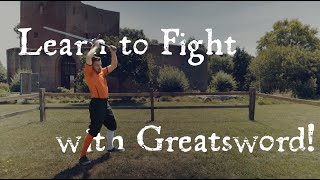
Learn to fight with the Greatsword! A tutorial on Figueyredo's simple rules 1-16
Virtual Fechtschule
Learn the Art of Combat: Longsword Guards - Beginners Guide
Björn Rüther