Foundation: The Mount Position Setup
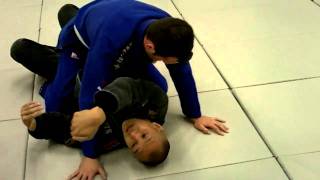
The trap and roll escape begins from a defensive position in the mount. The practitioner should maintain a lower profile if necessary, preparing to isolate one side of the opponent's body for the escape sequence.
Initial Grip: Securing the Arm and Foot
The defender secures the opponent's arm by gripping above the elbow—never below, as this allows escape. Simultaneously, the second leg cups the opponent's foot while positioning itself near the defender's own hip, creating the mechanical foundation for the roll.
The Bridge and Roll: Three Simultaneous Actions
The escape consists of three coordinated movements executed together: trapping the hand, trapping the leg, and bridging the hips upward. This synchronized action lifts the opponent and rotates them over the defender's body in one fluid motion.
Critical Head Positioning: The Ear-to-Ground Technique
When the opponent posts their hands to prevent the roll, the defender must turn their head completely toward the direction of the roll, pressing their ear to the ground. This small but essential detail provides the additional leverage and space needed to complete the escape.
Variation: The Collar Grip Counter-Roll
If the opponent posts an arm aggressively away from the defender, the strategy shifts: the defender maintains a tight grip on the posted arm while transferring their free hand to the opponent's rear collar. The defender then bridges toward their own head and rolls in the opposite direction, using head alignment as the triggering mechanism.
Head Alignment Principle: A Universal Vulnerability
When an opponent's head aligns with the defender's head, they become vulnerable to being swept over. This principle applies universally whenever an opponent is mounted and hugging the defender's head—maintaining distance prevents the escape, but alignment enables it.
Variation: Moving Into the Opponent's Base
When the opponent establishes a wide base that prevents the standard roll, the defender shifts strategy by moving their entire body toward the opponent's posted hand rather than pulling the opponent toward them. After repositioning, the defender executes the trap and roll in the new alignment.
Variation: The Cuff and Wrap
If the opponent bases out in one direction, the defender can cuff both sleeves (or wrists in no-gi) and drive them around and toward their own body to reverse the position. This technique works equally well in both gi and no-gi contexts.
Variation: The Elbow Cuff Extension
As a more recent refinement, the defender can cuff under the opponent's elbows and drive them straight upward while simultaneously trapping and rolling. This direct extension controls the opponent long enough to bridge and complete the escape in one explosive movement.
Trap & Roll Mount Escape
Key Takeaways
- •Foundation: The Mount Position Setup
- •Initial Grip: Securing the Arm and Foot
- •The Bridge and Roll: Three Simultaneous Actions
- •Critical Head Positioning: The Ear-to-Ground Technique
There are several ways you can escape from underneath the Mount Position. In this video I am going over several ways you can trap the arm, block the foot and bridge. I will follow this instruction with one where I cover several Elbow Escapes. Trillo Jiujitsu Academy 18400 NW 75 Place #122 Miami, Florida 33015 786-294-0447 trilloacademy.com https://www.facebook.com/TrilloAcademy/ Official Tom DeBlass Association Professor Freddy Trillo 25 Year Police Officer/SWAT/ Defense Tactics Police Instructor 23 Year Training Brazilian Jiujitsu Brazilian Jiujitsu Black Belt Professor under Professor Tom DeBlass Trillo Academy is located on Miami Gardens Drive, just a few blocks north of Miami Lakes and Hialeah area. We have classes for Adults, Teens, and Children. After School Program and Summer Camps available.
Frequently Asked Questions
What does this video teach about standard roll escape?
This video covers foundation: the mount position setup, initial grip: securing the arm and foot, the bridge and roll: three simultaneous actions. It provides detailed instruction from Trillo Jiujitsu Academy.
How long does it take to learn standard roll escape?
The basic mechanics can be understood in a single session, but developing reliable execution requires consistent drilling over weeks of practice. This 9-part breakdown helps structure your training by isolating each phase of the technique.
What are the key details for finishing standard roll escape?
If the opponent bases out in one direction, the defender can cuff both sleeves (or wrists in no-gi) and drive them around and toward their own body to reverse the position. This technique works equally well in both gi and no-gi contexts.