Crossface Control Setup
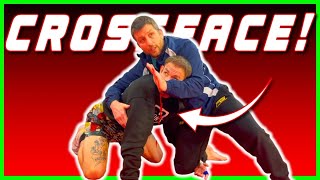
The crossface is executed by threading the arm closest to the opponent's head underneath and hooking the fingers into their armpit. The practitioner cinches this grip tightly while using the opponent's chin as a lever to rotate their head away. The shoulder then drives into the chin to complete the control, creating significant pressure and immobilization.
Body Alignment and Power Generation
Effective crossface control requires full-body engagement rather than isolated arm strength. The practitioner rises onto their toes and drives their hips at an angle that channels body weight downward through the jaw. This coordinated hip and shoulder movement creates exponentially greater pressure than arm-only techniques.
Effects and Defensive Priority
The crossface renders the bottom player completely immobilized, restricting head movement and compromising neck integrity. Prevention is far more important than escape—after sufficient training, opponents should rarely establish this position. The primary defensive strategy focuses on preventing the crossface entirely rather than escaping from it.
Early Escape: Positional Adjustment
When caught in a crossface, the defender must avoid allowing their neck to twist while their shoulders remain pinned. The defender permits their body to turn onto their side, lifting the shoulder off the mat to increase mobility and relieve pressure. Simultaneously, they position their hand to check the opponent's shoulder and begin relieving pressure through arm positioning.
Hand Placement and Frame Walking
Once the defending hand enters the space between the face and opponent's arm, the defender walks their fingers upward along the head. This 'hair slicking' motion creates sequential frames that prevent the opponent from achieving proper neck alignment and control. The goal is to maintain defensive hand contact throughout the opponent's pressure application.
Shoulder Frame When Caught Unprepared
If caught without hand placement inside the crossface, the defender frames the opponent's shoulder to create resistance and create space. The defender then turns onto their side—prioritizing neck integrity over positional advantage—and works to get their hand inside the crossface pocket. This shoulder frame provides temporary relief while the hand repositions for continued defense.
Proactive Crossface Block
The defender anticipates the crossface by positioning on their side and blocking the opponent's grip before it's fully established. The defender frames the opponent's collarbone with their forearm or elbow while keeping their elbows tight to their body. This proactive blocking requires the defender to stay on their side and maintain a strong base with their foot.
Defensive Hand Position Hierarchy
The primary defense involves framing the opponent's arm to prevent head control. If this fails, the defender can place both hands on their own head, creating structural resistance that makes crossface gripping extremely difficult. The defender maintains their side position throughout all variations to preserve neck safety.
Guard Pass Contingency
Even after the opponent successfully passes the guard, the defender must immediately establish a crossface block. Preventing head control remains the priority regardless of positional changes, as passing the guard does not guarantee the opponent has secured the head. The defender communicates this standard to training partners by actively blocking until the crossface threat is completely neutralized.
How to Make Side Control BRUTAL with the Crossface
Key Takeaways
- •Crossface Control Setup
- •Body Alignment and Power Generation
- •Effects and Defensive Priority
- •Early Escape: Positional Adjustment
BJJ black belt Cal MacDonald came into the Grapplearts dojo to share the details of the side control crossface for maximum pressure, as well as crossface defences and escapes. Check out Cal's instructional BJJ Foundations, the best BJJ curriculum I've ever seen, at https://www.grapplearts.com/bjj-foundations
Frequently Asked Questions
What does this video teach about standard crossface control?
This video covers crossface control setup, body alignment and power generation, effects and defensive priority. It provides detailed instruction from Stephan Kesting.
How long does it take to learn standard crossface control?
The basic mechanics can be understood in a single session, but developing reliable execution requires consistent drilling over weeks of practice. This 9-part breakdown helps structure your training by isolating each phase of the technique.
What are the key details for finishing standard crossface control?
The primary defense involves framing the opponent's arm to prevent head control. If this fails, the defender can place both hands on their own head, creating structural resistance that makes crossface gripping extremely difficult. The defender maintains their side position throughout all variations to preserve neck safety.
![Self Defense - The Clinch for Close Quarter Combat [Lesson 7]](https://img.youtube.com/vi/qOyK75ysdqo/mqdefault.jpg)