Introduction to Quando Konyuk
Quando Konyuk, commonly known as the hammer fist strike, is a fundamental technique in Ki Cho Woon Dong that combines defensive and offensive applications. The movement mirrors a low block but redirects toward the face or higher striking areas, demonstrating how blocking and striking share the same mechanical foundation.
Stance and Hand Positioning
The hammer fist can be executed from front stance or traditional side stance, striking with the bottom of the closed fist. Practitioners should maintain a slight micro-bend in the elbow to avoid hyperextension and practice against the waist or heavy bags to develop proper contact and power transfer.
Technique Variations
The hammer fist adapts to multiple applications including low strikes, center-line attacks, out-to-in blocks, and spinning variations. Each variation should be practiced systematically through line work, forms, partner drills, and pad work to develop comprehensive mastery.
Common Mistakes
Three primary errors undermine hammer fist effectiveness: confusing it with the back fist (a flicking technique requiring different mechanics), executing strikes without full-body power engagement, and losing balance during spinning applications. Proper technique demands whole-body integration, controlled range, and stable stance alignment throughout execution.
Drill 1: Sequential Pad Work
Execute five consecutive hammer fists in rhythmic sequence: basic strike, twisted variation, repetition on opposite side, and spinning strike. This drill develops versatility and timing while allowing practitioners to explore power application and breathing coordination.
Drill 2: Integrated Technique Combination
Combine the hammer fist with previously learned techniques by executing an out-to-in block followed by elbow strike, back fist, and hammer fist. This progression demonstrates why full-body power engagement is essential for technique effectiveness and builds comprehensive striking competency.
Drill 3: Takedown Applications
Practice two takedown variations: stepping back to block, then stepping forward in side stance for traditional hammer fist application; and the spinning hammer fist from Pyong Samdan form, where the strike crosses the opponent's face as the practitioner follows through to the floor. Both variations demand controlled speed initially to ensure partner safety.
Conclusion and Practice Framework
The hammer fist exemplifies how fundamental movements serve multiple purposes across blocking, striking, and grappling applications. Consistent practice through structured drills, forms training, and partner work develops the body mechanics and power generation necessary for effective real-world application.
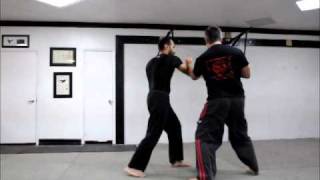
Ki Cho Woon Dong - Hammerfist Strike (Tutorial)
Key Takeaways
- •Introduction to Quando Konyuk
- •Stance and Hand Positioning
- •Technique Variations
- •Common Mistakes
Please watch part 10 on the low block first as the mechanics are the same and the hammerfist is just the striking version of the block
Frequently Asked Questions
What does this video teach about standard downward hammer fist?
This video covers introduction to quando konyuk, stance and hand positioning, technique variations. It provides detailed instruction from Heads of the Valleys Tang Soo Do.
How long does it take to learn standard downward hammer fist?
The basic mechanics can be understood in a single session, but developing reliable execution requires consistent drilling over weeks of practice. This 8-part breakdown helps structure your training by isolating each phase of the technique.
What are the key details for finishing standard downward hammer fist?
Practice two takedown variations: stepping back to block, then stepping forward in side stance for traditional hammer fist application; and the spinning hammer fist from Pyong Samdan form, where the strike crosses the opponent's face as the practitioner follows through to the floor. Both variations demand controlled speed initially to ensure partner safety.
Related videos

Hammer fist and Limb destruction
Dave Shaw - Combined Karate

HOW to HAMMER fist in a STREET FIGHT
Nick Drossos Defensive Tactics
The Hammer Fist
Miami Arnis Group

Mehr POWER für Kicks im Wing Chun, Wing Tsun Tritte: Beintraining für zu Hause
Dom Wolf

BOXING Q&A - Debunking Straights vs Hooks (punching myths and misconceptions)
expertboxing