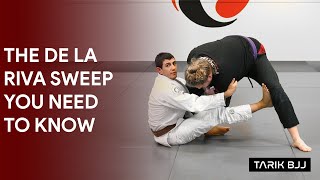
Setup: Cross Collar and Sleeve Guard
The instructor begins from a guard position with cross collar and sleeve grips established. The opponent applies forward pressure, attempting to pin the guard player's back to the mat. This aggressive posturing creates the ideal opportunity to execute the hook sweep.
Arm Positioning Under the Chin
Rather than maintaining a stiff-arm defense, the guard player bends their collar-grip arm and allows the opponent to advance slightly. The goal is to position the forearm and wrist under the opponent's chin, enabling better directional control of the head and creating potential neck attack opportunities.
Breaking the Grip and Transitioning
As the opponent commits their weight forward, the guard player immediately breaks the grip on the opponent's arm at the sleeve. The guard player pivots to their shoulder while keeping their back off the mat, using the underhook arm to direct the opponent's weight laterally.
Hook Lift and Load Sequence
The first movement initiates by using the hook foot to lift the opponent's weight forward while drawing the knee toward the chest. The arms simultaneously steer the opponent's upper body as the guard player drives off the mat foot to elevate onto their shoulder.
Knee Positioning and Leg Mechanics
The guard player ensures their top-side knee remains positioned outside the opponent's ribcage rather than in front of their body. This external angle prevents the opponent from collapsing the leg and provides the necessary leverage to complete the sweep successfully.
Executing the Sweep and Transition
Maintaining the steering pressure through both arms, the guard player rotates the hook foot to flip the opponent over while using the bottom foot to drive their body weight forward. The guard player lands in a dominant cross-knee pin position with grips intact, allowing immediate transition into a knee slice pass.
Angle Refinement and Pressure Distribution
Optimal positioning places the guard player slightly outside the opponent's centerline rather than directly in front. This angled setup increases mechanical advantage, makes grip collapse more difficult for the opponent, and provides additional space to execute the sweep with minimal resistance.
Application Against High-Level Opponents
This fundamental sweep remains effective even when applied against advanced practitioners due to its direct mechanical efficiency. When the primary sweep fails, the established grips and top position create reliable follow-up attacking sequences from the cross-knee pin.
Rafael Lovato Jr Teaches Cross Collar Hook Sweep
Key Takeaways
- •Setup: Cross Collar and Sleeve Guard
- •Arm Positioning Under the Chin
- •Breaking the Grip and Transitioning
- •Hook Lift and Load Sequence
Rafael Lovato Jr teaches a super effective Cross Collar Hook Sweep. This technique is part of his Guard Mastery DVD. Check out Rafael's DVDs here: https://bjjfanatics.com/collections/all/fighter_rafael-lovato?rfsn=4214888.4961f&subid=lovatoyt
Frequently Asked Questions
What does this video teach about standard collar-sleeve sweep?
This video covers setup: cross collar and sleeve guard, arm positioning under the chin, breaking the grip and transitioning. It provides detailed instruction from BJJ Video Vault.
How long does it take to learn standard collar-sleeve sweep?
The basic mechanics can be understood in a single session, but developing reliable execution requires consistent drilling over weeks of practice. This 8-part breakdown helps structure your training by isolating each phase of the technique.
What are the key details for finishing standard collar-sleeve sweep?
Optimal positioning places the guard player slightly outside the opponent's centerline rather than directly in front. This angled setup increases mechanical advantage, makes grip collapse more difficult for the opponent, and provides additional space to execute the sweep with minimal resistance.