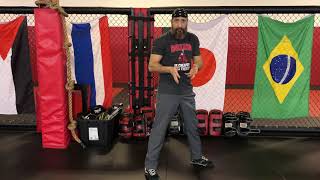
High Guard Fundamentals
The high guard is a boxing stance in which both hands are positioned at approximately eyebrow level. This positioning creates a secure barrier around the head, minimizing openings for opponents to land strikes to the upper body and face.
Muscle Memory and Defensive Reliability
Consistent practice in the high guard develops muscle memory that keeps the hands elevated for protection. Unlike specialized stances such as the Philly shell, which demand exceptionally fast reflexes, the high guard provides reliable defense even when an athlete is fatigued or under sustained pressure.
Professional Examples and Application
Professional fighters who rely exclusively on complex defensive techniques often struggle when compromised. Floyd Mayweather exemplified adaptive defense when stunned by a right hand from Shane Mosley; he immediately switched to the high guard and subsequently dominated the remainder of the bout, demonstrating its value as a situational tool.
Advantages of the High Guard
The high guard enables safer entry into close range without relying solely on head movement and reflexes. The elevated hand position provides comprehensive protection to vulnerable areas of the head and upper face.
Limitations and Trade-offs
The high guard reduces peripheral vision due to hand positioning near the face and leaves the body somewhat more exposed. Athletes must avoid overconfidence in hand coverage and cannot abandon active head movement, catching, and parrying techniques.
Three Critical Errors to Avoid
Athletes should not remain static in the high guard without actively catching, parrying, or moving the head—blocking should serve as a last resort. Hunching forward exposes both the torso and creates vulnerability to uppercuts, while overprotecting the head at the expense of body defense leaves the midsection dangerously exposed.
Three Essential Defensive Principles
Maintain continuous head movement and feinting to create distance and angles. Use the elevated hand position to draw opponent attention upward, then redirect attacks to the body when opportunities present themselves.
Five Counter-Punching Methods from the High Guard
Catch and parry straight shots, then counter immediately. Deflect body jabs with the elbow and respond with hooks; catch uppercuts and counter with hooks to both sides. Against body hooks, fire an uppercut to the chin; employ pullback counters to create distance and reset position.
Why You Should Know the High Guard (Tips & Counter Punches)
Key Takeaways
- •High Guard Fundamentals
- •Muscle Memory and Defensive Reliability
- •Professional Examples and Application
- •Advantages of the High Guard
The high guard is a boxing stance used commonly by aggressive fighters due to its shield-like protection as they pressure forward in the danger zone. In this video, I go over the pros & cons, do's & don'ts, and how to counter punch from the high guard. 00:00 Intro 00:12 Advantages of the High Guard 01:35 Cons of the High Guard 02:04 Couple Pointers to Try 02:31 3 Things Not to Do 03:16 3 Things You Should Do 03:41 5 Ways to Counter Punch from the High Guard 04:47 Outro For an extra useful tip to improve your high guard defense, click on this link here: https://youtu.be/_YavK8pPmw8 🥊🥊
Frequently Asked Questions
What does this video teach about standard high guard?
This video covers high guard fundamentals, muscle memory and defensive reliability, professional examples and application. It provides detailed instruction from Coach Pillow Fists.
How long does it take to learn standard high guard?
The basic mechanics can be understood in a single session, but developing reliable execution requires consistent drilling over weeks of practice. This 8-part breakdown helps structure your training by isolating each phase of the technique.
What are the key details for finishing standard high guard?
Maintain continuous head movement and feinting to create distance and angles. Use the elevated hand position to draw opponent attention upward, then redirect attacks to the body when opportunities present themselves.