Class Overview: Fundamental Guard Combinations
This lesson covers three essential techniques from the Gracie Jiu-Jitsu curriculum: the sit-up sweep, guillotine choke, and Kimura arm lock. These high-percentage techniques form the foundation of effective guard work and provide multiple submission opportunities from a single position.
Sit-Up Sweep: Body Positioning
The sit-up sweep begins with proper body mechanics. Rather than sitting straight up toward the opponent's knees, the practitioner must rotate the torso as they rise, which disrupts the opponent's arm positioning. The supporting hand remains on the palm (not the elbow) and stays centered along the body's midline for maximum structural integrity.
Sit-Up Sweep: Execution and Hip Control
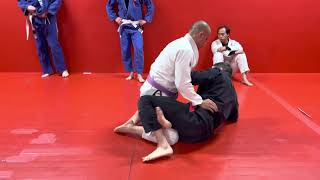
The sweep should only be attempted when the opponent is already upright or moving toward a 90-degree posture. As the opponent resists downward pressure and sits up, the practitioner releases their leg control and drives their hips onto the opponent's thighs while cupping the back of the arm. The knee then drives to the ground as the practitioner steps over into mounted position.
Sit-Up Sweep: Hip Displacement Principle
The primary objective of the sit-up sweep is to displace the opponent's hips past their heels, forcing them to sit on their buttocks. Rather than attempting complex over-the-top movements, the practitioner focuses solely on driving their own hips forward to complete the sweep.
Kimura Lock: Defense to Submission
When the opponent drives into the guard with good posture during a sit-up sweep attempt, their exposed arm becomes the target for a Kimura lock. The practitioner scoots their body to the side to jack the opponent's arm outward while trapping their leg, then secures the wrist grip across the body.
Kimura Lock: Finishing Position
From the wrist grip, the practitioner feeds their arm through and clasps their own wrist, then lays back while turning slightly to the side. The top leg locks over the bottom leg as the practitioner drives their elbow toward the ground while pressing the opponent's hand toward their head, completing the submission.
Guillotine Choke: Setup and Mechanics
The guillotine choke is executed when the sit-up sweep attempt reveals a weak neck position. The practitioner scoots their buttocks back to create distance while raising their arms, then drops their elbow below shoulder level and wraps around the opponent's neck to clasp their wrist.
Guillotine Choke: Compression Technique
The guillotine is finished by 'rocking the baby'—simultaneously shrugging the shoulders to bring the hands toward center while pulling the neck deeper into the choking pocket. The practitioner then lays toward the trapped side while applying steady pressure until the submission is secured.
lesson 3 guillotine, kimura, and sweeps
Key Takeaways
- •Class Overview: Fundamental Guard Combinations
- •Sit-Up Sweep: Body Positioning
- •Sit-Up Sweep: Execution and Hip Control
- •Sit-Up Sweep: Hip Displacement Principle
guillotine, kimura, and sweeps
Frequently Asked Questions
What does this video teach about standard kimura sweep?
This video covers class overview: fundamental guard combinations, sit-up sweep: body positioning, sit-up sweep: execution and hip control. It provides detailed instruction from Top Level Jiu-Jitsu.
How long does it take to learn standard kimura sweep?
The basic mechanics can be understood in a single session, but developing reliable execution requires consistent drilling over weeks of practice. This 8-part breakdown helps structure your training by isolating each phase of the technique.
What are the key details for finishing standard kimura sweep?
The guillotine choke is executed when the sit-up sweep attempt reveals a weak neck position. The practitioner scoots their buttocks back to create distance while raising their arms, then drops their elbow below shoulder level and wraps around the opponent's neck to clasp their wrist.