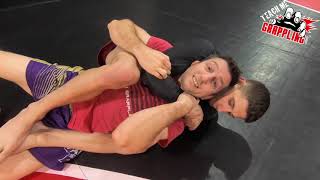
Inverted Grip High Elbow Guillotine Overview
The inverted grip high elbow guillotine is an unconventional variation executed with an inverted palm-to-palm grip rather than the traditional approach. This technique was successfully demonstrated by Benitez against Brown at UFC 180 and is particularly effective when the opponent drives the defender against the cage. The inverted grip allows the elbow to achieve optimal positioning over the trapezius immediately upon grip completion.
Grip Execution and Hand Positioning
To establish the grip, the practitioner inserts one hand upside down through the opponent's trap and locks it palm-to-palm with the other hand. The critical distinction from standard guillotine grips is the hand inversion, which naturally positions the elbow high over the trap without requiring additional angular adjustments. Once locked, this configuration creates exceptional pressure and eliminates common escape vectors.
Ground Application from Open Guard
The inverted grip guillotine translates effectively to ground fighting from open guard positions, such as following a failed single-leg takedown attempt. The technique exploits the existing gap between the opponent's neck and trapezius, allowing rapid grip establishment without creating additional space. Upon locking the palms, the forearm is already positioned over the opponent's back in the high elbow configuration.
Continued Choking Through Guard Passage
A key advantage of this variation is that the choke remains effective even after the opponent passes the guard on the same side. As the opponent moves across the practitioner's body, the elevated arm position maintains compressive force, often forcing the opponent to either tap or move back across. This persistent pressure distinguishes it from conventional guillotines, which typically lose effectiveness during guard passage.
Anatomical Advantages and Finish Mechanics
The inverted grip places the arm in a mechanically advantageous position that resists the opponent's attempts to peel the elbow away. By bringing the hips up and engaging leg pressure, the practitioner completes the choke with superior leverage compared to standard guillotine mechanics. The high elbow position combined with proper hip engagement creates a reliable finish that is difficult to defend or escape.
Arm-In Guillotine from Front Headlock Position
The arm-in guillotine, demonstrated by Lamas at UFC 180, is a katagatame-style choke applied from front headlock or go-behind positions. The technique requires locking the hands using either a standard guillotine grip or palm-to-palm configuration, with the standard grip being the preferred method. This variation combines headlock mechanics with guillotine principles for increased effectiveness.
Critical Leg Positioning for Head-Arm Control
Success with the arm-in guillotine depends on deep leg positioning, with the inside leg threading to touch or pass the opponent's same-side knee. This deep leg placement allows the hip to catch the opponent's triceps, preventing arm extraction and securing the choke. Insufficient leg depth is a common error that allows the opponent's head to escape.
Slack Removal and Transition to Finish
As the practitioner transitions to the ground position, removing all slack from the grip is essential before the body locks in fully. The practitioner yanks the grip tight through the opponent's armpit while simultaneously diving the inside knee deep, preventing the opponent's head from popping out. Only after slack removal should the practitioner fall back and establish leg hooks for the final squeeze.
Leg Configuration and Hip Drive for Completion
The finish position places the inside foot on the opponent's thigh while the outside foot hooks into the hip crook, similar to closed guard mechanics. The practitioner elevates the hips and applies sustained squeeze pressure using the legs to complete the modified head-arm or katagatame-style choke. This leg engagement provides the final compressive force necessary for the submission finish.
UFC 180 Guillotine Choke Breakdown /Quick Tutorial
Key Takeaways
- •Inverted Grip High Elbow Guillotine Overview
- •Grip Execution and Hand Positioning
- •Ground Application from Open Guard
- •Continued Choking Through Guard Passage
The inverted high elbow guillotine choke used by Benitez and front head arm choke used by Ricardo Lamas in UFC 180. These are both awesome guillotines, and both athletes used them very well. I call the front head arm "the Almeida" (Ricardo Almeida used this in training in the early days at Renzo's from back control - 1 hook in).
Related Techniques
Frequently Asked Questions
What does this video teach about posture guillotine escape?
This video covers inverted grip high elbow guillotine overview, grip execution and hand positioning, ground application from open guard. It provides detailed instruction from Shawn Williams BJJ.
How long does it take to learn posture guillotine escape?
The basic mechanics can be understood in a single session, but developing reliable execution requires consistent drilling over weeks of practice. This 9-part breakdown helps structure your training by isolating each phase of the technique.
What are the key details for finishing posture guillotine escape?
As the practitioner transitions to the ground position, removing all slack from the grip is essential before the body locks in fully. The practitioner yanks the grip tight through the opponent's armpit while simultaneously diving the inside knee deep, preventing the opponent's head from popping out. Only after slack removal should the practitioner fall back and establish leg hooks for the final squeeze.