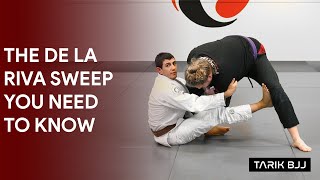
Introduction to De La Riva Guard Fundamentals
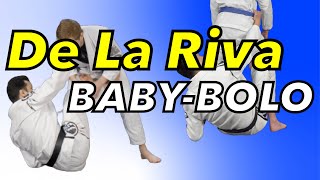
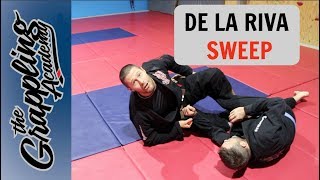
The De La Riva guard is a fundamental Brazilian Jiu-Jitsu position that provides excellent offensive sweeping opportunities for practitioners of all levels. This instructional focuses on basic De La Riva sweep mechanics suitable for white belt students who are developing their guard game. Understanding proper entry and control mechanisms is essential before attempting technical execution.
Establishing the De La Riva Hook
The De La Riva hook is created by placing the inside foot on the opponent's inner thigh while controlling their leg. Proper heel control prevents the opponent from turning their knee outward, which would compromise the position. The instructor maintains constant tension on the foot to prevent defensive adjustments and maintain positional dominance.
Grip Selection for White Belt Practitioners
The foundational grip for De La Riva consists of a cross-grip on the opponent's sleeve combined with control of the same-side hip. This grip combination provides the necessary leverage and balance control without overwhelming technical complexity. While advanced variations exist, this basic grip framework allows beginners to develop proper mechanics and positional awareness.
Common Entry: The Standing Guard Break Response
When an opponent stands to break the guard, the De La Riva position becomes readily accessible through a natural transitional sequence. The defender switches to the sleeve grip, opens their legs, captures the ankle, and immediately creates an off-balance situation. This entry method is practical and commonly encountered, making it essential knowledge for developing guard players.
Maintaining Control and Creating Off-Balance
Once in the De La Riva position, the student must maintain constant pressure against the opponent's leg while preventing forward stepping movement. The controlling foot pushes inward against the inner thigh while the grip maintains upper body off-balance. This foundational control element must be established before attempting any sweep technique.
The Hook Sweep Execution
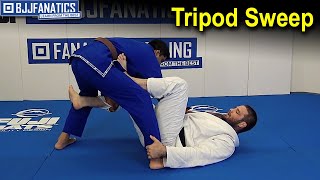
The sweep is initiated by moving the control foot to the opponent's hip, then immediately placing the other leg behind their knee to create a hook. The practitioner executes a simultaneous pushing and pulling action, driving through the hips while pulling downward on the grip. This coordinated motion should generate sufficient momentum to complete the takedown.
Critical Safety Consideration: Leg Positioning
A common mistake among white belts is leaving the sweeping leg extended during the upward movement, creating vulnerability to ankle lock attacks. As soon as the opponent begins falling, the sweeping leg must be retracted and the practitioner should establish a combat base. Proper leg management is essential to prevent defensive counter-attacks from skilled opponents.
Complete Technique Sequence and Passing Position
The full De La Riva sweep begins from the standing guard break, progresses through proper grip and hook establishment, and concludes with the synchronized push-pull sweep motion. Upon successful completion, the practitioner retracts the sweeping leg and transitions into a dominant passing position. This sequence should be practiced repeatedly to develop muscle memory and timing.
Adapting to Opponent Adjustments
Even when the opponent squares up their hips more than desired, the De La Riva sweep remains viable through proper grip maintenance and execution timing. The fundamental mechanics remain consistent regardless of minor positional variations. Practitioners should recognize that technical consistency matters more than perfect initial positioning.
Progressive Learning Framework: Entry, Control, Execution
Effective skill development follows a three-stage progression: first establishing proper entry into the position, second developing reliable control mechanisms, and third executing technical variations. Attempting techniques without adequate positional control is counterproductive and develops poor habits. White belt students should prioritize reaching the De La Riva position consistently before focusing on sweep variations or advanced applications.
Basic De La Riva Sweep for White Belts with Position Details
Key Takeaways
- •Introduction to De La Riva Guard Fundamentals
- •Establishing the De La Riva Hook
- •Grip Selection for White Belt Practitioners
- •Common Entry: The Standing Guard Break Response
Today's question is from Andrew who requested a De La Riva Sweep. In this video I first talk about some basic ideas of the De La Riva position (commonly written as DLR). These are techniques and ideas I show to my White Belts in class. Again, with any attack we plan to use in Brazilian Jiujitsu. We start with control of the position. I also show a very easy entry into the position that I show to my BJJ White Belts in my gym. After the basics of DLR I show an incredibly basic sweep often called a Hook Sweep. It's a very common and not very complicated sweep. And I find that a lot of my White Belts are able to take this BJJ technique and use it effectively. Make sure if you plan to use this technique for your Brazilian Jiu-jitsu game. Don't leave your legs hanging when you make your way on top. As I talk about, you can get caught in things like legs locks if you're not careful. Thanks again to Andrew for the question. And I hope this helps any of you trying to use a technique from De La Riva. -Chewy ----------------- Free Ebook: http://www.chewjitsu.net/focused-jiu-jitsu-13-page-ebook/ Video Courses and Products: http://www.chewjitsu.net/products T shirts: http://www.chewjitsu.net/shop/ http://www.Facebook.com/Chewjitsu http://www.instagram.com/Chewjitsu http://www.twitter.com/Chewjitsu Intro/Outtro Music : https://bknapp.bandcamp.com If you’d ever like to train with the team and I. Check out my gym Derby City MMA in Louisville,KY.
Related Techniques
Frequently Asked Questions
What does this video teach about standard de la riva sweep?
This video covers introduction to de la riva guard fundamentals, establishing the de la riva hook, grip selection for white belt practitioners. It provides detailed instruction from Chewjitsu.
How long does it take to learn standard de la riva sweep?
The basic mechanics can be understood in a single session, but developing reliable execution requires consistent drilling over weeks of practice. This 10-part breakdown helps structure your training by isolating each phase of the technique.
What are the key details for finishing standard de la riva sweep?
Even when the opponent squares up their hips more than desired, the De La Riva sweep remains viable through proper grip maintenance and execution timing. The fundamental mechanics remain consistent regardless of minor positional variations. Practitioners should recognize that technical consistency matters more than perfect initial positioning.