Introduction and Overview
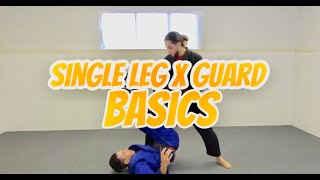
Thomas Esbo, a black belt and two-time world champion, outlines the single leg x-guard as a three-part system: entry, control and maintenance, and attacks. He explains that attacks from this position can take the form of sweeps, submissions, or back takes, and will address each element systematically.
The Shinoshina Entry
The entry begins by identifying which leg is slightly forward. Before attacking that leg directly, the practitioner must clear the opponent's hands through hand fighting to create space. Once close with the head inside, the practitioner hooks the leg and establishes initial control.
Transitioning to Single Leg X-Guard
From the Shinoshina position, the practitioner pushes the opponent's knee to one side while falling to that same side. This weight distribution prevents the opponent from dropping their knee onto the practitioner's chest. A reverse Lahiba hook with the inside leg further prevents the opponent from placing their knee across the chest.
Lower Body Positioning
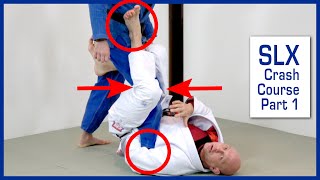
The heel of one foot presses against the opponent's hip to maintain elevation. The other foot hooks inside to protect the guard. The knees remain pinched together tightly rather than separated, which is fundamental to guard stability and control.
Upper Body Control
One arm controls the opponent's leg through various grip options—grabbing the calf, pants, wrapping the leg, or controlling via the collar. The opposite arm functions dynamically, serving multiple roles including trapping for sweeps, pushing to force postured defense, or defending against mount attempts.
Hip Positioning for Leverage
The hips must remain high and positioned inside the opponent's legs rather than outside. Proper inside hip positioning provides leverage for both offensive and defensive movements. When the opponent defends, the practitioner can counter or reset by bringing the hips back inside.
Basic Ankle Sweep Attack
The fundamental attack involves grabbing the opponent's ankle when their leg is close to the practitioner's arm. As the practitioner elevates their hips and pushes their knee back, they prevent the opponent from stepping backward. The practitioner should maintain leg control throughout the sweep and stand up while keeping hold of the leg to secure the takedown.
Understanding The Single Leg X Guard
Key Takeaways
- •Introduction and Overview
- •The Shinoshina Entry
- •Transitioning to Single Leg X-Guard
- •Lower Body Positioning
What is SLX? How do I add this technique to my game? How do I develop my skills in this type of game? In this video, I give a brief explanation of the three elements that comprise this technique: 1- Entry 2- Positioning and control 3- Attack This is just a preview of this course, which in my opinion, is one of the best I've done. If you want to improve your guard, be sure to check it out! https://bjjfanatics.com/collections/all/products/single-leg-x-beyond-the-basics-by-thomas-lisboa
Related Techniques
Frequently Asked Questions
What does this video teach about single leg x-guard?
This video covers introduction and overview, the shinoshina entry, transitioning to single leg x-guard. It provides detailed instruction from Alliance Jiu Jitsu SJC - Irmãos Lisboa.
How long does it take to learn single leg x-guard?
The basic mechanics can be understood in a single session, but developing reliable execution requires consistent drilling over weeks of practice. This 7-part breakdown helps structure your training by isolating each phase of the technique.
What are the key details for finishing single leg x-guard?
The hips must remain high and positioned inside the opponent's legs rather than outside. Proper inside hip positioning provides leverage for both offensive and defensive movements. When the opponent defends, the practitioner can counter or reset by bringing the hips back inside.