Understanding the Nelson System
The Nelson family of submissions is categorized by the number of gaps controlled on the opponent's body. The quarter Nelson uses one gap with a single arm, the half Nelson controls two gaps across the body, the three-quarter Nelson covers three gaps, and the full Nelson controls all four gaps. This classification system directly correlates to the intensity and effectiveness of each variation.
Hand Placement and Depth
Proper hand depth is critical for submission effectiveness. The instructor must drive upward through the opponent's chest to ensure the hand is deep enough—a depth check involves verifying that all fingers are visible above the surface. Shallow hand placement will compromise the submission's ability to create the necessary pressure.
The S-Grip Configuration
The S-grip aligns both cutting bones (the radius and ulna) with the sides of the opponent's head, creating optimal mechanical advantage for the neck crank. This grip position is essential for the immediate transition to the chancery and ensures proper biomechanical alignment throughout the submission sequence.
Positioning on the Side Control
After achieving the three-quarter Nelson, the instructor must scissor the elbows together to roll the opponent onto their side without allowing them to flatten to their back. The key is maintaining slight upward pressure while adjusting with the opponent's movement, preventing them from escaping by rotating to supine position.
Chest-to-Shoulder Body Positioning
The distinction between an effective and ineffective neck crank lies in chest placement on the opponent's shoulder. Simply twisting the neck without establishing this connection generates minimal pressure; driving the chest onto the shoulder while maintaining upward pressure on the head creates complete positional control and forces submission.
Cutting Bone Alignment for the Chancery
The cutting bones must be positioned precisely: one aligned at the base of the jaw, the other above the ear. This alignment creates a lateral neck compression effect. The thumbs twist inward together to complete the submission while body weight remains distributed on the opponent's shoulder, not lifted away.
Preventing Escape Through Weight Distribution
A common mistake is removing body weight from the opponent to transition into the chancery, which immediately allows the opponent to roll supine and escape. The instructor must lift the opponent slightly to adjust position while maintaining constant contact and control, keeping them pinned on their side throughout the submission.
Final Submission Execution
Once positioned correctly with body weight on the opponent's shoulder and cutting bones aligned properly, the thumbs drive together to apply lateral neck pressure. The submission mechanism operates through facial and neck compression rather than carotid restriction, forcing rapid tapout. This position remains mechanically sound and difficult for the opponent to defend against once fully established.
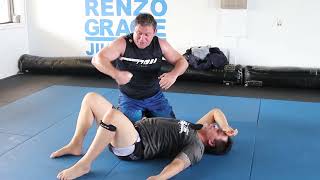
Catch Wrestling: 3/4 Nelson to 3/4 Chancery Neck Crank: @SnakePitUSA
Key Takeaways
- •Understanding the Nelson System
- •Hand Placement and Depth
- •The S-Grip Configuration
- •Positioning on the Side Control
Snake Pit U.S.A. Founder/Head Coach, Joel Bane demonstrates a 3/4 Nelson to Chancery Neck Crank. Please keep in mind there are MANY other Nelson’s but the ones discussed at the beginning are the basic 4. For more with Coach Bane & The World’s Premier Catch Wrestling Organization head over to http://SnakePitUSA.com Coach Bane Bio: http://snakepitusa.com/about-us/
Frequently Asked Questions
What does this video teach about catch wrestling neck crank?
This video covers understanding the nelson system, hand placement and depth, the s-grip configuration. It provides detailed instruction from Snake Pit U.S.A. Original No-Gi .
How long does it take to learn catch wrestling neck crank?
The basic mechanics can be understood in a single session, but developing reliable execution requires consistent drilling over weeks of practice. This 8-part breakdown helps structure your training by isolating each phase of the technique.
What are the key details for finishing catch wrestling neck crank?
A common mistake is removing body weight from the opponent to transition into the chancery, which immediately allows the opponent to roll supine and escape. The instructor must lift the opponent slightly to adjust position while maintaining constant contact and control, keeping them pinned on their side throughout the submission.
Related videos
Learn MMA Howdy Choke Position Choke, Neck Crank, & Funny BJJ Jiu-jitsu Catch Wrestling Submission!
DanTheWolfman

Gotch Worlds: Neck Crank Finishes
Catch Wrestling Alliance

Small Hand Wrap Chin Na Wrist Locking
Gary Gee

Gooseneck Wrist Lock (Nikyo): Ultimate Self-Defense Technique #aikido #hapkido #martialarts
Weapons Defense Academy

10 Elbow Locks Every Martial Artist Must Know.
Straight Circle Martial Arts