Hand Position and Control in Clinch
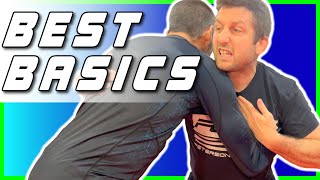
Proper hand placement establishes control in close-range grappling. The inside hand on the opponent's thigh or tricep area should remain lower than the defender's own hand to prevent the opponent from gaining leverage. This positioning allows for dynamic hip movement and prevents the need for reactive hand switches.
Footwork and Hip Load
Effective pummeling requires specific foot positioning to enable dynamic movement. Rather than keeping the front leg flat and pointing outward, the practitioner should slightly turn the toe inward, which loads the hip differently and allows for more explosive and varied hip motion during exchanges.
Frame, Fake, and Snap Sequence
The technique begins with a frame and level change to provoke an opponent reaction or freeze. From here, the practitioner executes a rounded, loose arm movement to the outside rather than a rigid entry, followed by a snap downward using the tricep grip. This sequence can lead to arm drags, control positions, or transitions to takedowns.
Creating and Exploiting Space
Rather than maintaining constant inward pressure, the practitioner should move in and then deliberately create space—a void—through simultaneous hand and foot action. This off-balances the opponent and creates tactical opportunity for continued hand fighting or technique execution.
Snap Mechanics and Hand Connection
The snap should involve establishing hand contact on the opponent's head or neck first, then executing the pulling motion rather than attempting to generate force immediately. The movement should be forward and backward—linear—rather than circular, with the hand action coordinated with foot placement to maximize effectiveness.
Alternating Hand Control Patterns
Practitioners can employ various hand configurations including double inside grips or mixed inside-outside grips. The dominant hand typically leads the snapping action, and the non-dominant hand provides supporting control. Both hands should remain active and connected throughout the exchange to maintain position and create offensive opportunities.
Hand fight and pummel like a pro!
Key Takeaways
- •Hand Position and Control in Clinch
- •Footwork and Hip Load
- •Frame, Fake, and Snap Sequence
- •Creating and Exploiting Space
In this session, I dive into the art of hand fighting - breaking down key concepts that challenge and humble even the most experienced grapplers. I work closely with small groups, giving interactive, real-time feedback designed to sharpen technique, improve awareness, and create effective habits. This hands-on approach ensures every athlete leaves with tools they can immediately apply, accelerating growth and development in one of the most important areas of grappling. Justin Flores has developed a system with the modern day grappler in mind. This platform JFLO ACADEMY is here to help you improve whether you're a beginner, experienced grappler or high level black belt. We are here to help you play the best gi and no-gi game and reach your full potential on the mat! Sign Up Here https://jfloacademy.com/ Instagram Justin Flores: @jflojudo
Frequently Asked Questions
What does this video teach about re-pummel?
This video covers hand position and control in clinch, footwork and hip load, frame, fake, and snap sequence. It provides detailed instruction from JFLOJUDO.
How long does it take to learn re-pummel?
The basic mechanics can be understood in a single session, but developing reliable execution requires consistent drilling over weeks of practice. This 6-part breakdown helps structure your training by isolating each phase of the technique.
What are the key details for finishing re-pummel?
The snap should involve establishing hand contact on the opponent's head or neck first, then executing the pulling motion rather than attempting to generate force immediately. The movement should be forward and backward—linear—rather than circular, with the hand action coordinated with foot placement to maximize effectiveness.