Introduction to Headlock Finishes
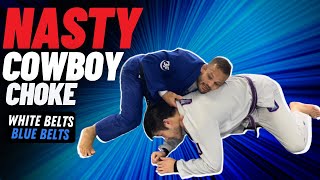
This instructional covers effective submission finishes from the front headlock position, a critical technique for lower belt students. The instructor presents the Cowboy Choke as the primary finish, followed by the Darce Choke as a secondary option when the initial attack is defended.
Establishing the Front Headlock Position
The front headlock begins from a controlling position where one arm wraps in front of the opponent's shoulder while the other arm secures behind their arm. This position commonly occurs after defending against a double-leg takedown attempt.
Grip Placement for the Cowboy Choke
Execute a four-finger grip on the opponent's collarbone area with the first hand, positioning it at medium depth—neither too shallow nor too deep. The second hand is placed palm-up around the side and slightly back of the opponent's neck, creating the foundation for the choke.
Executing the Cowboy Choke Finish
Drive the elbow downward while shooting the body underneath the opponent and pulling them onto top of the controlling grappler. The pressure from the hand placement on the collarbone and neck creates a tight choke that the opponent cannot escape through rolling.
Defensive Response to Rolling Away
If the opponent rolls away during the initial grip setup, follow them by posting the knee in a knee-cut pass position. This transition allows the grappler to apply the same choke from the top position using a collar grip and body weight distribution.
Transitioning to the Darce Choke
When the collar choke position is unavailable, slide both hands around the opponent's body without disconnecting them. This repositioning allows entry into the Darce Choke, a powerful finishing hold that combines arm and neck pressure.
Darce Choke Setup and Finish
From the repositioned grip, roll down and pull the opponent on top while maintaining base control. Slide into the Darce configuration by wrapping the tricep, then walk the hips into the opponent and apply finishing pressure through hip and neck positioning.
Chaining Techniques on Opponent Escape
If the opponent begins rolling away during the collar choke attempt, follow them while maintaining shoulder control. Use the opponent's front arm position to transition directly into a top position Darce Choke by switching base and hooking the leg for the final finish.
4 Ways to Finish From Head Lock Position (Lower Belts Need to Know)
Key Takeaways
- •Introduction to Headlock Finishes
- •Establishing the Front Headlock Position
- •Grip Placement for the Cowboy Choke
- •Executing the Cowboy Choke Finish
THIS VIDEO WILL HELP YOU SUBMIT ANYONE FROM HEAD LOCK POSITION, On This video i show you guys 4 ways to submit from head lock position, 1.Cowboy Choke 2.If they roll keep the grip and finish from top with crossed choke 3.go around the neck and apply the Darce Choke pulling them to you. 4.trap the Neck and push them forward, and finish with the Darce Choke on top . . . IF YOU LIKE THIS VIDEO PLEASE THUMBS-UP, SHARE AND SUBSCRIBE I Have amazing Instructional's to help you bring your Game to the Next level.. CLICK HERE https://bjjfanatics.com/search?q=marcos%20tinoco
Frequently Asked Questions
What does this video teach about wrist choke (front) from front headlock?
This video covers introduction to headlock finishes, establishing the front headlock position, grip placement for the cowboy choke. It provides detailed instruction from BIG OSS Jiu-Jitsu Channel.
How long does it take to learn wrist choke (front) from front headlock?
The basic mechanics can be understood in a single session, but developing reliable execution requires consistent drilling over weeks of practice. This 8-part breakdown helps structure your training by isolating each phase of the technique.
What are the key details for finishing wrist choke (front) from front headlock?
From the repositioned grip, roll down and pull the opponent on top while maintaining base control. Slide into the Darce configuration by wrapping the tricep, then walk the hips into the opponent and apply finishing pressure through hip and neck positioning.
Related videos
4 Ways to Finish From Head Lock Position (Lower Belts Need to Know)
BIG OSS Jiu-Jitsu Channel
4 Ways to Finish From Head Lock Position (Lower Belts Need to Know)
BIG OSS Jiu-Jitsu Channel
Front Headlock Defense
Endeavor Defense & Fitness
Front Headlock Defense
Endeavor Defense & Fitness
Front Headlock Defense
Endeavor Defense & Fitness