Understanding Pressure Points in Self-Defense
Pressure points are specific anatomical locations on the human body that, when targeted with appropriate force, can disrupt nerve function, impede blood flow, or trigger involuntary physiological responses. These points exploit the body's natural vulnerabilities—nerve endings, blood vessels, and sensitive muscle groups—allowing a defender to neutralize a threat without relying on superior strength or size.
The Knee: Disrupting Mobility
The knee joint represents a critical structural vulnerability due to its role in balance and locomotion. A well-executed strike or pressure application to the knee causes immediate pain and instability, effectively disabling an attacker's mobility and creating an opportunity for escape or counterattack.
The Nose: Sensory Disruption
The nasal structure's sensitivity makes it an effective target for creating immediate disorientation. A precise strike to the nose triggers pain, vision impairment through tearing, and potential breathing difficulty, allowing the defender to gain tactical advantage or create an escape window.
The Solar Plexus: Respiratory Control
Located below the ribcage, the solar plexus controls the diaphragm and breathing mechanics. A strike to this area causes immediate respiratory disruption and intense pain, rendering an attacker temporarily incapacitated and unable to sustain offensive pressure, particularly effective against close-range threats.
The Brachial Plexus: Neutralizing Grip and Control
The brachial plexus, situated near the shoulder where nerves controlling the arms converge, is highly vulnerable to targeted pressure. Striking or applying sustained pressure here causes radiating pain and temporary arm paralysis, enabling a defender to break free from holds or disarm an opponent effectively.
The Carotid Artery: Circulatory Compromise
The carotid arteries on either side of the neck supply oxygenated blood to the brain. Applied pressure to this area restricts cerebral blood flow, potentially causing disorientation or unconsciousness within seconds, making it a powerful control technique in both standing and ground combat scenarios.
The Temple: Neurological Disruption
The temple region's proximity to critical neural pathways makes it one of the most effective pressure points in martial arts. A strike here disrupts the nervous system directly, causing dizziness, confusion, or immediate incapacitation that provides decisive defensive advantage.
Tactical Application and Integration
Pressure point techniques are most effective when applied with precision timing and integrated into comprehensive defensive strategies. Rather than relying on pressure points alone, skilled practitioners combine them with strikes, grappling, and evasive movement to maximize effectiveness and adaptability.
Training and Situational Awareness
Mastery of pressure point techniques requires consistent practice until application becomes instinctive under stress. Equally important is developing situational awareness and mental control to deploy these techniques appropriately, ensuring efficient threat neutralization while maintaining ethical self-defense principles.
6 Forbidden Knockout Pressure Points (Martial Arts Secrets You’re Not Supposed to Know)
Key Takeaways
- •Understanding Pressure Points in Self-Defense
- •The Knee: Disrupting Mobility
- •The Nose: Sensory Disruption
- •The Solar Plexus: Respiratory Control
📥 ACCESS THE CLASSIFIED ARCHIVES: 📂 VOL. I // STRUCTURAL NEGATION (Bone & Joint) Break the hardware. Learn how to dismantle the skeletal structure. ► https://masteryourselflab.gumroad.com/l/bastfb 📂 VOL. II // NEURAL SHUTDOWN (The Nerves) [NEW] Hack the software. The guide to the "Human Off-Switches" discussed in this video. ► https://masteryourselflab.gumroad.com/l/vkwgft 📘 THE FOUNDATION // Mastering Martial Arts The complete guide to techniques, training, and the survival mindset. ► https://masteryourselflab.gumroad.com/l/jhmhbe Pressure points — the secret tools of ancient martial arts masters. Hidden within the human body are six vital spots that can instantly drop or disable any attacker when struck with precision. In this video, we reveal the 6 forbidden knockout pressure points that even advanced fighters rarely talk about — and how to use them safely for self-defense. 👉 Train smarter. Master yourself. Defend your life. 🎯 Learn more advanced techniques here buy my book: https://lucassmartialarts.gumroad.com/l/jhmhbe 🥋 What You’ll Learn: The truth behind martial arts pressure points 6 hidden knockout spots that can instantly disable attackers The science behind nerve disruption & reflex control Real-world applications for self-defense and street survival Why these techniques are banned in combat sports 💪 WARNING: These techniques are designed for self-defense only. Always train responsibly under the guidance of a qualified instructor. 🕒 CHAPTERS 00:00 Introduction – The Secret Behind Pressure Points 01:05 #6 – Knee Pressure Point (Instant Weakness) 02:40 #5 – Nose Pressure Point (Pain + Disorientation) 04:10 #4 – Solar Plexus Pressure Point (Knock the Wind Out) 05:30 #3 – Brachial Plexus (Paralyze the Arms) 06:45 #2 – Carotid Artery (Render Unconscious) 08:00 #1 – Temple Pressure Point (The Final Strike) When to Use Pressure Points Safely Outro – Master Yourself, Defend with Discipline 🧠 Related Videos: 🎬 10 Forbidden Death Touch Moves (Dim Mak Explained) 🎬 Top 5 Ugly Bone-Breaking Self-Defense Techniques ⚡ Stay Connected: 📺 Subscribe for weekly martial arts mastery: @MasterYourself1332 📲 Follow our training: https://lucassmartialarts.gumroad.com/l/jhmhbe 👍 If this video helped you understand how to protect yourself using ancient martial arts wisdom, Hit LIKE 💥 Subscribe 🔔 and Comment Below: “Which pressure point surprised you the most?”
Frequently Asked Questions
What does this video teach about standard jo block?
This video covers understanding pressure points in self-defense, the knee: disrupting mobility, the nose: sensory disruption. It provides detailed instruction from Master Yourself.
How long does it take to learn standard jo block?
The basic mechanics can be understood in a single session, but developing reliable execution requires consistent drilling over weeks of practice. This 9-part breakdown helps structure your training by isolating each phase of the technique.
What are the key details for finishing standard jo block?
Pressure point techniques are most effective when applied with precision timing and integrated into comprehensive defensive strategies. Rather than relying on pressure points alone, skilled practitioners combine them with strikes, grappling, and evasive movement to maximize effectiveness and adaptability.
Related videos
No-contact Basic Aikido Techniques #1 - With Jo
Tampa Aikido
Japanese Jo or walking stick for self defense
Matt Pasquinilli
Shinto Muso Ryu Gyakute zuki
funkrelaxo
SHINTO MUSO RYU JODO DEMONSTRATION | JODO AUCKLAND
AIKIDO SILVERDALE
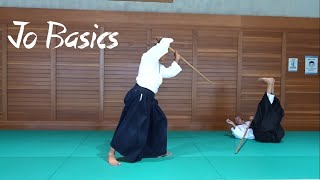
Basic Jo Principles - Introduction to Chiba Sensei's Weapons System #7
Davinder Bath