Introduction to Basic Blocking Fundamentals
Basic blocks are single-handed defensive techniques that protect large sections of the body rather than isolated points. The three foundational blocks taught in traditional dojangs are the high block (ulgul maki), middle block (momtong maki), and down block (are maki). This lesson covers proper execution, hand positioning, wrist alignment, elbow placement, and power generation for each technique.
High Block Execution and Hand Positioning
The high block positions the defending arm above the head with the fist one fist-length from the forehead and the wrist positioned higher than the elbow. The wrist must remain straight and aligned, creating an umbrella-like shield against punches and overhead attacks. The non-blocking arm begins inside the body near the centerline and follows the V-line of the uniform before rotating downward as the blocking arm rises.
Synchronized Dual-Arm Motion for Power and Balance
As the blocking arm passes through the center line, the opposite arm begins its downward rotation and pull to create balanced, synchronized movement. This double-pulling action generates significant power while maintaining stability and prevents the arms from interfering with each other. The non-blocking side elbow must point directly back without flaring outward, avoiding the common 'chicken wing' error.
Middle Block: Inward Defense of the Torso
The middle block protects the torso (momtong) between the neck and hips using an inward circular motion against incoming punches. Both fists begin slightly above shoulder height at approximately 90 degrees, then pull inward with a final twist to complete the block. The blocking-side elbow maintains consistent distance from the body throughout the circular path, keeping the elbow pointed at the belly button to prevent shoulder misalignment and balance loss.
Proper Elbow Position and Angle Control
The blocking arm must form slightly greater than 90 degrees between the upper arm and forearm, with the fist pointing toward the belly button. Maintaining proper elbow proximity to the body prevents excessive shoulder engagement and preserves power transfer. The non-blocking hand begins in a neutral position in front of the body and pulls back to the belt during execution.
Down Block: Lower Body Defense
The down block (are maki) defends the hips and lower body while maintaining an upright posture to avoid exposing the head to counterattacks. The blocking arm begins positioned on top of the opposite shoulder, travels diagonally downward along the arm's length, and twists as the wrist passes the centerline. The block must stay close to the body's centerline throughout execution to maintain power and structural integrity.
Training Combinations and Progressive Practice
Practitioners should create varied block combinations such as high-middle-down sequences or repeated blocks in single directions to develop muscle memory and fluidity. Mixing block combinations strengthens neural pathways and allows practitioners to practice transitions between defensive techniques. Progressive repetition builds the speed, power, and consistency necessary for effective application.
Common Errors and Correction Strategies
Wrist bending during execution reduces blocking effectiveness and should be corrected immediately through deliberate practice of straight wrist alignment. In middle block, the elbow must remain inside the body's centerline; wandering elbows result in lost power and compromised structure. During down block transitions, timing the opposite-hand pull prevents wrist collision and maintains proper sequencing between both arms.
Basic Taekwondo Blocks
Key Takeaways
- •Introduction to Basic Blocking Fundamentals
- •High Block Execution and Hand Positioning
- •Synchronized Dual-Arm Motion for Power and Balance
- •Middle Block: Inward Defense of the Torso
Day one on the Taekwondo mats... Here are the three blocks you would learn! High block, Middle block, and Down/Low block. Despite the simplicity, these are effective techniques to protect yourself. Let's look at how to improve these blocks!👊
Frequently Asked Questions
What does this video teach about standard low base?
This video covers introduction to basic blocking fundamentals, high block execution and hand positioning, synchronized dual-arm motion for power and balance. It provides detailed instruction from TaekwondoShawn.
How long does it take to learn standard low base?
The basic mechanics can be understood in a single session, but developing reliable execution requires consistent drilling over weeks of practice. This 8-part breakdown helps structure your training by isolating each phase of the technique.
What are the key details for finishing standard low base?
Practitioners should create varied block combinations such as high-middle-down sequences or repeated blocks in single directions to develop muscle memory and fluidity. Mixing block combinations strengthens neural pathways and allows practitioners to practice transitions between defensive techniques. Progressive repetition builds the speed, power, and consistency necessary for effective application.
Related videos
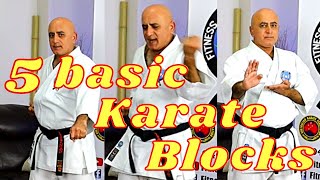
How to learn 5 Basic karate Blocks?
Fitness Karate Academy
Lesson 14 - Smuggler - Form 1 Basic Low Attack
Rogue Saber Academy

Low Single Defense | Wrestling Moves
Iron Faith Wrestling

09 Ankle Breakdown - Quick Sit to Hip Heist
SJJ Wrestling
4 Shaolin Monk Exercises That Build Unbelievable Strength and Endurance
FitPulse