Introduction to Underhook Takedowns
The instructor presents three effective underhook-based takedowns applicable to wrestling, jiu-jitsu, and MMA. These techniques are demonstrated as part of a systematic approach to chain wrestling from the underhook position.
Establishing the Underhook
To secure an underhook, the practitioner establishes control from the opponent's wrist with a hard club motion. A forceful punch into the space between the opponent's elbow and body creates room for the underhook, followed by placing the forehead firmly against the opponent's neck.
Head Position and Control
Proper head positioning involves pressing the forehead directly into the opponent's neck rather than positioning it higher. Maintaining this low head position protects against head-and-arm control attempts while allowing effective leverage through the underhook and shoulder.
High Crotch Takedown
From the underhook position, if the opponent steps back defensively, the high crotch takedown becomes available. The technique involves pulling the opponent close with the underhook, changing lead legs, dropping the hips, and flaring the underhook while shooting into the crotch.
Shoulder Position in High Crotch
The shooting shoulder must remain close to the body rather than extended outward, preventing the opponent from cutting the corner. Proper shoulder positioning enables the practitioner to cut the corner and transition into a double-leg takedown.
Knee Pick Setup and Execution
The knee pick can be set up by faking a high crotch attempt, causing the opponent to step back. Once the opponent's weight shifts to the back foot, the practitioner attacks the knee with a crossing step and maintains forward pressure until the opponent's body reaches the mat.
Knee Pick Continuation
Rather than dropping immediately after attacking the knee, the practitioner should continue driving forward aggressively. This sustained pressure ensures the takedown completion against skilled opponents rather than relying on a static position.
Snapdown Finish
The snapdown completes the underhook chain-wrestling sequence, initiated after faking the high crotch when the opponent's weight is forward. The practitioner pulls down firmly on the underhook while clubbing the head, then either grabs the ankle in wrestling or transitions to back control with a seatbelt grip in jiu-jitsu.
3 Underhook Takedowns That EVERYONE Should Know (That Actually WORK)
Key Takeaways
- •Introduction to Underhook Takedowns
- •Establishing the Underhook
- •Head Position and Control
- •High Crotch Takedown
In today's video I go over 3 pretty basic takedown options from the underhook. The reason I choose to show these is because the underhook is a position ALL Brazilian Jiu-Jitsu Grapplers, MMA Fighters, or Wrestlers find themselves. in. In grappling the underhook is one of the TOP control ties and therefore we NEED to make sure we develop the proper BASIC skills from there while we can. These 3 options are all pretty simple, but once mastered create a pretty dangerous system for grapplers on the feet. If you'd like to learn more from me, you can go to Brandonreed3x.com/store to check out my various Wrestling for BJJ Instructionals.
Related Techniques
Frequently Asked Questions
What does this video teach about double underhook?
This video covers introduction to underhook takedowns, establishing the underhook, head position and control. It provides detailed instruction from Brandon Reed BJJ.
How long does it take to learn double underhook?
The basic mechanics can be understood in a single session, but developing reliable execution requires consistent drilling over weeks of practice. This 8-part breakdown helps structure your training by isolating each phase of the technique.
What are the key details for finishing double underhook?
Rather than dropping immediately after attacking the knee, the practitioner should continue driving forward aggressively. This sustained pressure ensures the takedown completion against skilled opponents rather than relying on a static position.
Related videos
Younes Emami Underhook System | Overview
DPS Breakdowns
THE BASICS OF CLINCH FIGHTING & TAKEDOWNS
Budo Brothers
JiuJitsu Magazine: Technique Takedowns Working the Clinch
JiuJitsuMag
Learn to Underhook Like a Wrestler | Wrestling for BJJ
Wrestling University - Takedowns for Jiu Jitsu
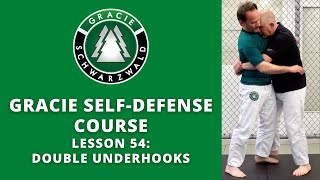
BJJ Self-Defense Course | Lesson 54: Double Under Hooks
Gracie Schwarzwald Jiu-Jitsu