Foundation: Proper Stance
The pendulum step begins with correct positioning. Feet should be shoulder-width apart with weight distributed on the balls of the feet, never flat-footed. This positioning ensures the mobility and responsiveness required for the technique's rapid directional changes.
Weight Distribution and Mobility
Maintaining weight on the balls of the feet is non-negotiable for executing the pendulum step effectively. Flat-footed positioning severely compromises speed and creates vulnerability. The constant state of readiness this stance provides is essential for explosive movement in any direction.
Punch Mechanics: Snap Over Power
The pendulum step's offensive effectiveness relies on whip-like punch delivery rather than muscular pushing. Practitioners should think of driving through the shoulders with a cracking motion, generating speed and penetration before opponents can read the strike. This technique-driven approach produces superior timing and accuracy compared to strength-dependent punching.
Cardiovascular Conditioning Requirements
Sustaining the pendulum step across multiple rounds demands significant aerobic capacity. Long-distance running builds the foundational gas tank, while sprinting develops the explosive movement capability needed during exchanges. Practitioners unable to maintain the pattern for five to seven consecutive rounds will deteriorate against conditioned opponents.
Movement Pattern: Horizontal Over Vertical
The pendulum step is characterized by short, efficient forward-and-back shifts rather than vertical bouncing. These small lateral movements create tactical angles and openings while conserving energy. The distinction between this controlled footwork and inefficient rabbit-like hopping represents a critical technical division between skilled and novice practitioners.
Upper-Lower Body Coordination
Effective pendulum stepping requires the torso and legs to function as independent systems. The upper body remains relaxed and fluid while the legs generate movement, preventing the stiffness that telegraphs intentions and slows reactions. This separation of function optimizes both defensive elusiveness and offensive readiness.
Offensive Application: Range Management
When stepping into range, practitioners should execute long hooks that maintain distance while generating power. Feinting before commitment forces opponent reactions, enabling practitioners to exploit defensive openings. This calculated approach prevents reckless entries and capitalizes on psychological advantages.
Defensive Exit and Framing
Exiting engagement requires purposeful technique rather than aimless retreat. The lead arm should frame against the opponent's centerline to prevent charging pursuit. These transitional details between offensive and defensive phases significantly impact fight control and safety.
Arm Positioning During Movement
Arms should hang naturally from the shoulders while remaining bent at the elbows in a ready position. This posture balances relaxation with readiness, preventing both excessive tension and vulnerable exposure. The arms function as loaded weapons, capable of immediate deployment from this optimal positioning.
Strategic Mastery and Fight Control
The pendulum step transcends mere footwork to become a comprehensive system for controlling fight rhythm and dictating exchanges. Practitioners who master this technique achieve elusiveness, unpredictable offense, and constant positional advantage. This technical proficiency distinguishes elite fighters from average competitors through superior timing, spacing, and anticipation.
"Pendulum Step Secrets: How to Stay Elusive & Dangerous"
Key Takeaways
- •Foundation: Proper Stance
- •Weight Distribution and Mobility
- •Punch Mechanics: Snap Over Power
- •Cardiovascular Conditioning Requirements
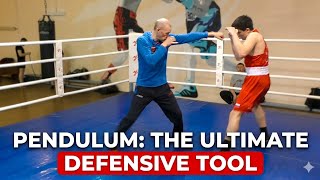
Alright, listen up—if you’re still out here thinking the pendulum step is just some fancy bouncing around, you’re doing it WRONG. This isn’t just hopping up and down like a kangaroo—this is one of the slickest, most effective footwork patterns in fighting. When done right, it makes you impossible to hit, keeps you constantly in and out of range, and lets you attack when your opponent least expects it. Today, I’m breaking it down step by step, so by the end of this, you’ll be floating like a ghost and snapping punches like a whip. Let’s get into it. First things first—your stance is everything. Feet should be shoulder-width apart, not too wide, not too narrow. Your weight? Always on the balls of your feet. If you’re flat-footed, you’re slow. If you’re slow, you’re a sitting duck. Simple as that. The whole point of the pendulum step is to stay light, constantly shifting, always ready to explode in or slip out of danger. Now, let’s talk about throwing hands. When you throw a punch, DON’T muscle through it. This isn’t about brute strength—it’s about snap and fluidity. Imagine whipping your shoulders forward instead of pushing your punch. It should feel like a crack of a whip, not a shove. That’s what makes your strikes sharp, fast, and hard to read. If you do it right, you’re landing before they even know what hit ‘em. But here’s the thing—none of this works if you’re gassing out after two rounds. You NEED cardio. Long-distance running builds that gas tank, and sprints give you that explosive movement. If you can’t bounce for five, six, seven rounds straight, you’re gonna get picked apart by someone who can. No shortcuts here—put in the work. Alright, let’s clear something up—the pendulum step isn’t just hopping up and down like a rabbit. That’s the biggest mistake people make. It’s short, quick shifts forward and back, not vertical jumps. You want small, efficient movements, just enough to create angles and openings. And here’s a tip—imagine your torso and legs as separate entities. Your upper body stays relaxed, your legs do the work. If you’re too stiff, you’re slow. If you’re slow, you’re predictable. And if you’re predictable? You’re getting cracked. Now, let’s talk offense. When you’re stepping in, throw long hooks instead of short hooks. You wanna maintain range while still generating power. And don’t just rush in blindly—feint as you step in. Make your opponent react before you even commit. When you exit, don’t just bounce out aimlessly—frame with your lead arm to stop them from charging in. These little details make a MASSIVE difference. One last thing—your arms while bouncing. They should feel like they’re hanging naturally from your shoulders, but your elbows should be bent and pointy. Not too tight, not flaring out—just loose, ready to fire at any moment. Think of them as loaded weapons, always primed. So here’s the bottom line—the pendulum step isn’t just about moving around. It’s about staying elusive, attacking unpredictably, and always being in control of the fight’s rhythm. If you can get this down, you’re not just moving—you’re gliding, floating, dictating every exchange. And that’s what separates average fighters from killers. Now, go drill this, put in the work, and when you start making people miss by inches and countering before they can react? Thank me later.
Frequently Asked Questions
What does this video teach about pendulum step defence?
This video covers foundation: proper stance, weight distribution and mobility, punch mechanics: snap over power. It provides detailed instruction from GH BOXING WORKOUT.
How long does it take to learn pendulum step defence?
The basic mechanics can be understood in a single session, but developing reliable execution requires consistent drilling over weeks of practice. This 10-part breakdown helps structure your training by isolating each phase of the technique.
What are the key details for finishing pendulum step defence?
Arms should hang naturally from the shoulders while remaining bent at the elbows in a ready position. This posture balances relaxation with readiness, preventing both excessive tension and vulnerable exposure. The arms function as loaded weapons, capable of immediate deployment from this optimal positioning.
Related videos
Keep the Pendulum Rhythm Throughout the Round
Russian School of Boxing
Basics: Soviet Pendulum Step🥊#BoxenLernen#Boxtraining #BoxenFürAnfänger #FitDurchBoxen#MentaleStärke
jaso.boxing
Boxing Drills to Build a Pendulum Step Worthy of Oleksandr Usyk
MyBoxingCoach
Boxing: How to Slip Punches in Pendulum
Russian School of Boxing
Boxing: Pendulum as a Defence Against an Aggressive Opponent
Russian School of Boxing