Review: Danish War Axe by Arms & Armor - Cuts like a polesword (technical term :p)
0
Standard Javelin Technique·Skallagrim
*** Specifications *** Overall length: 133 cm / 52.25'' Blade length (edge): 27 cm / 10.6'' Blade width (shaft to edge)…
Translation: standard javelin technique
Fundamental overhand javelin throwing technique using a running approach and full-body kinetic chain for maximum range and penetration.
The standard javelin throwing technique preserves the overhand delivery method documented in ancient Greek athletic manuals and Roman military training texts. [1] Vegetius (De Re Militari, c. 390 CE) describes Roman soldiers practising javelin throws at wooden stakes, developing both accuracy and power — a training methodology essentially identical to modern athletic javelin coaching. [2] The technique's endurance across millennia reflects the biomechanical optimality of the overhand throw for propelling spear-type projectiles. [1],[2]
Standard javelin technique uses a run-up, cross-step, and overarm release to achieve maximum distance and accuracy. [1]
Modern javelin technique was standardised for Olympic competition, evolving from military throwing to athletic performance. [1]
Standard javelin technique is used in Olympic and World Athletics javelin competition. [1]
No images yet for this technique.
Sign in to suggest an image.
*** Specifications *** Overall length: 133 cm / 52.25'' Blade length (edge): 27 cm / 10.6'' Blade width (shaft to edge)…
Recently I've had a lot of people request a video showing how I command troops in battle, so here it is! Mount and Blad…
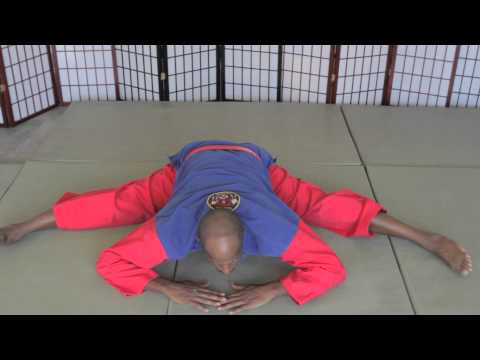
Kaiso Shawn Cephas, founder of American Shorinji-Te shows very useful stretching techniques for martial artist for more…
The transcripts provided do not contain instructional content related to standard javelin technique. Instructor 1 (Kaiso Shawn Cephas) delivers a stretching and flexibility routine covering joints from fingers to ankles—preparatory conditioning work unrelated to javelin mechanics. Instructor 2 (Strat Gaming Guides) discusses army formation and tactical positioning in the video game Mount & Blade II: Bannerlord, covering unit grouping, movement commands, and battlefield strategy—content about virtual military simulation rather than physical weapon technique. Instructor 3 (Skallagrim) reviews a historical Danish War Axe replica, examining its construction, handling characteristics, cutting performance against various materials, and comparison to other axes on the market—focused on axe design and evaluation rather than javelin throwing methodology. None of the three instructors address grip mechanics, release timing, body positioning, approach velocity, or any technical elements of javelin throwing in their respective videos. The transcripts appear to be mismatched to the requested technique topic.
Synthesized from 3 instructors
No instructional courses yet for this technique.
Sign in to suggest a course.
Risk of injury to the person this technique is applied to
Projectile weapons including shuriken, throwing knives; high penetration risk
Skill level needed to execute this technique reliably
Whether this technique is allowed under major competition rule sets
Chinese Martial Arts Training Manuals (Brian Kennedy & Elizabeth Guo, 2005)
Alias sources — [1] Hoplology (Burton, 1884) [2] Hoplology (Burton, 1884) [3] Hoplology (Burton, 1884)
History sources — [1] Anglo, S., The Martial Arts of Renaissance Europe (Yale University Press, 2000) [2] Draeger, D. & Smith, R., Comprehensive Asian Fighting Arts (Kodansha, 1969)
Mixed Japanese-Western terminology — combines traditional Japanese terms with katakana loanwords
Alias sources — [1] Hoplology (Burton, 1884) [2] Hoplology (Burton, 1884) [3] Hoplology (Burton, 1884)
History sources — [1] Anglo, S., The Martial Arts of Renaissance Europe (Yale University Press, 2000) [2] Draeger, D. & Smith, R., Comprehensive Asian Fighting Arts (Kodansha, 1969)
precision, wrist snap, hand-eye coordination
strong wrists and forearms, excellent proprioception
forearm extensors, wrist flexors, deltoids, core
Fundamental overhand javelin throwing technique using a running approach and full-body kinetic chain for maximum range and penetration.
The standard javelin throwing technique preserves the overhand delivery method documented in ancient Greek athletic manuals and Roman military training texts. Vegetius (De Re Militari, c.
Traditional martial arts: legal — Practiced in traditional kata/forms and weapon-specific competition under var…; IWUF: legal — Legal in wushu taolu if applicable; HEMA: legal — Legal in applicable historical weapon categories
Danger rating 8/10. Very High — projectile weapons including shuriken, throwing knives; high penetration risk
The standard setup chain: Ready Position → Distance Control → Execute Technique → Return to Guard.
Standard counters include: Guard Position — return to a defensive ready stance / Distance Management — control the measure to avoid being in range / Counter-Attack — strike during the opponent's recovery or between movements.
Common variants: Standard technique (primary execution from the most common grip and stance); Competition variation (adapted for sport-specific rules and scoring); Traditional variation (classical execution as taught in the traditional art); Combination variation (chained with preceding or following techniques in a flow).
Standard javelin technique is used in Olympic and World Athletics javelin competition.
Top errors to watch for: Short-arming the throw — the arm must fully extend; a shortened arm path reduces velocity and accuracy / Not using the legs — the throw starts from the ground; leg drive provides the foundation of throwing power / Throwing with a bent elbow at release — the elbow must be fully extended at the release point for maximum velocity / Aiming with the arm rather than the body — the body alignment toward the target determines accuracy; the arm follows.
The Standard Javelin Technique is also known as Sutandādo Nage-yari Waza, Basic Javelin Throw, Overhand Javelin Cast, Standard Pilum Technique.