How to Check Sweep in Sparring
0
Bo Sweep·Sensei Ichi
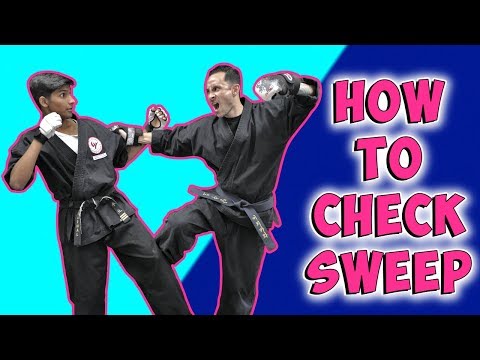
This Sneaky Check Sweep for Sparring is a Basic Version. I did another video about check sweeping, but I realized it w…
Translation: Staff Sweeps
Low sweeping techniques using the bo to unbalance or trip the opponent by targeting the legs or feet.
Bo sweeping techniques (harai-waza) use the staff's length to attack the opponent's legs, unbalancing or toppling them. [1] Sweep techniques are a distinctive feature of Okinawan bojutsu not commonly found in sword arts, leveraging the staff's non-lethal nature to disable rather than kill. [2] The low sweeping arc appears in several classical kobudo kata and was considered tactically valuable against multiple opponents, where sweeping the legs could create distance and disrupt coordinated attacks. [1]
Bō sweeps use the staff's length to attack the opponent's legs, tripping or unbalancing them while maintaining safe distance. [1]
Staff sweeping techniques appear in both Asian and European staff-fighting traditions, exploiting the weapon's reach advantage at ground level. [1]
Bō sweeps are demonstrated in kobudō kata competition and koryū bōjutsu demonstrations. [1]
No images yet for this technique.
Sign in to suggest an image.
This Sneaky Check Sweep for Sparring is a Basic Version. I did another video about check sweeping, but I realized it w…
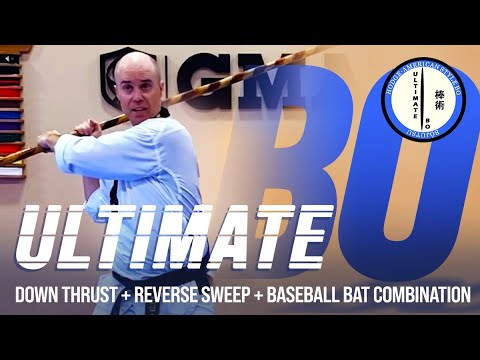
In this short lesson Ultimate Bo head instructor, Nathan Douglas, teaches a 3-step combination. Set up a FREE Beginner'…
No instructional courses yet for this technique.
Sign in to suggest a course.
Risk of injury to the person this technique is applied to
Staff/bo/jo weapons generate significant blunt force; fracture risk
Skill level needed to execute this technique reliably
Whether this technique is allowed under major competition rule sets
The Essence of Okinawan Karate-Do (Shoshin Nagamine, 1976)
Alias sources — [1] Kobudo: Okinawan Weapons (Demura, 1976) [2] Comprehensive Asian Fighting Arts (Draeger & Smith, 1969) [3] Comprehensive Asian Fighting Arts (Draeger & Smith, 1969)
History sources — [1] Bishop, M., Okinawan Kobudo (Tuttle, 1999) [2] Draeger, D. & Smith, R., Comprehensive Asian Fighting Arts (Kodansha, 1969)
Established Japanese martial arts naming convention — native Japanese term (和語/漢語)
Alias sources — [1] Kobudo: Okinawan Weapons (Demura, 1976) [2] Comprehensive Asian Fighting Arts (Draeger & Smith, 1969) [3] Comprehensive Asian Fighting Arts (Draeger & Smith, 1969)
History sources — [1] Bishop, M., Okinawan Kobudo (Tuttle, 1999) [2] Draeger, D. & Smith, R., Comprehensive Asian Fighting Arts (Kodansha, 1969)
wrist snap speed, sliding grip coordination, hip rotation
long reach and strong wrists for staff manipulation
forearms, wrist rotators, core rotators, shoulders
Every move, in any martial art, shares a few universal traits. Mix and match below to pinpoint the right tool — or compare equivalents across styles.
You want to make sure you're not gripping too high up on the bo, otherwise you won't be able to get it past your body. According to Global Martial Arts University, proper hand placement is critical for executing the sweep effectively.
Global Martial Arts University emphasizes that you should bring the bo back around horizontally to carry momentum, finishing in a horse riding stance with the bo centered on your center line for a clean, polished look.
Sensei Ichi stresses staying neutral—don't lean back or forward. You should throw the check between bounces while keeping your stride, and perform the check at a point just enough closer to your opponent by moving your back foot forward slightly.
Low sweeping techniques using the bo to unbalance or trip the opponent by targeting the legs or feet.
Bo sweeping techniques (harai-waza) use the staff's length to attack the opponent's legs, unbalancing or toppling them. Sweep techniques are a distinctive feature of Okinawan bojutsu not commonly found in sword arts, leveraging the staff's non-lethal nature to disable rather than kill.
Traditional martial arts: legal — Practiced in traditional kata/forms and weapon-specific competition under var…; IWUF: legal — Legal in wushu taolu if applicable; HEMA: legal — Legal in applicable historical weapon categories
Danger rating 7/10. Very High — staff/bo/jo weapons generate significant blunt force; fracture risk
The standard setup chain: Ready Position → Distance Control → Execute Technique → Return to Guard.
Standard counters include: Guard Position — return to a defensive ready stance / Distance Management — control the measure to avoid being in range / Counter-Attack — strike during the opponent's recovery or between movements.
Common variants: Overhead strike (bringing the staff down from above in a vertical arc); Lateral strike (horizontal sweep targeting the ribs or head); Thrust (straight thrust with the end of the staff); Butt-end strike (striking with the rear end of the staff at close range).
Bō sweeps are demonstrated in kobudō kata competition and koryū bōjutsu demonstrations.
Top errors to watch for: Sweeping without commitment — the sweep must travel through the target with full body rotation / Telegraphing by looking at the target — maintain eye contact with the opponent's centre, not their feet / Bending too low and losing balance — use the staff's reach to sweep while maintaining an upright posture / Not following up after the sweep — a sweep that unbalances the opponent must be followed immediately with a strike.
The Bo Sweep is also known as Bo Barai, Staff Sweep, Bo Harai.