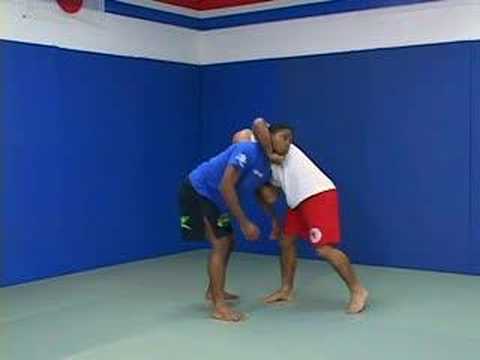
From the Clinch
0
Standard·Bernard Rizon
BJJ techniques, Watch out for more...
Translation: standard
Standard clinch lock techniques are the foundational standing submission methods applied from basic clinch positions — underhooks, overhooks, collar ties, and body locks. [1] These include standing guillotines executed from a front headlock clinch, standing kimuras from overhook or wrist control, standing arm triangles from a head-and-arm clinch, and standing wrist locks from grip fighting exchanges. Standard clinch locks differ from their ground counterparts primarily in the challenge of maintaining balance and control while applying submission pressure — the opponent can use footwork, level changes, and explosive movement to escape in ways not available on the ground. [2] In MMA, the cage wall provides a stabilizing surface that makes standing submissions more viable; in pure grappling, standing submissions are typically attempted as transitions that flow into takedowns if the submission is not achieved.
Standing submission techniques are among the oldest in martial arts, predating the development of sophisticated ground fighting systems. [1] Classical jujutsu schools trained extensively in tachi-waza (standing techniques) that combined strikes, throws, and standing joint locks as integrated combat sequences. In catch wrestling, standing wristlocks and standing headlocks were standard competitive techniques used in professional matches. [2] The modern revival of standing submissions in MMA has led to increased study of clinch lock mechanics as part of cage-fighting strategy.
Standard submission technique represents the baseline execution of a submission hold, emphasising correct body mechanics, grip placement, and finishing pressure. [1]
Standard submissions were codified through judo's katame-waza curriculum and refined in BJJ competition over decades. [1]
Standard submission techniques form the foundation of competitive grappling at all levels from white belt to black belt competition. [1]
No images yet for this technique.
Sign in to suggest an image.
BJJ techniques, Watch out for more...
No instructional courses yet for this technique.
Sign in to suggest a course.
Risk of injury to the person this technique is applied to
Standard clinch locks apply joint pressure from standing; risk of sudden takedown amplifies danger
Skill level needed to execute this technique reliably
Whether this technique is allowed under major competition rule sets
Japanese BJJ community standard katakana transliteration
Japanese BJJ community standard katakana transliteration
Standard katakana transliteration of Western martial arts terminology (外来語) — used in Japanese MMA, boxing, and BJJ communities
Japanese terminology sourced from Japanese BJJ community standard katakana transliteration
grip strength, rotational power, shoulder/core stability
strong forearms and thick wrists
forearm flexors, rotator cuff, core rotators, deltoids
Clinch locks use standing joint manipulations from the clinch — primarily wrist locks, shoulder locks, and arm cranks. Fundamental to Aikido (kote-gaeshi, ikkyo), Hapkido, and self-defense systems. In MMA, standing submissions from the clinch are rare but spectacular. (Aikido and Hapkido texts in corpus)
Leaving your elbow out gives your opponent space to bring their head out and escape. Bernard Rizon emphasizes that you must keep your elbow tight to prevent this.
Keep your elbow tight against your body. This closes off the space your opponent needs to create an escape by turning their head out.
Standard clinch lock techniques are the foundational standing submission methods applied from basic clinch positions — underhooks, overhooks, collar ties, and body locks. These include standing guillotines executed from a front headlock clinch, standing kimuras from overhook or wrist control, standing arm triangles from a head-and-arm clinch, and standing wrist locks from grip fighting exchanges.
Standing submission techniques are among the oldest in martial arts, predating the development of sophisticated ground fighting systems. Classical jujutsu schools trained extensively in tachi-waza (standing techniques) that combined strikes, throws, and standing joint locks as integrated combat sequences.
IBJJF: legal — Legal — standing submissions follow same rules as ground submissions; IJF: legal — Legal — standing joint locks and chokes permitted within standard judo rules; ADCC: legal — Legal; Unified MMA: legal — Legal — standing submissions permitted; FIAS Sport Sambo: legal — Legal — standing joint locks permitted; FIAS Combat Sambo: legal — Legal
Danger rating 5/10. Standard clinch locks apply joint pressure from standing; risk of sudden takedown amplifies danger
The standard setup chain: Control Position → Isolate the Arm → Lock the Figure-Four → Apply Rotation.
Standard counters include: Straighten the Arm — extend the arm to break the figure-four grip angle / Roll Toward — roll in the direction of the lock to relieve rotational pressure / Grip the Belt/Shorts — anchor the hand to prevent the arm from being isolated.
Common variants: Standard kimura (figure-four grip rotating the shoulder from guard, side c…); Kimura trap (using the kimura grip as a controlling position to chain …); Standing kimura (applied during a clinch or takedown exchange); Reverse kimura (attacking from the opposite rotation angle (Americana dir…).
Standard submission techniques form the foundation of competitive grappling at all levels from white belt to black belt competition.
Top errors to watch for: Squeezing with the arms only — the choke requires hip engagement and posture manipulation, not just arm strength / Not controlling the opponent's posture — if they can lift their head, the choke releases; keep their head pulled down / Failing to secure the grip before the opponent postures — the grip must be locked before the opponent realises the th… / Standing too upright — the hips must drive forward to create the choking angle.
The Standard is also known as Sutandādo, Standard Clinch Lock, Standing Clinch Submission.