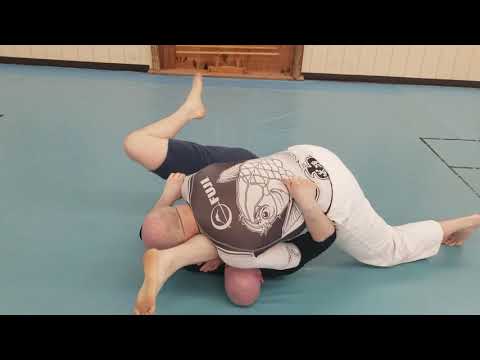
Can Opener

Genus

缶切り(Kankiri)

Traditional

Translation: Can Opener

Overview

The can opener is a cervical flexion crank applied from inside the opponent's closed guard by clasping both hands behind the opponent's head and forcefully driving the chin toward the chest. [1],[2],[3] The attacker interlaces the fingers behind the head and curls the opponent's neck forward, creating intense pressure on the cervical vertebrae and posterior neck muscles. [1],[4] While primarily used as a guard-opening technique — forcing the opponent to uncross their ankles due to spine pain — the can opener can also force a tap from pure neck crank pressure. [1],[5]

Also known as
Neck Crank from Guard[1]Stack Crank[2]Can Opener Neck Crank[3]

History & Origin

The can opener has long been used in wrestling and MMA as a method to open the closed guard. [1],[2] The name derives from the prying motion resembling a can opener. [1],[3] In early UFC and Vale Tudo events, the can opener was frequently used before competitors developed sophisticated guard techniques. [1],[4] The IBJJF restricts cervical cranks at lower belt levels due to injury risk. [1],[5]

Effectiveness

The can opener uses neck cranking pressure from inside closed guard to force the guard open or create a submission via neck hyperflexion. [1]

Lineage

The can opener was a common technique in early MMA and catch wrestling, now restricted in some BJJ rule sets. [1]

Competition Record

The can opener is legal in MMA and some submission grappling events, though banned in IBJJF competition at lower belt levels. [1]

Images

No images yet for this technique.

Sign in to suggest an image.

Biomechanical Mechanism

Primary ActionCompression of the neck structures — restricts blood flow or airway depending on technique application
Joints InvolvedCervical spine, surrounding musculature, and vascular structures of the neck
Force VectorDirected compression against the neck from the choking limb or body position
Finishing MechanicSustained pressure causes either vascular occlusion (unconsciousness) or tracheal restriction (breathing difficulty)

Position & Entry

From controlling positionEstablish the dominant position, clear defensive grips, thread the choking limb into position
From guard (bottom)Break the opponent's posture, isolate the neck and configure the choke from underneath
From transitionDuring a scramble or position change, secure the neck control and lock the choke before the opponent re-establishes defence

Videos

Can opener guard pass series

0
Can Opener·USA Martial Arts of Toledo·Added by Admin

Sensei Gray demonstrates the can opener guard pass series

1 video

Learn This Technique

No instructional courses yet for this technique.

Sign in to suggest a course.

Ratings

Danger Rating

Risk of injury to the person this technique is applied to

8
Very High8/10

The can opener forces the head forward from inside closed guard; banned in most BJJ competition

Difficulty

Skill level needed to execute this technique reliably

Beginner
Competition Legality

Whether this technique is allowed under major competition rule sets

Illegal
IBJJF — Neck cranks and spinal locks prohibited at all be...
IBJJF Rules Book v6.0, June 2024PDF
IJF — Neck cranks prohibited
IJF Sport and Organisation Rules 2025, Article 27PDF
FIAS Sport Sambo — All chokes prohibited in Sport Sambo
FIAS International Sambo Competition RulesPDF
Legal
ADCC — Legal
ADCC Rules Update, April 2025PDF
Unified MMA — Legal — choke submissions are among the mos...
Unified Rules of MMA, August 2025PDF
FIAS Combat Sambo — Legal
FIAS Combat Sambo RulesPDF

Training Notes

The can opener forces the opponent's head into cervical flexion from inside their closed guard — the attacker laces hands behind the head and drives the chin to the chest, creating intense cervical pressure to open the guard (Gracie & Gracie, Brazilian Jiu-Jitsu: Theory and Technique, 2001)
The mechanism: from inside closed guard, clasp the hands behind the opponent's head (gable grip or interlocked fingers), then extend the arms while pressing the head forward — the cervical spine is forced into maximum flexion
The 'can opener' name reflects its purpose: it 'opens' the closed guard by creating so much neck discomfort that the bottom player opens their legs to relieve the pressure
The can opener exists at the intersection of positional tool and submission: in some rule sets it's a submission technique, in others it's a guard-opening method, and in others it's illegal
The cervical flexion created by the can opener stresses the posterior ligaments, disc spaces, and cervical muscles — the pain is acute and persuasive
In competition: the can opener is legal in ADCC and most no-gi events but illegal at IBJJF white and blue belt divisions — checking the rule set is essential
The can opener from closed guard is often the first cervical technique grapplers encounter — it teaches the principle that controlling the head can force positional changes

Common Mistakes

!Using the can opener as a violent neck crank — it should be applied progressively; explosive can openers cause cervical injuries in training
!Relying on the can opener as a primary guard-passing technique — it's a tool for creating reactions, not a sophisticated passing method; use it to open the guard, then pass properly
!Applying the can opener with extended arms — the strength comes from the back and shoulders, not the arms; keep elbows in and use back extension
!Not transitioning when the guard opens — the can opener creates a brief window when the guard opens; pass immediately rather than continuing to crank
!Using the can opener in competition where it's illegal — IBJJF restricts cervical locks at lower belt levels; know the rules
!Ignoring the opponent's guard attacks during the can opener — the bottom player may attack with armbars or triangles while you're focused on the opener; maintain arm awareness
!Stacking too aggressively with the can opener — excessive stacking combined with the can opener can cause cervical injury; the opener alone provides sufficient pressure

Related Techniques

Counter Techniques

Setup Chain

1Establish Positionachieve the controlling position needed for this submission
2Create the Threatbegin the submission setup to force a defensive reaction
3Secure the Holdlock the submission grip with proper body mechanics
4Finishapply increasing pressure until the opponent taps or the joint/choke takes effect

Sources & References

Primary Source

Japanese BJJ — established since 1990s; Shooto training materials

1BookJapanese BJJ — established since 1990s; Shooto training materials

Japanese terminology sourced from Japanese BJJ — established since 1990s; Shooto training materials

2OtherShooto (Japanese MMA)

Japanese MMA pioneer organization — technique terminology

Standard Japanese martial arts terminology (kanji/hiragana)

4OtherJapanese Martial Arts Standard Terminology (武道用語)

Established Japanese martial arts naming convention — native Japanese term (和語/漢語)

5CitationJapanese BJJ — established since 1990s; Shooto training materials

Japanese terminology sourced from Japanese BJJ — established since 1990s; Shooto training materials

Community

Athletics

Requires

grip or squeeze strength, positional control

Favours

strong upper body for sustained compression

Key muscles

forearms, biceps, pectorals, core stabilisers

Sub-techniques

Frequently Asked Questions

What's the key to making the can opener work effectively?

You need to apply pressure with your arms forward against the back of the head to force your opponent's head up quickly—you can't hesitate or do it slowly, or they'll be able to defend.

How do you transition from the can opener into a guard pass?

Once you've forced their head up and opened their guard, quickly grab both of their thighs to lift them up and complete the pass.

How does the Can Opener work?

The can opener is a cervical flexion crank applied from inside the opponent's closed guard by clasping both hands behind the opponent's head and forcefully driving the chin toward the chest. The attacker interlaces the fingers behind the head and curls the opponent's neck forward, creating intense pressure on the cervical vertebrae and posterior neck muscles.

Where does the Can Opener come from?

The can opener has long been used in wrestling and MMA as a method to open the closed guard. The name derives from the prying motion resembling a can opener.

Is the Can Opener legal in competition?

IBJJF: banned — Neck cranks and spinal locks prohibited at all belt levels; IJF: banned — Neck cranks prohibited; ADCC: legal — Legal; Unified MMA: legal — Legal — choke submissions are among the most common finishes in MMA; FIAS Sport Sambo: banned — All chokes prohibited in Sport Sambo; FIAS Combat Sambo: legal — Legal

How dangerous is the Can Opener?

Danger rating 8/10. The can opener forces the head forward from inside closed guard; banned in most BJJ competition

How do I set up the Can Opener?

The standard setup chain: Establish Position → Create the Threat → Secure the Hold → Finish.

How do I defend against the Can Opener?

Standard counters include: Early Recognition — identify the submission attempt early and begin defence immediately / Posture and Base — maintain strong posture and base to prevent submission setups / Grip Fight — deny the attacker their preferred gripping configuration.

What are the variants of the Can Opener?

Common variants: Standard grip variation (primary hand configuration for maximum choking pressure); Gi variation (uses the lapel or collar as an anchor for additional fric…); No-gi variation (adapted grip and positioning for submission grappling wit…); Transition finish (applied during a positional change to catch the opponent …).

How effective is the Can Opener in competition?

The can opener is legal in MMA and some submission grappling events, though banned in IBJJF competition at lower belt levels.

What are common mistakes when doing the Can Opener?

Top errors to watch for: Using the can opener as a violent neck crank — it should be applied progressively; explosive can openers cause cervic… / Relying on the can opener as a primary guard-passing technique — it's a tool for creating reactions, not a sophistica… / Applying the can opener with extended arms — the strength comes from the back and shoulders, not the arms; keep elbow… / Not transitioning when the guard opens — the can opener creates a brief window when the guard opens; pass immediately….

What are other names for the Can Opener?

The Can Opener is also known as Kankiri, Neck Crank from Guard, Stack Crank, Can Opener Neck Crank.