Martial Arts Foot Techniques | Striking Surfaces for Kicks
0
Foot Stomp·Barbell Black Belt
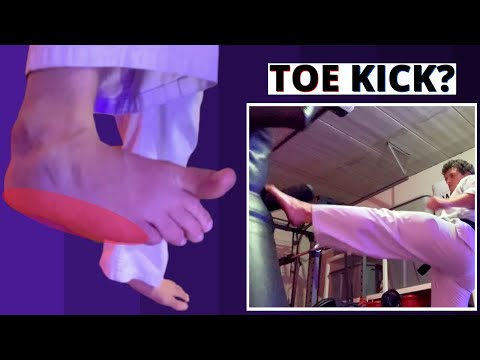
Just like with the many hand striking surfaces, the kicking world offers some... unique options. Here are some that I ha…
Translation: Foot stomp — a close-range stomping strike onto the opponent's foot, typically delivered from the clinch position against the cage in MMA
The Foot Stomp is a close-range stomping strike delivered onto the top of the opponent's foot, typically executed from the clinch position against the cage in MMA, used to create pain, disrupt the opponent's base, and force positional changes. [1] The technique is deceptively simple — the fighter lifts one foot and drives the heel downward onto the opponent's instep or toes — but its tactical value in MMA's cage-clinch exchanges is significant: the acute pain from the heel crushing the small metatarsal bones of the foot forces the opponent to shift their weight, creating openings for takedowns, clinch breaks, and positional improvements. [1] BJ Penn documented the Foot Stomp in The Book of Knowledge (2007) as one of the 'dirty' clinch techniques used when pinned against the cage — a category of low-glamour, high-utility techniques that don't produce highlight-reel finishes but accumulate damage and create tactical advantages through persistent discomfort. [1] The Foot Stomp is one of the most commonly used techniques in UFC cage-clinch exchanges: fighters including Daniel Cormier, Colby Covington, and Jon Jones have used foot stomps extensively during cage-wall wrestling sequences, sometimes delivering 10-20 stomps per round to gradually degrade the opponent's comfort and willingness to maintain clinch positions. [2] The technique's value is CUMULATIVE rather than fight-ending: a single foot stomp rarely produces significant damage, but repeated stomps over multiple rounds cause metatarsal bruising, swelling, and pain that progressively impairs the opponent's footwork, stance stability, and willingness to plant their feet for power techniques. [1],[2] In self-defence, the foot stomp is taught as a fundamental close-range response to being grabbed or held — stomping on the attacker's instep with the heel creates instant pain and frequently breaks the attacker's grip. [1]
The Foot Stomp is one of the oldest and most instinctive close-range combat techniques — stomping on an attacker's foot to create pain and break a grip is a universal self-defence response that appears across virtually every culture's fighting tradition. [1] In Krav Maga, the foot stomp is taught as a foundational close-range response to grabs and clinches. [1] In MMA, the Foot Stomp became a standard cage-clinch technique as the sport evolved and fighters sought every legal advantage in the extended clinch exchanges that occur against the cage wall. [2] BJ Penn documented the technique in The Book of Knowledge (2007) as one of several 'dirty' clinch techniques. [1] Daniel Cormier popularised the Foot Stomp in the UFC through his extensive use of it during cage-wall clinch exchanges, particularly in his heavyweight and light heavyweight title fights. [2]
The Foot Stomp's effectiveness is cumulative: a single stomp produces acute pain but rarely changes the fight's dynamic; 10-20 stomps over a 5-round fight create progressive metatarsal damage that impairs the opponent's footwork, reduces their willingness to plant for power strikes, and degrades their overall movement quality. [1],[2] In UFC title fights (which go 5 rounds), the cumulative effect of Foot Stomps is more significant than in 3-round fights because the damage has more time to compound. [2] The technique's greatest tactical value is as a DISRUPTOR: the acute pain of each stomp forces the opponent to shift their weight, which creates brief windows for other techniques (takedowns, underhook pummelling, clinch breaks). [1] In self-defence, the Foot Stomp (especially when wearing shoes) is one of the most effective first-response techniques to a close-range grab — the pain is immediate and often sufficient to break the attacker's grip. [1]
Daniel Cormier — used foot stomps extensively in UFC title fights, including vs Stipe Miocic (UFC 226, 241, 252) and vs Jon Jones (UFC 182, 214) || Colby Covington — used foot stomps as part of his high-volume cage-clinch strategy || Jon Jones — incorporated foot stomps into his cage-wall clinch work || The technique is one of the most commonly used supplementary weapons in UFC cage-clinch exchanges, though it rarely appears in highlight reels due to its low visual impact.
No images yet for this technique.
Sign in to suggest an image.
Just like with the many hand striking surfaces, the kicking world offers some... unique options. Here are some that I ha…
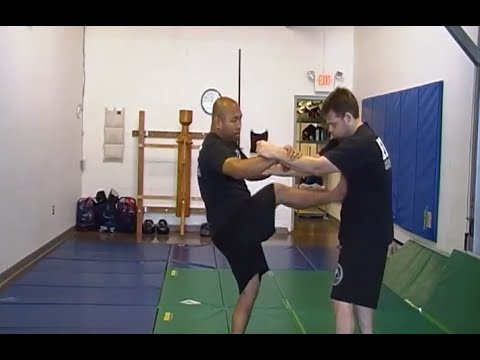
A demo on how to apply the Wing Chun stomp kick from chi sao. Webiste: http://www.EliteAcademyOfMartialArts.com Faceboo…
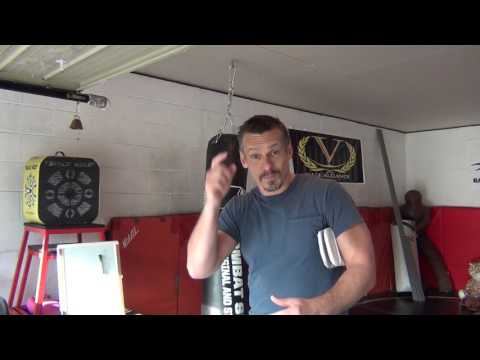
Mark Hatmaker demonstrates a solo "Calking" (Foot-Stomp) Drill. Details and drills at http://www.extremeselfprotection.…
The foot stomp is a close-range striking technique that employs the heel or arch of the foot to target an opponent's lower body, particularly the knee, shin, ankle, or foot. Barbell Black Belt emphasizes that the heel is an effective striking surface for stomps, achieved by pulling the toes back via the tibialis muscle to expose the heel for solid contact, while noting that the arch of the foot offers greater surface area than the heel alone—beneficial when precision targeting is uncertain, such as in foot stomps where missing with a smaller surface creates tactical disadvantage. Elite Academy of Martial Arts presents the stomp kick (also called the dumb tech in Wing Chun) as a close-range weapon deployed during hand-pummeling exchanges or clinch work, where hands become ineffective due to proximity or defensive pressure. By driving the knee upward with a bent knee and retracted toes, the practitioner delivers a heel strike to the knee, groin, stomach, or even head, simultaneously off-balancing or distracting the opponent and creating openings for follow-up strikes. Mark Hatmaker provides historical context through the "corking" drill, referencing lumberjack foot-stomping techniques using spiked boots; he advocates integrating foot stomps as part of entry footwork during close-quarters combat, executed without breaking upper-body technique continuity. All three instructors agree the stomp functions as a supplementary tool in grappling ranges where hand strikes are compromised, with consensus on heel-strike mechanics and tactical application for creating distance or openings.
Synthesized from 3 instructors
No instructional courses yet for this technique.
Sign in to suggest a course.
Risk of injury to the person this technique is applied to
The individual Foot Stomp causes moderate acute pain but rarely produces significant structural damage from a single application. The danger is CUMULATIVE: repeated stomps over the course of a fight cause metatarsal bruising, periosteal contusion, soft tissue swelling, and progressive pain that impairs the opponent's movement. In rare cases, a full-weight heel stomp can fracture metatarsal bones, particularly the 5th metatarsal (the weakest of the five). In self-defence (with shoes), the stomp is significantly more damaging because shoe soles concentrate and amplify the downward force.
Skill level needed to execute this technique reliably
Whether this technique is allowed under major competition rule sets
Mixed Martial Arts: The Book of Knowledge (Penn, Cordoza & Krauss, 2007)
description: [1] Penn 2007 cage clinch
Standard katakana transliteration of Western martial arts terminology (外来語) — used in Japanese MMA, boxing, and BJJ communities
description: [1] Penn 2007 cage clinch
No special physical requirements — the Foot Stomp is a simple downward motion accessible to all body types
Good balance on the standing leg during the one-legged stomp
Proprioception for targeting the opponent's foot without looking down
The technique can be executed by anyone regardless of martial arts experience
The foot stomp drives the heel down onto the opponent's foot — typically from the clinch. Legal in MMA and used to create discomfort and brief openings for position changes. A minor but legal weapon. (Unified Rules of MMA; MMA training manuals)
The arch of the foot provides more surface area than the heel, making it more practical for stomping someone's foot since you have a larger target to secure. According to Barbell Black Belt, this can be used in situations where the heel might traditionally be used but you need better coverage.
Mark Hatmaker emphasizes that the foot stomp should be part of your overall movement forward rather than a separate technique—let the stomp happen naturally as you're moving in with your upper body techniques like jabs, rather than thinking about it as a distinct action.
In close-range fighting, the foot stomp can target the stomach or head depending on how you bend your leg. Elite Academy of Martial Arts notes that even at close range in hand-pummeling exchanges, proper leg positioning allows you to generate significant force to these targets.
The Foot Stomp is a close-range stomping strike delivered onto the top of the opponent's foot, typically executed from the clinch position against the cage in MMA, used to create pain, disrupt the opponent's base, and force positional changes. The technique is deceptively simple — the fighter lifts one foot and drives the heel downward onto the opponent's instep or toes — but its tactical value in MMA's cage-clinch exchanges is significant: the acute pain from the heel crushing the small metatarsal bones of the foot forces the opponent to shift their weight, creating openings for takedowns, clinch breaks, and positional improvements.
The Foot Stomp is one of the oldest and most instinctive close-range combat techniques — stomping on an attacker's foot to create pain and break a grip is a universal self-defence response that appears across virtually every culture's fighting tradition. In Krav Maga, the foot stomp is taught as a foundational close-range response to grabs and clinches.
Unified MMA: banned — Soccer kicks/stomps to grounded opponent banned under most commissions; WBC/Boxing: banned — All kicks prohibited; WKF: banned — Prohibited; Kyokushin: banned — Prohibited; WT: banned — Prohibited; WAKO: banned — Prohibited; K: banned — 1/GLORY — Prohibited; IFMA: banned — Prohibited
Danger rating 4/10. The individual Foot Stomp causes moderate acute pain but rarely produces significant structural damage from a single application. The danger is CUMULATIVE: repeated stomps over the course of a fight cause metatarsal bruising, periosteal contusion, soft tissue swelling, and progressive pain that impairs the opponent's movement. In rare cases, a full-weight heel stomp can fracture metatarsal bones, particularly the 5th metatarsal (the weakest of the five). In self-defence (with shoes), the stomp is significantly more damaging because shoe soles concentrate and amplify the downward force.
The standard setup chain: Cage clinch established → Both fighters are pressed against the fence → Identify the opponent's lead foot position (by feel, not by looking) → Lift the heel approximately 6-12 inches → Drive the heel straight downward onto the opponent's instep → Acute pain forces the opponent to shift their weight → USE THE WEIGHT SHIFT: → If they shift forward → underhook entry → If they shift backward → takedown or knee entry → If they lift the stomped foot → single-leg attempt → Continue stomping throughout the clinch exchange to accumulate damage.
Standard counters include: Move the feet — simply shifting the feet before the stomp lands avoids the impact entirely / Wear shoes with reinforced toes — in training and competition, footwear reduces the stomp's effect on the metatarsals / Clinch break — separating from the clinch removes the proximity needed for the stomp / Counter-stomp — stomping on the opponent's foot simultaneously.
Common variants: Heel stomp to instep (the standard version, driving the calcaneus onto the top …); Toe stomp (targeting the opponent's toes specifically for maximum pain); Grinding stomp (stomping and then grinding the heel on the foot (rolling …); Rapid-fire stomps (multiple quick stomps in succession to the same foot); Alternating stomps (stomping left foot then right foot in alternation); Stepping stomp (incorporating the stomp into a stepping motion (stepping …).
Daniel Cormier — used foot stomps extensively in UFC title fights, including vs Stipe Miocic (UFC 226, 241, 252) and vs Jon Jones (UFC 182, 214) || Colby Covington — used foot stomps as part of his high-volume cage-clinch strategy || Jon Jones — incorporated foot stomps into his cage-wall clinch work || The technique is one of the most commonly used supplementary weapons in UFC cage-clinch exchanges, though it rarely appears in highlight reels due to its low visual impact.
Top errors to watch for: Stomping with the ball of the foot — the ball distributes force over a wider area and reduces the pain effect; the HE… / Looking down to aim — looking at the opponent's foot telegraphs the stomp; learn to stomp by feel (proprioception) ra… / Losing clinch position to stomp — the stomp should be integrated into the existing clinch exchange, not require relea… / Using too much force in training — the metatarsals are fragile; full-power stomps in training cause injuries. Use con….
The Foot Stomp is also known as Futto Sutonpu, Stomp on Foot, Clinch Foot Stomp, Heel Stomp on Foot, Cage Foot Stomp.