02 Roundhouse Elbow Strike
0
Sok Ngad·Hakuda Ryu Eastern Arts Centre
In this lesson, we're going to be looking at the elbow strikes starting with the roundhouse.
Translation: Sok (ศอก) = elbow, Ngad (งัด) = to pry/to lever upward — the levering/prying upward elbow, driven vertically into the opponent's chin from below
Sok Ngad (the Uppercut Elbow) drives the point of the elbow vertically upward into the opponent's chin from below, combining the knockout mechanics of a boxing uppercut with the devastating hardness of the elbow's olecranon bone. [1] The technique is the third fundamental elbow in Muay Thai's classical 24-elbow system (Cherng Sok 24 Cherng), after the diagonal Sok Fan Nah and the horizontal Sok Tad — it completes the three-directional elbow arsenal (diagonal, horizontal, and VERTICAL) that gives Muay Thai fighters the ability to attack with the elbow from any angle. [1] The Sok Ngad is executed from close range by bending the elbow fully (bringing the fist to the same-side shoulder), then driving the elbow point straight upward using hip extension and a slight rising body motion — the ascending elbow enters under the opponent's chin from below, targeting the mandible (jawbone) from its most vulnerable direction. [1],[2] Yod Ruerngsa documents the Sok Ngad as particularly effective in the Muay Thai clinch, where the fighters are chest-to-chest and the opponent's chin is exposed directly above — the rising elbow needs only 6-8 inches of vertical travel to reach the chin from this range. [1] The chin is the human body's optimal knockout target because the mandible acts as a first-class lever: when struck from below, the jaw rotates the head backward with angular acceleration that exceeds the brain's tolerance for shearing forces, producing immediate loss of consciousness. [1],[2] When the impact surface is the elbow (1 cm² of olecranon bone, the hardest striking surface on the body) rather than the fist (8-10 cm²), the pressure at the contact point is approximately 8-10x higher than a boxing uppercut of the same force — this extreme pressure concentration is what makes the Sok Ngad capable of breaking the jaw, fracturing the palate, and producing instantaneous unconsciousness from a single strike. [1],[2]
The Sok Ngad is the third technique in the Cherng Sok 24 Cherng (24 traditional Muay Thai elbow techniques), completing the fundamental three-directional elbow system alongside the diagonal Sok Fan Nah and the horizontal Sok Tad. [1] Together, these three elbows provide attack capability from three primary directions (diagonal, horizontal, vertical), forming the foundation upon which all other elbow variants are built. [1] In Muay Thai's golden era (1980s-1990s), the rising elbow in the clinch was a signature weapon of clinch specialists like Dieselnoi Chor Thanasukarn, who used the plum clinch's head control to position opponents' chins directly above his ascending elbows. [1],[2] The technique has been preserved in Muay Thai through the traditional training camp system (sor/sak/kor camp nomenclature), where young fighters learn the 24 elbows as a complete system before specialising in their preferred weapons. [1]
The Sok Ngad is the single most effective elbow technique for producing knockouts because it targets the chin from below — the mandible's leverage effect means that even moderate force produces knockout-level rotational acceleration of the head. [1],[2] In the Muay Thai clinch, the Sok Ngad is the primary knockout weapon: the chest-to-chest position places the opponent's chin directly above the fighter's elbow, requiring only 6-8 inches of vertical travel — the shortest distance of any elbow technique. [1] In MMA, the rising elbow from the clinch and from bottom position has produced numerous stoppages, with fighters like Jon Jones, Tony Ferguson, and Valentina Shevchenko demonstrating the technique's fight-ending capability at the highest level. [3] The Sok Ngad's effectiveness is enhanced in the clinch because the opponent's hands are typically engaged in clinch wrestling (fighting for neck control, underhooks, etc.) rather than protecting the chin — the chin is consistently the most exposed target in the clinch. [1]
The Sok Ngad is the primary clinch-range knockout elbow in Muay Thai stadium competition. Dieselnoi Chor Thanasukarn used the rising elbow from the clinch extensively during his undefeated Lumpinee reign. In MMA, Jon Jones has used the rising elbow from the clinch in multiple title fights. Valentina Shevchenko's spinning elbow KO of Jessica Eye (UFC 238) included a rising elbow component. The technique is responsible for some of the most devastating knockouts in both Muay Thai and MMA history.
No images yet for this technique.
Sign in to suggest an image.
In this lesson, we're going to be looking at the elbow strikes starting with the roundhouse.
Disclaimer: This presentation has been developed for educational purposes only.
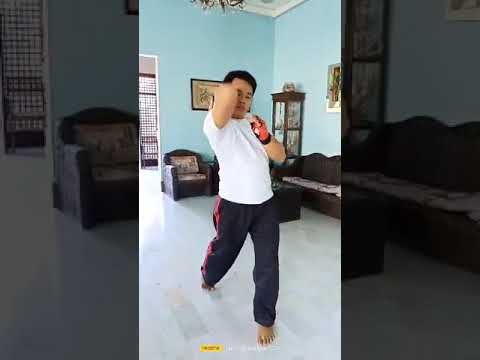
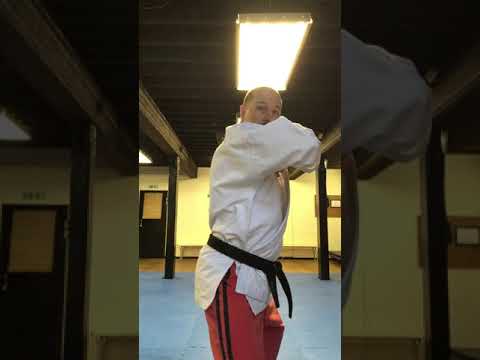
Sok Ngad, or the roundhouse elbow strike, is a fundamental elbow technique executed from close range that emphasizes full-body torque and hip rotation. Hakuda Ryu Eastern Arts Centre provides detailed technical instruction, beginning from a classical fighting stance with feet positioned as if on a clock face (front foot at 12 o'clock, back foot at 3 o'clock for right-handed practitioners). The technique initiates with feet together in a short straddle stance, hands up in a defensive guard position, then progresses through two coordinated movements: stepping forward while rotating the hips and shoulders, then striking with the back elbow across the target (chin or body). The instructor emphasizes that power derives from total body engagement—chest, shoulders, and hips—rather than arm strength alone. The technique can be adapted from classical karate stance or modern boxing guard, with the rear elbow traveling in an arc to contact the opponent. Positivist's Muay Thai approach categorizes elbow strikes into variants including forward, upward, and downward directions, positioning the roundhouse as part of a broader elbow arsenal used in close-contact fighting. Both instructors stress the importance of correct slow-speed practice before increasing velocity to establish proper muscle memory and technique foundation.
Synthesized from 2 instructors
No instructional courses yet for this technique.
Sign in to suggest a course.
Risk of injury to the person this technique is applied to
The Sok Ngad to the chin is one of the most dangerous legal strikes in combat sports. The combination of the elbow's hardness (the olecranon is the hardest bony prominence on the body), the chin's lever-effect vulnerability (the mandible amplifies rotational force), and the vertical trajectory (which arrives from the opponent's visual blind spot below) creates a strike capable of: immediate knockout, jaw fracture (mandibular fracture), palatal fracture (roof of the mouth), dental avulsion (teeth knocked out), and severe concussion. In Muay Thai, the rising elbow to the chin is responsible for some of the sport's most spectacular and brutal knockouts. [1,2]
Skill level needed to execute this technique reliably
Whether this technique is allowed under major competition rule sets
Muay Thai: The Art of Fighting (Ruerngsa, Charuad & Cartmell)
description: [1] Ruerngsa Sok Ngad, [2] Krauss 2006
Official karate technique names (和語/漢語)
Established Japanese martial arts naming convention — native Japanese term (和語/漢語)
description: [1] Ruerngsa Sok Ngad, [2] Krauss 2006
Strong legs and hips for the rising drive (the primary power source)
Good proprioception for targeting the chin from below
Close-range comfort (the technique operates at 6-8 inches)
The elbow requires no special conditioning (the olecranon is naturally hard and durable)
Accessible to all body types — shorter fighters have a natural advantage for rising elbows because their elbows are closer to the opponent's chin
Sok ngad (uppercut elbow from the crouch) delivers a rising elbow from a crouching position — used when ducking under a punch to counter with the elbow. (Kraitus, Muay Thai: The Art of Fighting)
Concentrate on technique first and practice slowly with correct form rather than fast and wrong. Hakuda Ryu Eastern Arts Centre emphasizes that doing it fast but incorrectly builds bad muscle memory that's hard to break later.
You want to get your shoulder, chest, and entire body into the strike, rotating everything around together as you bring the elbow to the target point.
Sok Ngad (the Uppercut Elbow) drives the point of the elbow vertically upward into the opponent's chin from below, combining the knockout mechanics of a boxing uppercut with the devastating hardness of the elbow's olecranon bone. The technique is the third fundamental elbow in Muay Thai's classical 24-elbow system (Cherng Sok 24 Cherng), after the diagonal Sok Fan Nah and the horizontal Sok Tad — it completes the three-directional elbow arsenal (diagonal, horizontal, and VERTICAL) that gives Muay Thai fighters the ability to attack with the elbow from any angle.
The Sok Ngad is the third technique in the Cherng Sok 24 Cherng (24 traditional Muay Thai elbow techniques), completing the fundamental three-directional elbow system alongside the diagonal Sok Fan Nah and the horizontal Sok Tad. Together, these three elbows provide attack capability from three primary directions (diagonal, horizontal, vertical), forming the foundation upon which all other elbow variants are built.
Unified MMA: legal — Legal — all elbow strikes permitted; WBC/Boxing: banned — All elbow strikes prohibited in boxing; WKF: banned — Elbow strikes not a legal technique in sport karate; Kyokushin: banned — Elbow strikes prohibited; WT: banned — Prohibited; ITF: banned — Prohibited; WAKO: banned — Prohibited in all kickboxing formats; K: banned — 1/GLORY — Prohibited — key difference from Muay Thai; IFMA: legal — Legal — elbows are a core Muay Thai weapon (art of eight limbs)
Danger rating 10/10. The Sok Ngad to the chin is one of the most dangerous legal strikes in combat sports. The combination of the elbow's hardness (the olecranon is the hardest bony prominence on the body), the chin's lever-effect vulnerability (the mandible amplifies rotational force), and the vertical trajectory (which arrives from the opponent's visual blind spot below) creates a strike capable of: immediate knockout, jaw fracture (mandibular fracture), palatal fracture (roof of the mouth), dental avulsion (teeth knocked out), and severe concussion. In Muay Thai, the rising elbow to the chin is responsible for some of the sport's most spectacular and brutal knockouts.
The standard setup chain: From Muay Thai clinch: establish plum clinch (both hands behind opponent's head) → Use knee strikes to the body to occupy the opponent's defensive attention → Release one clinch grip → Bend the released arm's elbow fully (fist to same-side shoulder) → Drive the olecranon straight UPWARD using leg and hip extension → Elbow point impacts the underside of the opponent's chin → Mandible lever amplifies the upward force into rotational head acceleration → Opponent's head snaps backward → Knockout or severe stunning → Follow with additional strikes or clinch control → From clinch break: fighters separate → Sok Ngad fires upward during the separation gap → Chin is exposed above the lowered post-clinch guard.
Standard counters include: Chin tuck — tucking the chin against the chest removes the primary target from the rising elbow's path / Lean back — pulling the head backward as the elbow rises causes it to fall short / Clinch tighter — in the Muay Thai clinch, pulling the opponent closer (rather than creating space) prevents the elbow… / Push kick (teep) — a front kick to the body at the moment the opponent releases the clinch to fire the Sok Ngad creat….
Common variants: Standard Sok Ngad (straight vertical rising elbow from close range); Clinch Sok Ngad (fired from within the Muay Thai plum clinch); Retreating Sok Ngad (the rising elbow fires as the fighter steps backward, cat…); Lead Sok Ngad (using the lead arm for a faster rising elbow (less power …); Sok Ngad from the ground (a rising elbow delivered from bottom position to a top op…); Double Sok Ngad (two successive rising elbows from alternating arms).
The Sok Ngad is the primary clinch-range knockout elbow in Muay Thai stadium competition. Dieselnoi Chor Thanasukarn used the rising elbow from the clinch extensively during his undefeated Lumpinee reign.
Top errors to watch for: Not bending the elbow fully — if the elbow angle is greater than approximately 40°, the forearm contacts the target i… / Using arm strength instead of hip/leg drive — the rising elbow should be powered by the body's upward motion, not by … / Elbow not pointing straight up — if the elbow drifts laterally during the rising motion, it becomes a diagonal or hor… / Telegraphing by dipping — dropping the body before rising (a natural preparatory motion) alerts the opponent to the i….
The Sok Ngad is also known as Sok Ngad (Thai: ศอกงัด), Uppercut Elbow, Rising Elbow, Sok Ngat, Vertical Elbow.