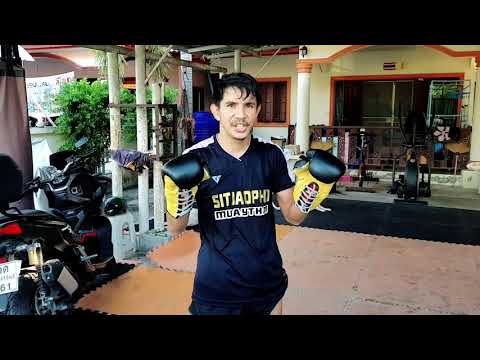
How to use the long knee for counter attack How to counter attack the long knee #longknee
0
Standard Knee Counter·Pisit Muaysocial ·Added by Admin
How to use the long knee for counter attack How to counter attack the long knee.
Translation: standard knee-strike counter
The Standard Knee Counter times a sharp knee strike upward to meet the shooting opponent's head as it drops during the takedown entry. [1] The defender reads the takedown initiation, steps one foot back slightly to create space, then drives the lead knee upward into the opponent's face or chest as they level-change. [1],[2] The timing must be precise — too early and the opponent can adjust; too late and the takedown is already secured. [2],[3]
The knee strike as a takedown counter is devastating when timed correctly, as the opponent shoots forward directly into the rising knee. [1] In Muay Thai, the knee to the head of a ducking opponent has ended numerous fights. [2] The technique carries significant risk if the timing is off, as a missed knee can leave the defender in a poor position to stop the takedown. [1]
The knee counter to a shooting opponent has roots in Muay Thai's clinch knee system and was integrated into MMA as wrestlers began fighting against Thai boxers and strikers. [1]
Anderson Silva's knee knockout of Rich Franklin in their second fight at UFC 77 (2007) — though from the clinch rather than a pure takedown defence — demonstrated the devastating potential of the knee as a counter-weapon against a closing opponent. [1]
No images yet for this technique.
Sign in to suggest an image.
How to use the long knee for counter attack How to counter attack the long knee.
No instructional courses yet for this technique.
Sign in to suggest a course.
Risk of injury to the person this technique is applied to
Sprawls and stuffs involve sudden body weight displacement; knee/hip strain risk
Skill level needed to execute this technique reliably
Whether this technique is allowed under major competition rule sets
Freestyle Wrestling: A Complete Guide for Coaches and Wrestlers (Petrov, 1977)
Alias sources — [1] Muay Thai: The Most Distinguished Art of Fighting (Kraitus, 1988) [2] MMA Instruction Manual (Ryan & Snowden, 2010) [3] MMA Instruction Manual (Ryan & Snowden, 2010)
Effectiveness sources — [1] Muay Thai Counters (Delp, 2005) [2] Muay Thai: The Most Distinguished Art of Fighting (Kraitus, 1988)
Mixed Japanese-Western terminology — combines traditional Japanese terms with katakana loanwords
Alias sources — [1] Muay Thai: The Most Distinguished Art of Fighting (Kraitus, 1988) [2] MMA Instruction Manual (Ryan & Snowden, 2010) [3] MMA Instruction Manual (Ryan & Snowden, 2010)
Effectiveness sources — [1] Muay Thai Counters (Delp, 2005) [2] Muay Thai: The Most Distinguished Art of Fighting (Kraitus, 1988)
reaction speed, structural body mechanics, defensive awareness
quick reflexes and conditioned defensive surfaces
varies — forearms (blocking), legs (movement), core (stability)
When your opponent throws a pushing knee, use a front knee to meet it halfway and pop/deflect it. Focus on stopping the long knee from the outside by using popping motions with your chin and leg position to neutralize the attack.
No. According to SITJAOPHO MUAYTHAI, you should not bend your right arm when defending against the long knee—keep it positioned properly to maintain your guard.
Lift your arm to protect your chin and step back while using popping hand motions to deflect the incoming knee strike. This creates distance and prevents the attack from landing effectively.
The Standard Knee Counter times a sharp knee strike upward to meet the shooting opponent's head as it drops during the takedown entry. The defender reads the takedown initiation, steps one foot back slightly to create space, then drives the lead knee upward into the opponent's face or chest as they level-change.
The standard knee counter became a feared defensive weapon in MMA, with knockout finishes from this counter creating some of the sport's most memorable moments. It serves as the ultimate risk for wrestlers shooting takedowns in MMA.
Unified MMA: legal — Legal defensive technique; WBC/Boxing: legal — Legal — blocking and evasion are core boxing skills; WKF: legal — Legal — blocking is a fundamental karate skill; Kyokushin: legal — Legal; WT: legal — Legal; WAKO: legal — Legal; K: legal — 1/GLORY — Legal; IFMA: legal — Legal
Danger rating 3/10. Moderate — sprawls and stuffs involve sudden body weight displacement; knee/hip strain risk
The standard setup chain: Anticipate the Attack → Execute Defence → Recover Stance → Counter or Disengage.
Standard counters include: Timing — attack when the defence is recovering or between movements / Feint — use deception to create openings in the defensive structure / Angle Change — attack from an unexpected angle that the defence does not cover.
Common variants: Standard defence (primary defensive technique from the most common position); Reactive defence (triggered by the opponent's attack, minimal movement for …); Proactive defence (anticipating the attack and positioning to neutralise it …); Counter defence (using the defensive movement to create an immediate count…).
Anderson Silva's knee knockout of Rich Franklin in their second fight at UFC 77 (2007) — though from the clinch rather than a pure takedown defence — demonstrated the devastating potential of the knee as a counter-weapon against a closing opponent.
Top errors to watch for: Pulling the opponent's head down (illegal in MMA — considered a knee to a grounded opponent in some rules) — frame th… / Throwing the knee with the lead leg when the rear leg would provide more stopping power — assess which knee is approp… / Not thrusting the hips — a knee without hip drive is just a leg lift; the hips generate the force / Standing straight up while throwing the knee — drop your base slightly to maintain balance.
The Standard Knee Counter is also known as Sutandādo Hiza-geri Kauntā, Basic Knee Strike Counter, Rising Knee Check, Knee Uppercut Counter.