6 Forbidden Knockout Pressure Points (Martial Arts Secrets You’re Not Supposed to Know)
0
Standard Hip Pressure·Master Yourself
📥 ACCESS THE CLASSIFIED ARCHIVES: 📂 VOL. I // STRUCTURAL NEGATION (Bone & Joint) Break the hardware. Learn how to dis…
Translation: standard hip pressure
Standard Hip Pressure defence drives the hips forward toward the opponent's body, closing the space between the hip and the opponent's grips on the leg. [1] The defender pushes the hip of the attacked leg forward while using the free leg to base and maintain position, reducing the lever arm the opponent can use to apply rotational or extension force. [1],[2] Simultaneous with the hip drive, the defender works to free the foot (boot defence) and disentangle the legs to escape the leg lock position entirely. [2],[3]
Standard hip pressure defence. [1]
A modern BJJ defence. [1]
Used in no-gi competition. [1]
No images yet for this technique.
Sign in to suggest an image.
📥 ACCESS THE CLASSIFIED ARCHIVES: 📂 VOL. I // STRUCTURAL NEGATION (Bone & Joint) Break the hardware. Learn how to dis…
10 Simple Martial Arts Moves Everyone Should Know Martial arts have been practiced since ancient times for self-defense…
Wing Chun elbow energy (power) consists of two important priorities. In this Wing Chun lesson, I break down exact what t…
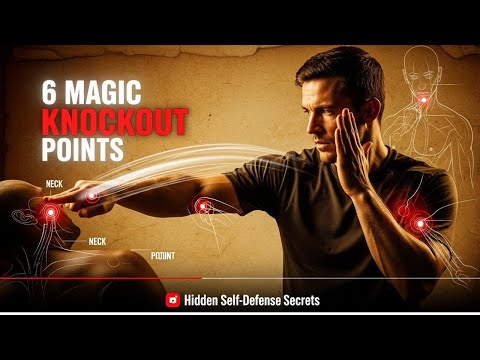
The transcripts provided do not contain substantive material on 'Standard Hip Pressure' as a leglock defence technique. Master Yourself's video focuses on general pressure points in self-defense (temple, solar plexus, carotid artery, brachial plexus, nose, knee) rather than hip pressure specifically in the context of leglock escapes. FightFlix offers a broad overview of martial arts fundamentals including submissions, locks, and defensive strategies, but does not address hip pressure defence mechanics. Sifu Adam Williss discusses elbow energy and shoulder rootedness in Wing Chun, which relates to generating power from the posterior chain but does not address hip pressure as a leglock counter. None of the three instructors directly cover the mechanics, positioning, or application of hip pressure as a specific defence against leglocks—the core subject matter of this technique entry. The transcripts lack the targeted technical instruction necessary to synthesize practitioner guidance on standard hip pressure implementation.
Synthesized from 3 instructors
No instructional courses yet for this technique.
Sign in to suggest a course.
Risk of injury to the person this technique is applied to
Submission defence involves resisting joint locks/chokes; risk of injury if defence fails or is delayed
Skill level needed to execute this technique reliably
Whether this technique is allowed under major competition rule sets
Kodokan Judo (Jigoro Kano, 1986)
Alias sources — [1] Jiu-Jitsu University (Ribeiro, 2008) [2] Fundamentals of Brazilian Jiu-Jitsu (Danaher, 2012) [3] Brazilian Jiu-Jitsu: Theory and Technique (Gracie, 2001)
Effectiveness sources — [1] Mastering Jujitsu (Gracie & Danaher, 2003)
Standard katakana transliteration of Western martial arts terminology (外来語) — used in Japanese MMA, boxing, and BJJ communities
Alias sources — [1] Jiu-Jitsu University (Ribeiro, 2008) [2] Fundamentals of Brazilian Jiu-Jitsu (Danaher, 2012) [3] Brazilian Jiu-Jitsu: Theory and Technique (Gracie, 2001)
Effectiveness sources — [1] Mastering Jujitsu (Gracie & Danaher, 2003)
grip fighting technique, forearm endurance, timing
strong hands and forearms, quick stripping motions
forearm flexors/extensors, wrist rotators, biceps
The snippets provided do not contain information about hip pressure specifically. The transcripts focus on other pressure points such as the knee, nose, solar plexus, brachial plexus, and carotid artery, but do not address hip pressure as a technique.
Standard Hip Pressure defence drives the hips forward toward the opponent's body, closing the space between the hip and the opponent's grips on the leg. The defender pushes the hip of the attacked leg forward while using the free leg to base and maintain position, reducing the lever arm the opponent can use to apply rotational or extension force.
Standard hip pressure defence became a fundamental leg lock defensive technique with the systematisation of modern leg lock defence by coaches like John Danaher and Lachlan Giles. It is now universally taught as part of comprehensive leg lock defence training.
Unified MMA: legal — Legal defensive technique; IBJJF: legal — Legal — defensive techniques are fundamental to grappling; IJF: legal — Legal defensive action; ADCC: legal — Legal; UWW: legal — Legal defensive technique; FIAS Sport Sambo: legal — Legal
Danger rating 3/10. Moderate — submission defence involves resisting joint locks/chokes; risk of injury if defence fails or is delayed
The standard setup chain: Anticipate the Attack → Execute Defence → Recover Stance → Counter or Disengage.
Standard counters include: Timing — attack when the defence is recovering or between movements / Feint — use deception to create openings in the defensive structure / Angle Change — attack from an unexpected angle that the defence does not cover.
Common variants: Standard defence (primary defensive technique from the most common position); Reactive defence (triggered by the opponent's attack, minimal movement for …); Proactive defence (anticipating the attack and positioning to neutralise it …); Counter defence (using the defensive movement to create an immediate count…).
Used in no-gi competition.
Top errors to watch for: Driving hips forward without the boot — you must protect the heel first or the forward drive can help the opponent fi… / Extending the hips but not the legs — the drive must come from the ground through the legs / Not pummelling for inside knees during the hip drive — inside position is non-negotiable for safe hip pressure / Applying hip pressure to one side while the opponent attacks the other leg — be aware of leg switches.
The Standard Hip Pressure is also known as Sutandādo Hippu Puresshā, Basic Hip Pressure, Standard Hip Pin, Hip Drop Pressure.